Get Full Government Meeting Transcripts, Videos, & Alerts Forever!
Get email alerts on the Zoning topic
No spam. Unsubscribe anytime.
Planning board asks council to change front-yard setback, side-fence height and driveway rules
Summary
The New Milford Planning Board recommended three zoning-text amendments: adopt a uniform 30-foot front-yard setback, allow side-yard fences up to 6 feet, and add driveway-width/curb-cut standards to the one- and two-family dwelling standards; council directed staff to draft language and return it to the planning board for confirmation.
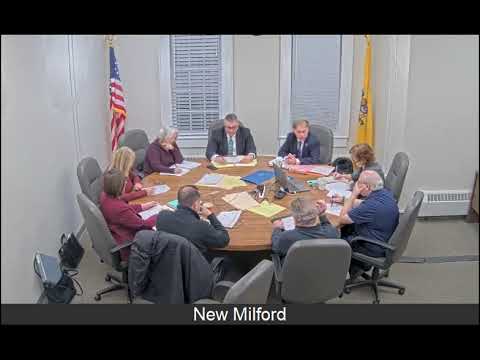
The New Milford Planning Board sent three recommendations to the mayor and council for zoning-code changes that the council discussed at its February work session.
The recommendations are: (1) repeal the existing provision that sets front-yard setbacks by averaging neighboring setbacks and instead require a uniform 30-foot front-yard setback in the applicable district; (2) amend subsection 20.14(b)(2) to permit side-yard fences up to six feet in height (currently four feet); and (3) incorporate driveway-width and curb-cut standards from Chapter 18 into the one- and two-family dwelling standards (to clarify maximum driveway widths and prohibit more than one curb cut per individual lot).
Council members asked questions about pedestrian and driver visibility at corners and whether side-triangle sight-line rules would remain enforced; a councilmember noted that corner visibility and side-triangle requirements are handled by separate ordinance provisions and are not changed by the proposed fence-height amendment. Members also discussed why the driveway standard should appear in both Chapter 18 (construction standards) and Chapter 30 (land-use standards) and agreed staff and the planning board should clarify placement to ensure enforceability.
Outcome: Councilmembers asked staff to draft the proposed amendments and send the drafts back to the Planning Board for confirmation that the language reflects the board’s intent before the council proceeds with introduction.
Why it matters: The changes affect property owners, zoning enforcement and design expectations in residential neighborhoods; fence heights and setback rules alter permitted yard uses and building placement.
Next steps: Borough staff will prepare ordinance text, return it to the Planning Board for review, and then the council will consider introductions and hearings as appropriate.