Get Full Government Meeting Transcripts, Videos, & Alerts Forever!
Get email alerts on the Event Funding Application topic
No spam. Unsubscribe anytime.
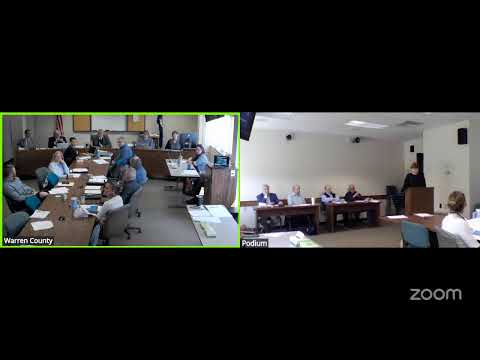
Warren County committee reviews new online application and scoring rubric for event funding
Summary
Committee discussed a new online application platform, a scoring rubric that weights room nights heavily, and a proposal allowing signature events to request funds above the $50,000 cap with committee approval; a formal resolution will be brought at the next meeting.
Warren County officials on April 21 reviewed a redesigned online application and a points-based scoring system intended to guide how the county distributes occupancy-tax funds to events.
The discussion centered on an application portal for for-profit and nonprofit event organizers, an August 1–September 15 application window, and a scoring rubric in which numerical metrics contribute 80 points and committee judgment contributes 20 points. The county intends to reserve separate procedures for municipal applicants.
The draft rubric allocates the single largest share of numeric points — 45 points — to total room nights an event is expected to generate. Committee members and staff said the intent is to direct funds toward events that create overnight stays in off-peak seasons. "This new application takes into account hard numbers," said Paul, an IT staff member who helped build the platform. "An applicant comes in and requests, let's say, the maximum amount. Based on the metrics... they're not gonna hit that high hundred points unless those metrics are met." The committee will verify applicant claims using analytics and daily occupancy data rather than quarterly summaries.
Staff also proposed a carve-out for "signature events" that draw more than 50,000 attendees: those events could request more than the standard $50,000 cap, but only after receiving committee approval to apply for additional funds. Committee members asked for clarity about how the rubric treats events held in congested summer months, when hotels are already busy. "If people are already here at 92% regardless of whether there's an event or not, then it doesn't have an impact on what we're doing," said Supervisor Patchett, urging the committee to consider net incremental room-night impact rather than raw occupancy rates.
Members discussed practical scoring concerns: the system will accept applicants' estimates of headcounts and room nights but staff will cross-check those numbers with market analytics, average daily rate (ADR), and visa-spend data. The portal will record organization history, prior awards and performance, marketing geography, budgets, and whether events work with third-party partners such as the county CVB or local chambers.
Committee members also discussed whether recurring anchor events should be required to appear before the committee every year. Staff said anchor events would still submit an application and be scored, but committee members could pull any application for additional discussion or override the numeric score in exceptional cases.
No formal changes were approved at the April 21 meeting. Staff said it will prepare a resolution describing either the proposed changes or the committee's role as ongoing overseer; that resolution will be presented at the next meeting for possible action.