Get Full Government Meeting Transcripts, Videos, & Alerts Forever!
Get email alerts on the Comprehensive Plan Portal topic
No spam. Unsubscribe anytime.
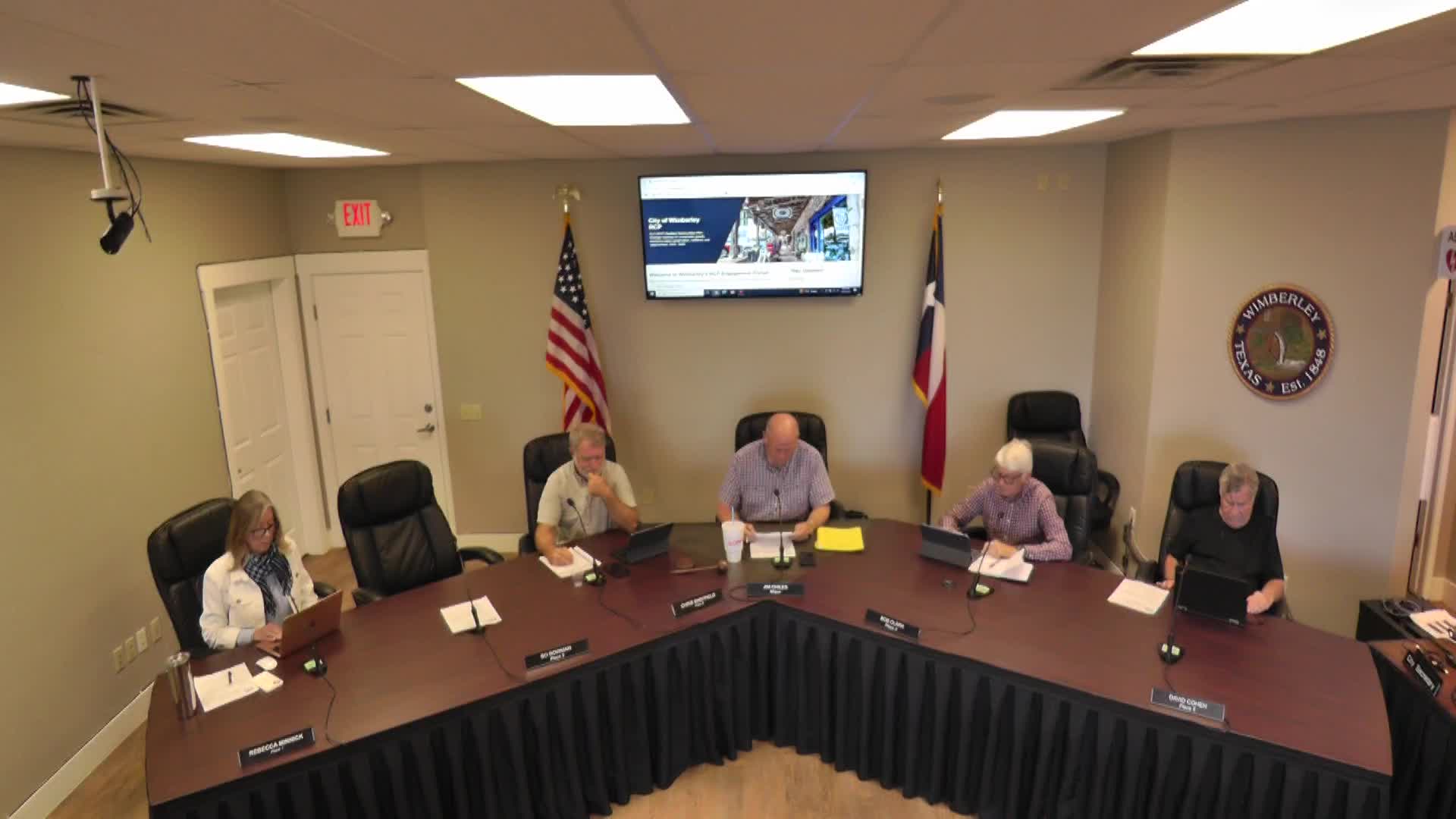
City consultant shows new master-plan portal, council debates stakeholder commenting
Summary
Langford Community Management Services demonstrated a new online portal for Wimberley’s comprehensive plan; councilors and staff discussed stakeholder access, moderation, and open‑meetings implications ahead of a planned public rollout when the preliminary draft is ready within about two months.
Langford Community Management Services consultant Jerry Conrado told the Wimberley City Council the city now has a live online engagement portal to share the draft comprehensive plan and collect feedback.
Conrado said, “We finally got this portal that we've been promising for so long running,” and described features including a 24/7 timeline, comment and polling tools, an AI search that “hunts through the document,” and a social‑map tool for residents to add site markers within Wimberley city limits.
The portal is currently open only to the project’s key stakeholders, Conrado said, and will be kept internal until council and staff finish integrating and confirming the plan’s goals and objectives. He estimated the preliminary draft will be ready “within 2 months,” after which the city intends a public rollout with surveys and town‑hall style materials.
Why it matters: the portal is the central public‑engagement tool for the city’s GLO‑funded comprehensive plan work and will host mapping, zoning‑ordinance review materials and the one‑water study. Councilors asked whether stakeholder commenting inside the portal could run afoul of open‑meetings rules; Conrado said comments go through moderation and that the key‑stakeholder group would see submissions but that staff can change commenting rights.
Council discussion focused on access and compliance. One councilmember asked, “If we make comments on this to each other, aren't we running the foul of the open meetings act?” Conrado replied that comments are submitted to staff and go through moderation and that the portal can be configured so only certain participants can post. Mayor Jim Chiles and others asked for clarity on who will have posting rights and for staff to retain a record of moderated items.
Conrado also described supporting contractors and content to be posted: an ArcGIS approach was considered but dropped for complexity; instead the portal links maps, a community‑zoning ordinance review by Doucette/Kleinfelder, and a progress area for the one‑water study. He said he sent stakeholders a preview link the day of the meeting and that some 65% of the preliminary draft content is already uploaded.
Conrado said the tool includes a moderation policy that prevents profanity and that comments “show up like a little yellow sticky pad” after review. He noted stakeholders can comment with an identity or anonymously, though the consultant asked stakeholders to identify themselves so the city knows who is commenting.
The council did not take formal action; Conrado asked for feedback on access controls and said staff will return with proposed settings and a timeline for public launch once the goals and objectives are integrated.
Ending: Conrado said the portal will remain internal until the preliminary draft is finished; the city expects to invite broader public review after staff integrates the goals and objectives and confirms grant requirements for resiliency content.