Get Full Government Meeting Transcripts, Videos, & Alerts Forever!
Get email alerts on the City Finance topic
No spam. Unsubscribe anytime.
Carrollton officials say city finished fiscal 2024 in strong position while flagging sales-tax, pension and utility risks
Summary
City staff presented the annual comprehensive financial report and a five-year budget forecast, telling council the city ended FY2024 with stronger unrestricted net position and healthy liquidity but that sales-tax rule changes, health-care and utility cost pressures and future contract expirations pose risks.
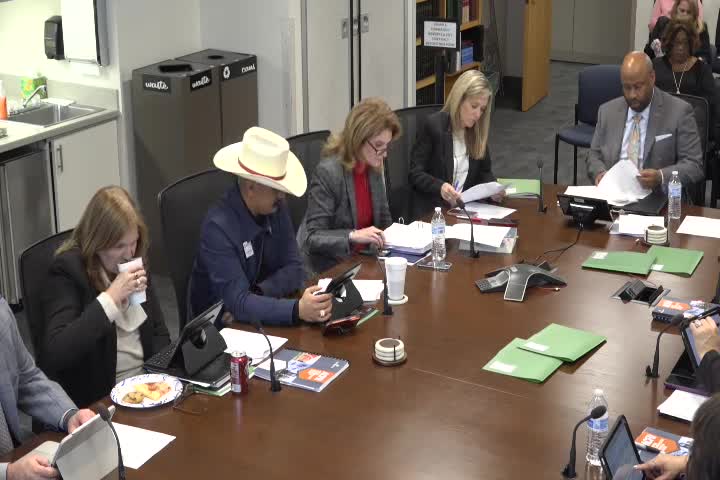
Diana Vaughn, a city finance presenter, told the Carrollton City Council at its March 4 work session that the city's annual comprehensive financial report for the fiscal year ending Sept. 30, 2024, shows a generally positive picture: unrestricted net position rose for both governmental and business-type activities and liquidity remains strong, though not as high as the previous year.
Council members were given a primer on how the ACFR differs from the budget and why rating agencies, bond counsel and taxpayers use it to evaluate state of the city finances. Vaughn and Finance Director Melissa Everett walked the council through multiyear trends, pension funding, retiree health liabilities (OPEB), debt metrics and major revenue drivers.
The officials said the city received an unmodified (clean) audit opinion and that continuing disclosures for the city's outstanding bonds are in order. Vaughn noted the city’s current ratio figures and long-term trend tables but cautioned that certain one-time federal funds that boosted recent years are no longer available.
Why it matters: the ACFR and the five‑year forecast inform decisions on capital projects, debt issuance and operating budgets, and they are used by rating agencies to set borrowing costs. At the meeting staff asked council to consider longer-term funding tradeoffs as higher costs for employee benefits, utilities and potential state rule changes could shrink available recurring revenue.
Key takeaways and council questions
- Health-care and benefits: Everett and Vaughn said health-care costs remain the city’s largest employee benefit cost. Vaughn cited a 2024 per‑member health-care cost of “a little over $16,000” and noted the city's self‑insured plan. The city projects health‑plan cost increases in its forecast; staff plan to monitor stop‑loss and other program components.
- Pensions and OPEB: The council was told the city’s pension funding under the Texas Municipal Retirement System (TMRS) recovered from a low point in 2023 and was about 95.77% funded in 2024; officials called that a strong position. OPEB (other post‑employment benefits) unfunded liability rose in 2024, to roughly $5.1 million, primarily caused by actuarial treatment of a small group of long‑service employees, staff said.
- Sales tax and franchise fees: City staff flagged ongoing comptroller rule changes and litigation affecting sales-tax allocation. Everett said the city is budgeting conservatively for an anticipated reduction and cited a working estimate that the rule change could reduce recurring sales‑tax receipts by roughly $4.0 million to $4.6 million annually; sales tax receipts were about 2.5% lower in 2024 than in 2023. Franchise-fee calculations for telecom were also noted as a structural downward pressure because carriers now pay on the highest line item rather than per line.
- Utilities and capital: Staff said utility (enterprise) funds are separate from the general fund and forecasted potential rate increases in the 7% range in the next year to cover capital and contract increases, including anticipated TRA (treatment plant) cost increases. The presentation also highlighted a standalone parks capital fund because of substantial in‑progress projects.
- Debt and investment income: Vaughn described debt per capita and debt-to-taxable-value metrics and reminded council that GASB accounting can create unrealized gains or losses in any year; the presentation reported investment income of roughly $17.2 million for the year that staff said can be used for one‑time needs and debt service mitigation.
What council directed or will see next
Staff said they will circulate the ACFR slide deck to the full council, produce a condensed popular annual financial report (PAFR) for publication, and continue to refine the five‑year forecast. Everett asked for council feedback on assumptions used in the forecast, including inflation, wage and health‑care projections and the sales‑tax outlook.
Ending: Council approved the consent agenda items that included formal acknowledgment of receipt of the ACFR as part of consent (see "Votes at a glance"), and staff will return with further budget sessions and detailed cost analyses as the fall 2025 budget process advances.