Get Full Government Meeting Transcripts, Videos, & Alerts Forever!
Get email alerts on the Citizen Presentation Policy topic
No spam. Unsubscribe anytime.
Council weighs risks of allowing videos, slide decks in citizen presentations; staff flags cybersecurity and legal costs
Summary
City staff outlined cybersecurity, recordkeeping and legal concerns about allowing electronic presentations at council meetings. Councilmembers expressed widespread concern about security, moderation and potential lawsuits and generally favored retaining the current process while asking staff to draft formal policy options.
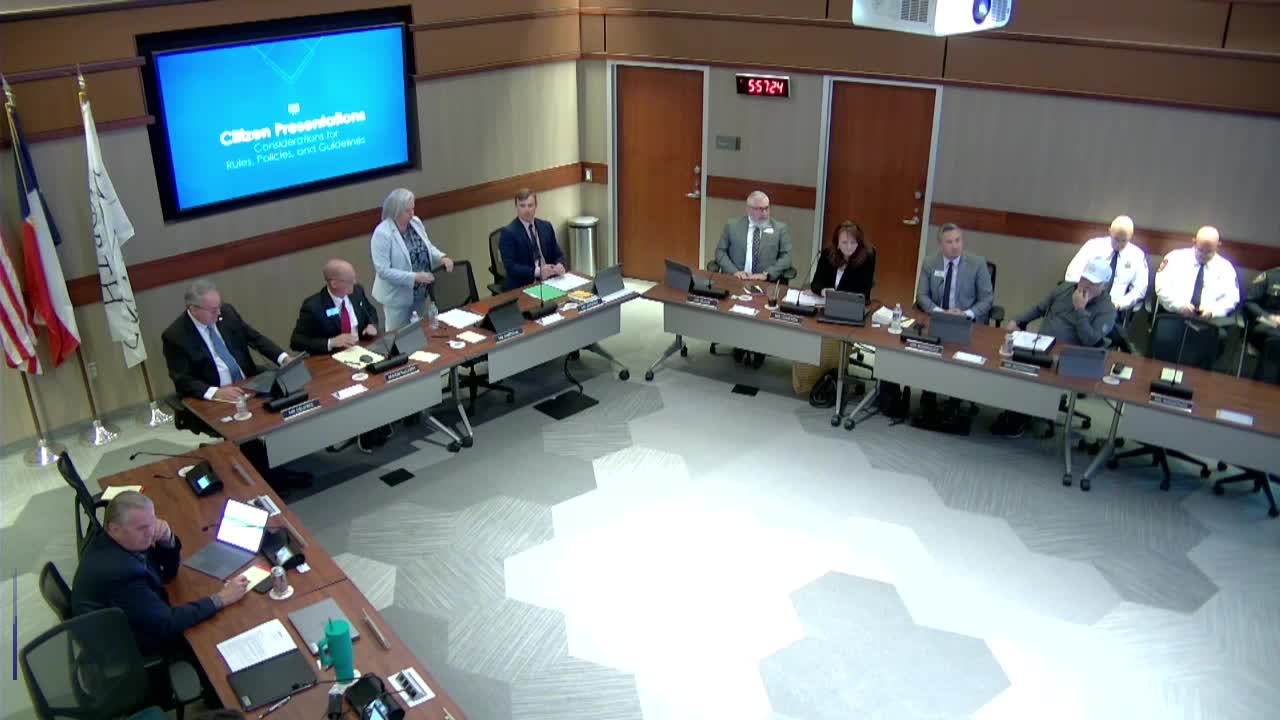
City staff presented a summary of considerations for allowing PowerPoints, videos and other digital media during citizen presentations at North Richland Hills council meetings and told the council that such materials would create additional cybersecurity and public-record responsibilities.
“External devices such as laptops, flash drives, smartphones can create liability for the health of our network,” Trudy, staff lead on the item, told the council and said the legislature’s cybersecurity training requirements factor into any policy change (she referenced House Bill 3834’s cybersecurity training requirements for officials and employees). She described detection systems, quarantining suspicious messages and the need to “trust but verify” digital content before it is displayed.
Staff estimated at least one hour of initial staff time per request for review — including IT screening, city secretary processes and possible legal review — and warned that storing submitted media as part of the permanent record would add ongoing costs and public-record responsibilities. Bradley, the city’s attorney, told the council that the city’s ability to restrict speech is narrow: “Threats of committing a crime, violence, that's something that can be limited. Generally, beyond that, if you open up a public forum, you get into obscenity and lewdness that is under the law, we would have the right to limit, which in itself is not a bright line.”
Several councilmembers argued that the cybersecurity risk and the legal exposure from moderating or denying content made allowing media unattractive. Councilmembers also cited the potential chilling effect on speakers who lack presentation skills or digital capacity. Others said written handouts or e-mails to councilmembers and making materials available on social platforms already allow broad distribution without technical risk. No formal vote was taken; councilmembers indicated by discussion they prefer to keep the current citizen-presentation practice and asked staff to draft a formal policy and estimated costs if the council wishes to permit electronic media in the future.