Get Full Government Meeting Transcripts, Videos, & Alerts Forever!
Get email alerts on the Carports Regulation topic
No spam. Unsubscribe anytime.
North Richland Hills council hears mixed public survey on front-yard carports, opts to keep rules
Summary
City staff presented results of a March flash-vote survey showing most respondents oppose front-yard carports; council members said the city already has permitting and design rules and agreed by consensus to keep current regulations while improving public information.
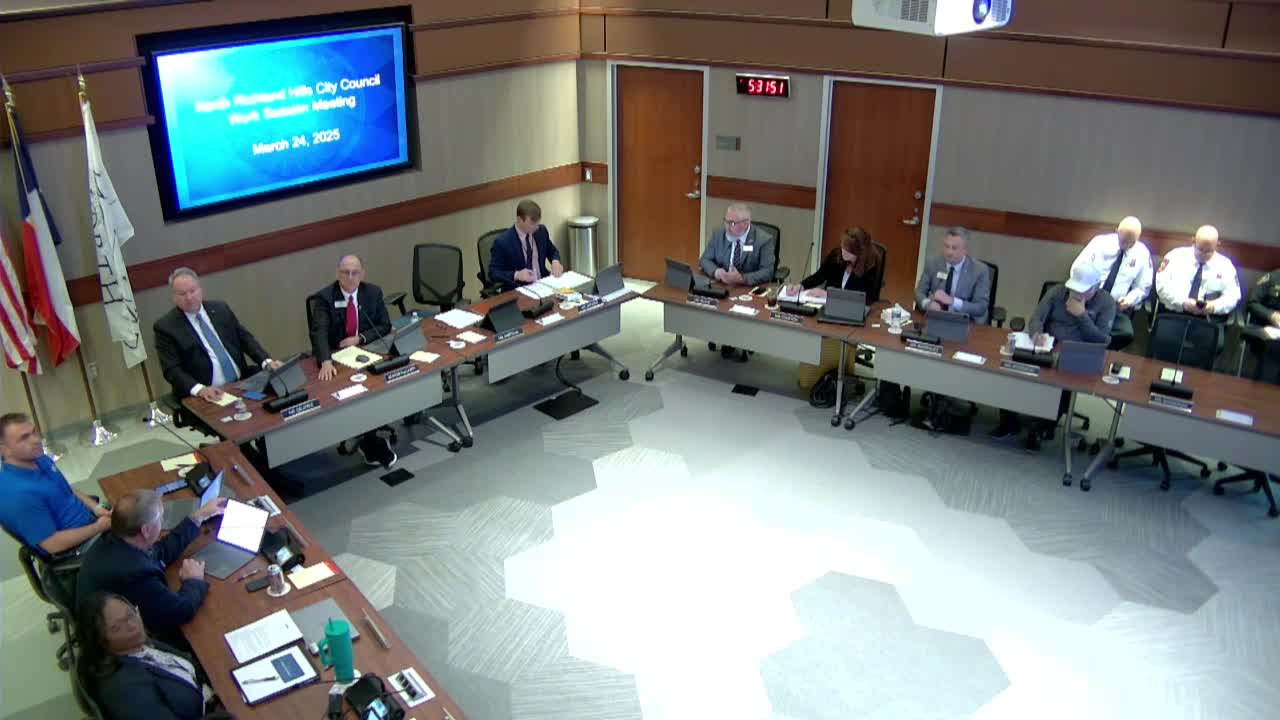
Paulette Hartman, planning staff, told the City Council on March 24 that a flash-vote survey of registered panel members found the majority did not support allowing carports in front yards and that the city’s existing design rules already address many community concerns.
Hartman said 556 people responded to the flash-vote survey (margin of error ±5%) and that 59% of respondents answered “no” when asked whether they would add a carport to the front of their house if the city changed the rules. She also reviewed recent permit activity: “From 2022 to the current time there's been 24 carport applications submitted; 54% of those were approved, 17% were withdrawn, and 29% were denied,” Hartman said, and listed the common denial reasons: encroachment into required setbacks, exceeding allowable size, or proposed work over easements.
The survey also showed respondents prioritized design guidelines that match houses or neighborhoods, setback/distance from the street or sidewalk, and size limitations. Hartman described current local standards that limit flat roofs, require a 4/12 roof pitch in many cases, and prohibit exposed metal posts unless they are clad with brick or masonry.
Several council members said they questioned whether the flash-vote panel is representative of the city’s entire population, given North Richland Hills has roughly 48,000 registered voters. Some council members urged more education and clearer online guidance on the permitting and variance process for residents who want to pursue a carport legally. One councilmember noted that only a small number of applications are submitted each year—about 24 over three years—so the issue is not large in volume.
After discussion, councilmembers signaled unanimous consensus not to change the carport regulations at this time. Council also directed staff to improve public-facing information about the permitting and variance process, using simpler language and clearer step-by-step guidance on the city website.