
Bellbrook-Sugarcreek warns state cash-cap would flip small surplus into multi‑million deficit
Get AI-powered insights, summaries, and transcripts
Sign Up Free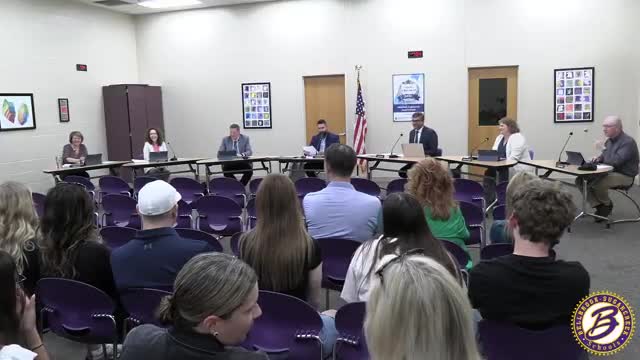
Summary
District treasurer told the Bellbrook Sugar Creek Board of Education that a House-passed plan to cap school cash balances at 30% would turn a projected $530,000 surplus next year into nearly a $6 million shortfall and sharply reduce the district’s days of cash on hand.
Bellbrook Sugar Creek’s treasurer told the Board of Education on May 20 that a House-passed proposal to cap local school districts’ cash carryover at 30% would transform the district’s near‑term finances, turning a projected $530,000 surplus for the next fiscal year into nearly a $6,000,000 deficit and increasing five‑year shortfalls through 2029.
The district’s treasurer said the forecast currently shows about 219 days of cash on hand as of June 30, 2025, and that under the proposed 30% cap the district would drop to about 151 days in 2026 and fall to roughly two weeks of cash by 2029. “We right now, as you can see, we are carrying more,” the treasurer said, adding that a House-passed budget provision would require the district to refund excess balances to taxpayers as a one‑time credit.
Why it matters: the treasurer said personnel costs make up roughly three‑quarters of the district’s budget and that cutting payroll is the primary lever left if revenue cannot be raised. The treasurer told the board the cap would force either repeated levy votes or staffing reductions: “If you can’t raise revenue, you have to decrease expenditures,” he said. Board discussion referenced estimates that a district of this size could face layoffs on the order of “somewhere in that range” of about 30 staff, though no formal layoff plan was presented.
Supporting details: the treasurer showed revenue and expenditure breakdowns the board reviewed. Local property taxes supply the majority of revenues (about 69%), the treasurer said, while the state provides roughly 23%. The board was also told that the district’s levy timing affects collections: a property‑tax renewal in 2027 would mean lower collections in 2028–29 if not renewed, and the forecast already projects declines in later years for that reason.
The presentation flagged several specific drivers: rising personnel costs including a negotiated agreement with one‑time bonuses, an expected health‑insurance cost increase, planned capital purchases (a Chromebook refresh in 2026–27 funded from the general fund), and a projected spike in electricity costs tied to a new capacity charge the treasurer said could increase bills significantly.
The treasurer urged residents to contact state lawmakers. The board approved the five‑year forecast as presented in a roll call vote that passed five‑to‑zero. During discussion board members asked staff to post the forecast materials publicly and to alert the community about the potential consequences if the 30% cap becomes law.
The board’s action does not change district policy or levy status; it is the statutorily required forecast used for planning and for the state’s oversight. The treasurer said the forecast is used by the Ohio Department of Education and the state’s fiscal monitors to determine whether a district will be placed in fiscal caution, watch or emergency status.