Get Full Government Meeting Transcripts, Videos, & Alerts Forever!
Get email alerts on the K 12 Education topic
No spam. Unsubscribe anytime.
Olmsted Falls Intermediate presents action-research linking friendships, PBIS and basic skills to learning goals
Summary
School leadership presented an action-research update to the Olmsted Falls City School Board on benefits-based accountability, describing multi-year PBIS work, weekly student surveys about friendships and a new focus this year on teaching foundational skills (math facts, paragraph writing) more engagingly to boost mastery and later achievement.
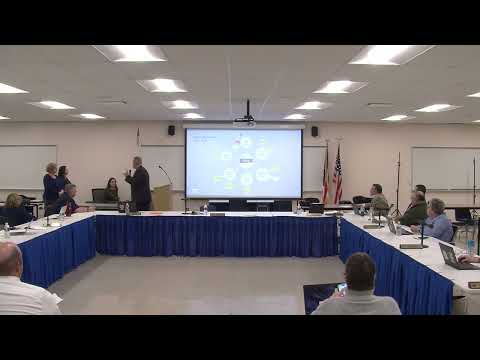
Olmsted Falls Intermediate School leaders briefed the Olmsted Falls City School Board on an ongoing action-research project using benefits-based accountability to connect student engagement, social connections and academic skill mastery.
The presentation, given by members of the intermediate school leadership and teachers, described a long-running Positive Behavioral Interventions and Supports (PBIS) program and a recent effort to embed weekly one-question student surveys about friendships and belonging into instruction. The presenters said the building’s design work, including partnerships with the Schlecky Center and a consultant identified in the transcript as John Tanner of Bridal Ed, has helped the school codify practices and measure short-term outcomes.
Presenters said parents had told the school their top priorities were that students learn, feel safe and be happy; the school distilled those responses into three operational areas — learning, safe and supportive classrooms, and friendships/connections — and built systems around them. Teacher Debbie Poitman described routine, repeated assessments: “We’ve got four times a year assessments” for math facts and repeated paragraph-writing rubrics in language arts to create baseline/mid/year progress measures. She said the paragraph rubric is used across fourth and fifth grades so teachers have consistent, frequent data.
The leadership team reported last year’s action research focused on friendships and connections and produced positive behavioral and attendance signals; the team said it has had more difficulty establishing a direct, measurable link to academic outcomes. For the coming year the research question is whether teaching foundational skills (for example, automaticity of math facts and structured paragraph writing) in more engaging ways will move the academic “achievement needle” while remaining linked to engagement and design-work strategies.
Presenters described instructional strategies intended to be both engaging and skill-focused (for example, collaborative novelty rather than flashcards), and they said data collection will include frequent teacher-collected measures (timed math fact checks, repeated paragraph prompts) rather than only infrequent standardized tests. The team emphasized continuous improvement: slides and measures change as staff learn what works, and the presenters said they expect to refine rubrics to avoid students “topping out” scores where instruments do not show room for growth.
Board members and district staff praised the work and advised focusing on the programmatic question (competency vs. stretch goals for writing) and on how to present the results to families. Superintendent and board comments in the meeting stressed that demonstrating basic-skill mastery programmatically can be appropriate even where some students exceed that benchmark.
Presenters and board members noted this is an ongoing multi-year effort integrated into building design teams and staff meetings; the team invited board members to the May 20 action-research presentations where buildings will share results.