Get Full Government Meeting Transcripts, Videos, & Alerts Forever!
Get email alerts on the State Education Budget And Curriculum topic
No spam. Unsubscribe anytime.
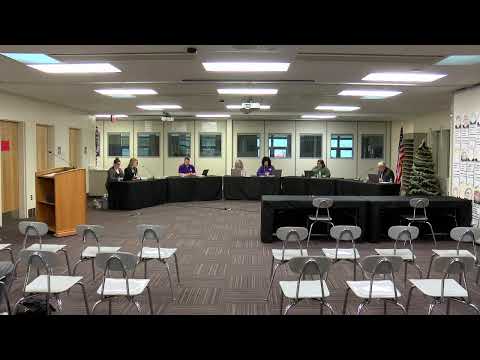
Fremont City board highlights state budget and proposed curriculum bills, urges public contact with legislators
Summary
At a board meeting, members reviewed the state biennial budget process and raised concerns about proposed senate bills on K–12 curriculum, math placement and display of "founding documents," and urged residents to consult OSBA materials and contact Rep. Clique and Sen. Reineke.
At a Fremont City Schools board meeting, a board member identified as Don reviewed legislative developments tied to the House version of the biennial budget (HB 96) and several proposed senate bills, and urged board members and the public to use Ohio School Boards Association (OSBA) resources and contact legislators.
Don said the board is encouraging trustees and the public to watch an OSBA webinar about HB 96 and to reach out to legislators to “educate yourself on what's going on.” He described a tight budget environment in which proposals to reduce taxes at the state level could shift costs back to local property taxpayers.
The report highlighted several provisions under discussion in the Ohio Senate. Don described one proposed senate bill that would require K–12 instruction on the effects of short- and long-term substance use, information about illegal drugs, and bullying and hazing curriculum. He also summarized a proposal that would require districts to develop mathematics improvement and monitoring plans; under that draft, a seventh grader scoring “accomplished” or “advanced” on unspecified measures could be required to take Algebra I. Don expressed concern that such automatic placement could be problematic if it does not allow local districts, administrators and parents to make placement decisions.
Don said another proposed senate measure under discussion would require schools to display a list of “founding documents” in school buildings. He read aloud examples included in bill text as presented to the board: the Mayflower Compact, the Declaration of Independence, the Magna Carta, the Bill of Rights, the U.S. Constitution, the Articles of Confederation and — controversially — the Ten Commandments. Don said the draft also mentioned state and national mottos and that some language appears to extend beyond what the board would consider core founding documents.
Don urged residents to contact House Representative “Mr. Clique” and State Senator Reineke, who he said sits on a relevant committee, to share local views before senate hearings and reconciliation with the House. “If you have input, please share that with our state senator Reineke,” he said.
Board members and staff did not take formal action on the bills during the meeting; the report was advisory and informational. The board recommended members consult OSBA’s legislative pages for links and facts cited during the report.
The legislative report acknowledged uncertainty about final language and timing: Don noted the Senate was on break and expected to hold hearings the week of April 28. He also cautioned that proposals under discussion could change during reconciliation before any final enactment.
The board did not adopt a formal legislative position at the meeting but asked members and the public to follow OSBA materials and contact legislators if they wish to share feedback.