Fairborn treasurer warns Ohio budget change could sharply cut school property-tax revenue
Loading...
Summary
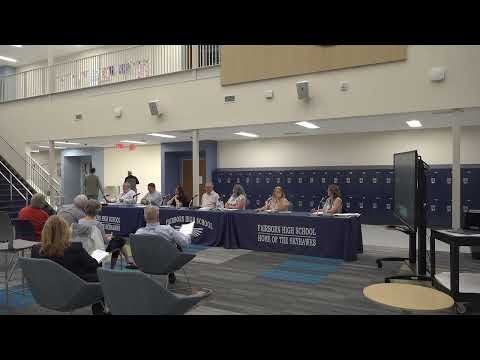
Mike Filo, the Fairborn City Schools treasurer, told the board May 1 that a provision passed by the Ohio House as part of the state budget could sharply cut the district’s property-tax collections by tying state collections to school districts’ cash balances.
Mike Filo, the Fairborn City Schools treasurer, told the board May 1 that a provision passed by the Ohio House as part of the state budget would tie property-tax collections to school districts’ cash balances and could “take that money away from the schools.”
Filo presented the district’s required five-year forecast and said he modeled a worst-case scenario to show how the proposed change might affect Fairborn’s finances. “Property tax owners in Fairborn would see a 67% decrease in their taxes,” he said, adding that collections “would go from 1,400 to $462” under the House measure as he calculated it for the district.
The forecast the treasurer presented included several illustrative line items: a placeholder for a proposed 4-mill operating levy in November 2027, a $5 million maximum exposure shown for a new middle school (modeled as $2.5 million in each of two years), and a $750,000 placeholder this year for transfers to the district’s permanent-improvement account to fund urgent work such as new boilers for the Park Hills building. Filo also modeled double-digit health-insurance increases and the continued cost of a multi-year “closing the gap” program the district began after COVID.
Why it matters: Filo said the House language would allow the state to reduce a district’s property-tax collection in the year after a cash-balance calculation by an amount the state deems excessive. Using the district’s figures, he said the House formula would have cut roughly $14.4 million from Fairborn’s collections and left the district collecting about $7.1 million of the roughly $21.5 million it currently receives in property taxes. He warned that the mechanism would create violent swings in taxpayer bills when the state adjusts collections up or down. “We would lose roughly 14,400,000 and only collect 7,100,000 instead of 21.5,” Filo said during his presentation.
Filo said the House-passed budget provision currently exempts districts at the 20-mill floor but that separate bills under consideration could change what counts toward that floor. “There’s also been bills introduced that the school district income tax, which we have, would count towards the 20 floor,” he said, and he referenced discussions that emergency levies might be counted as well. He told the board that the measure passed the Ohio House and next goes to the state Senate.
Board members and staff discussed timing and options. Filo warned the board the law’s effective date and the state’s chosen cash-balance snapshot would matter; if the provision takes effect based on the June 30 cash balance, districts can respond by moving funds into allowable categories before that date. “If this passes in June of 2025, you’re going to see some creativity and some transfers come across your desk here at the June board meeting,” he said, noting that districts sometimes accelerate transfers to permanent-improvement funds to alter the reported balance.
The treasurer also highlighted the district’s revenue mix (roughly half local, half state), recent strength in income and real-estate tax receipts, and cost pressures from wages, benefits and program continuity. He said district leaders plan to keep the district’s instructional supports in place but shrink them over time through attrition rather than an abrupt cut.
Formal action: The board approved the treasurer’s three finance recommendations on a roll call (motion moved and seconded; recorded votes: Mr. Browning — yes; Miss Landon — yes; Mrs. Millard — yes; Mrs. Webb — yes; Mr. Steininger — yes). The treasurer’s presentation of the five-year forecast was informational; the board did not adopt changes to the forecast at the meeting beyond approving the recommended finance items.
What remains uncertain: The final language and percentage reduction are unresolved. Filo said the House originally used a 30% reduction; in meetings with state lawmakers the percentage had been discussed and could change in the Senate. He warned the board the conference process between the House and Senate and the governor’s line-item veto power could materially change the final outcome before the June 30 budget deadline.
Board members will continue monitoring the bill and, if necessary, consider one-time transfers or other accounting moves in June to reduce the district’s reported cash balance before the state’s snapshot date.