Get Full Government Meeting Transcripts, Videos, & Alerts Forever!
Get email alerts on the Tax Policy Tourism topic
No spam. Unsubscribe anytime.
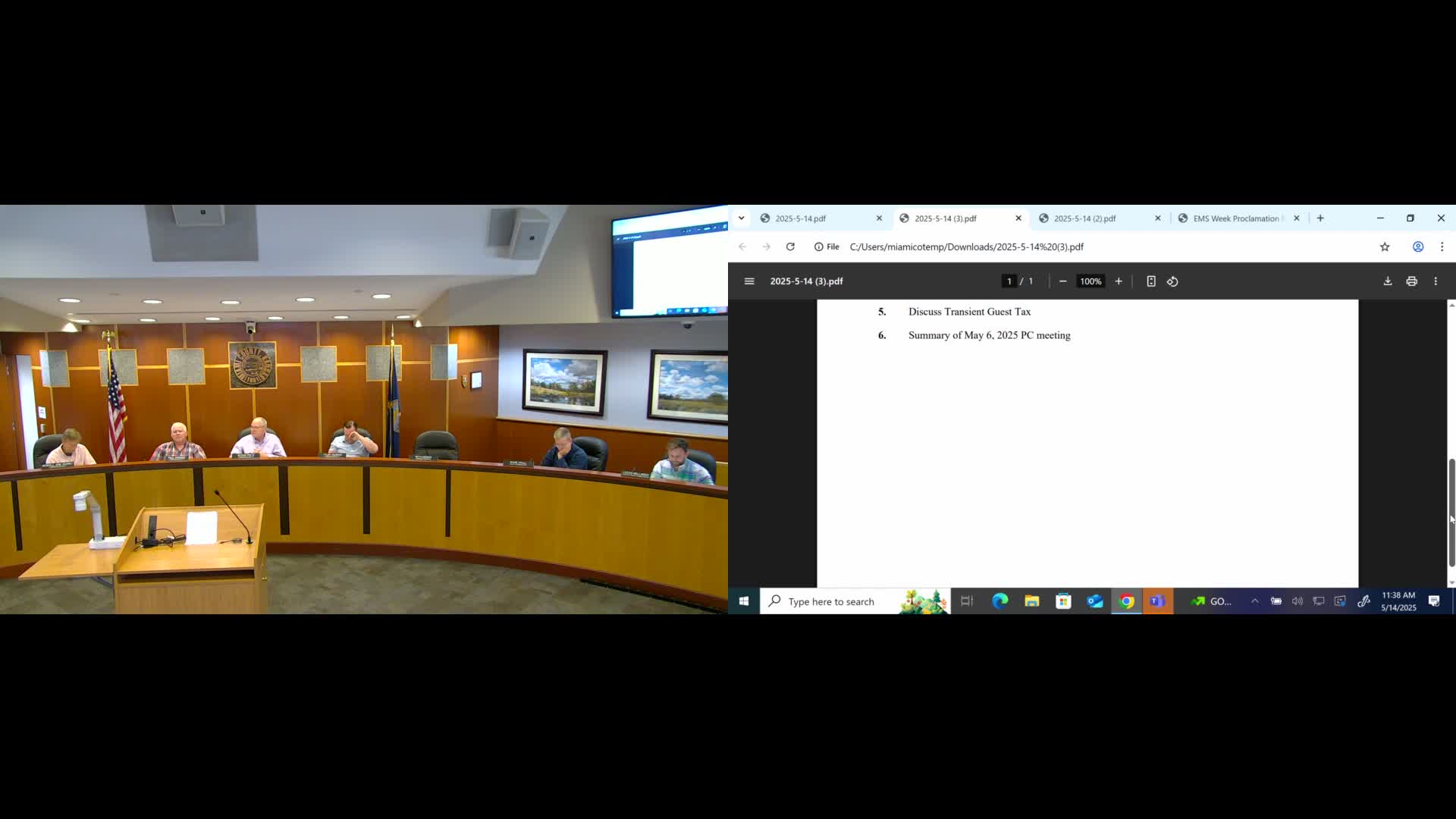
Commissioners direct staff to explore transient guest tax and short‑term rental rules; concern about zoning alignment
Summary
County economic development and legal staff briefed the Board of County Commissioners on the option of adopting a county transient guest (hotel) tax and on updating land‑use rules for short‑term rentals.
County economic development and legal staff briefed the Board of County Commissioners on the option of adopting a county transient guest (hotel) tax and on updating land‑use rules for short‑term rentals.
Shane (staff) summarized the statutory landscape and noted that, while the statute references a 2% cap, several local governments levy higher rates. He said some neighboring counties and cities already collect transient guest taxes and that Miami County would set its own rate; he also noted that if a city inside the county already levies the tax within its corporate limits, the county does not collect that revenue for the city area.
Janet McCray, director of economic development, said an Airbnb/short‑term rental operator had estimated that at a 6% rate a single listing could contribute roughly $7,000 to $10,000 a year to county coffers; she also noted the state keeps a 2% administrative fee from collections.
Planning Director Kenny Cook described approaches other counties use to regulate short‑term rentals: conditional use permits for each unit, a countywide licensing approach, ownership‑residency requirements (for example, ownership for at least two years before applying) and density limits to prevent clustering. He said current Miami County rules allow bed‑and‑breakfast operations in specific circumstances but do not have a modern short‑term rental licensing framework; staff recommended aligning tax policy with zoning and suggested planning commission review.
Commissioners asked the county counselor to draft a resolution and to coordinate planning‑commission review of permitting options. Staff said a resolution and an ordinance path could move quickly enough to be effective for bookings by mid‑year if the board chooses to adopt a tax, although planning and legal steps would influence the precise timetable.
Ending
Staff will have planning and legal draft documents and present proposed language for a resolution and zoning changes for the board to consider in coming months.