Get Full Government Meeting Transcripts, Videos, & Alerts Forever!
Get email alerts on the Compensation And Staffing topic
No spam. Unsubscribe anytime.
Miami County discusses pay options and multiple PRPA staffing requests, including sheriff and jail roles
Summary
Sarah Denney, Miami County human resources director, briefed commissioners on PRPA position requests and compensation options, including proposals that would add deputies and jail positions and convert several part-time roles to full time.
Sarah Denney, Miami County human resources director, reviewed position-request and classification proposals and previewed compensation options at the commission study session.
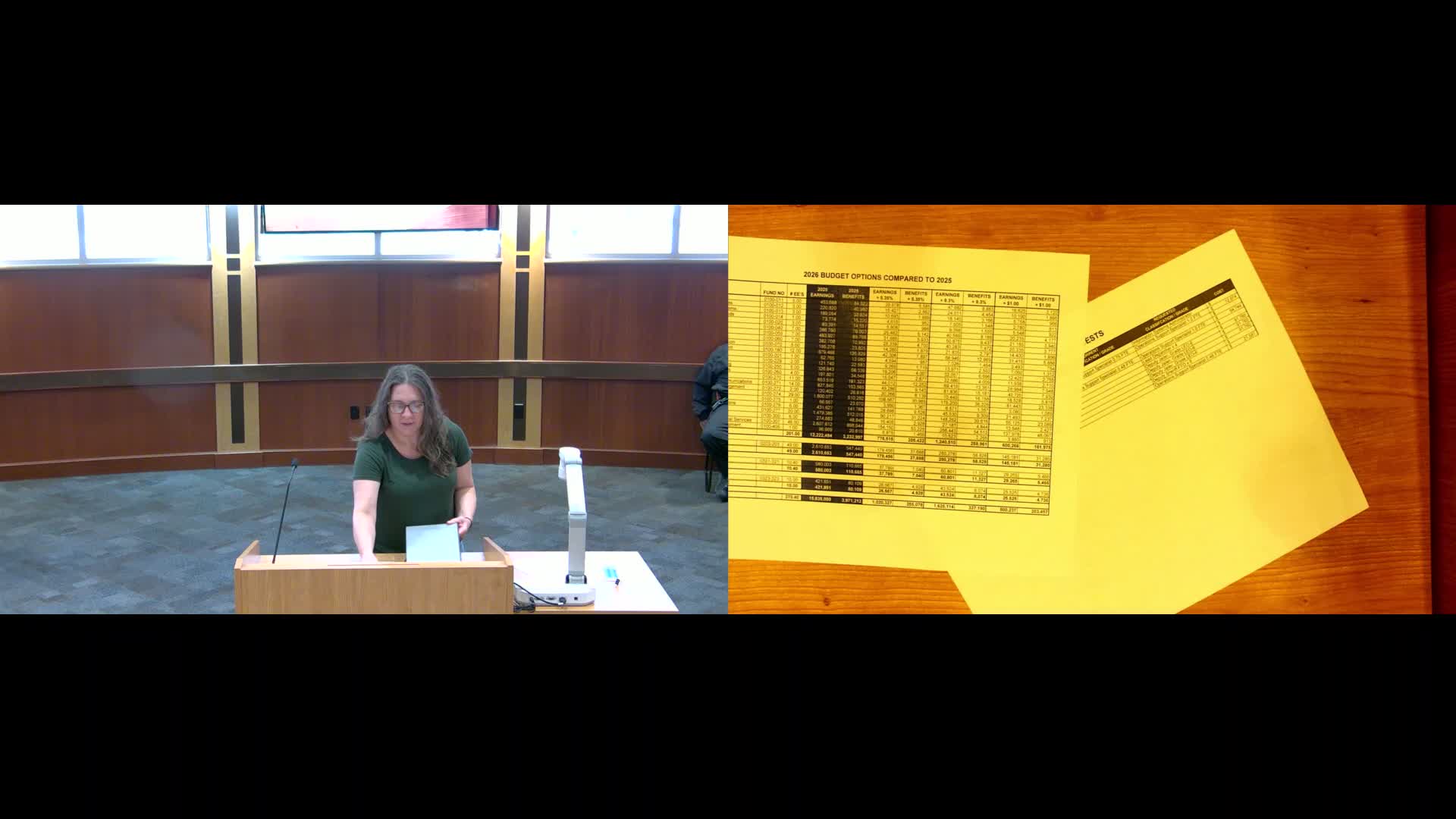
Denney described the PRPA (position-request/position-analysis) process and listed current staffing requests: a proposed information-systems-administrator classification (no cost estimate yet), a health-department change from 0.75 FTE to 1.0 FTE (estimated cost $12,974), a register-of-deeds change from 0.48 FTE to full-time benefit-eligible (estimated total cost $54,744, with roughly half of that estimate presented as benefits), and a part-time 0.48 FTE operation-support specialist for economic development (estimated $21,006). "The PRPA process is the position request, position, analysis, process that department heads can use to request new positions, request the reclassification of a position, maybe request an additional FTE in a position," Denney said.
Denney also relayed several sheriff’s office requests: creation of a dispatcher-lead classification (to have a lead on shift at all times), a request for three deputy jailer positions (staff presented an estimated cost of $91,760 per position including salary and benefits), training-cost notes for new hires, and a proposed Field Training Officer (FTO) classification with a suggestion of up to eight budgeted FTOs for deputies. Denney said figures for some classifications were still being researched and presented as estimates: "These are just estimates, yes."
Compensation options discussed: commissioners and staff reviewed three approaches previously discussed by the board: a 5.35% package (3.85% COLA + 1.5% merit), a 9.3% package (7.8% COLA + 1.5% merit) that staff said would keep the county on the previously adopted pay plan, and an across‑the‑board $1-per-hour increase. Commissioners debated trade-offs: the $1-per-hour option raises lower-paid employees relatively more but creates pay compression (a smaller percentage gap between lower and higher pay grades) and may conflict with multi-year pay-plan goals. Commissioners also referenced the prior $2.50-per-hour, sheriff-specific increase and how that accelerated compression in some classifications.
Staff and commissioners highlighted two operational constraints for a merit-based system: budget predictability (how to budget for variable merit payouts across departments) and objective performance evaluation infrastructure (whether department leaders and evaluation tools exist to allocate merit equitably). Denney and commissioners agreed merit-based pay discussions should continue toward 2027 after more work on evaluation tools and budget modeling.
What the commission discussed and asked staff to follow up on: commissioners asked staff to confirm exact vacancy counts and tenure for the sheriff’s positions that would be promoted to FTO or dispatcher-lead classifications; to verify whether register-of-deeds tech funds can support a larger share of a position’s cost; and to provide updated, complete cost estimates for any proposed full‑time conversions or new classifications. No formal decisions were made.
Ending: Denney and staff will return with detailed cost estimates and human-resources tools (for performance evaluation and PRPA point-factor analysis) during departmental budget hearings next week. Commissioners signaled interest in deeper discussion of pay-plan strategy but did not vote on compensation this session.