Get Full Government Meeting Transcripts, Videos, & Alerts Forever!
Get email alerts on the County Budget topic
No spam. Unsubscribe anytime.
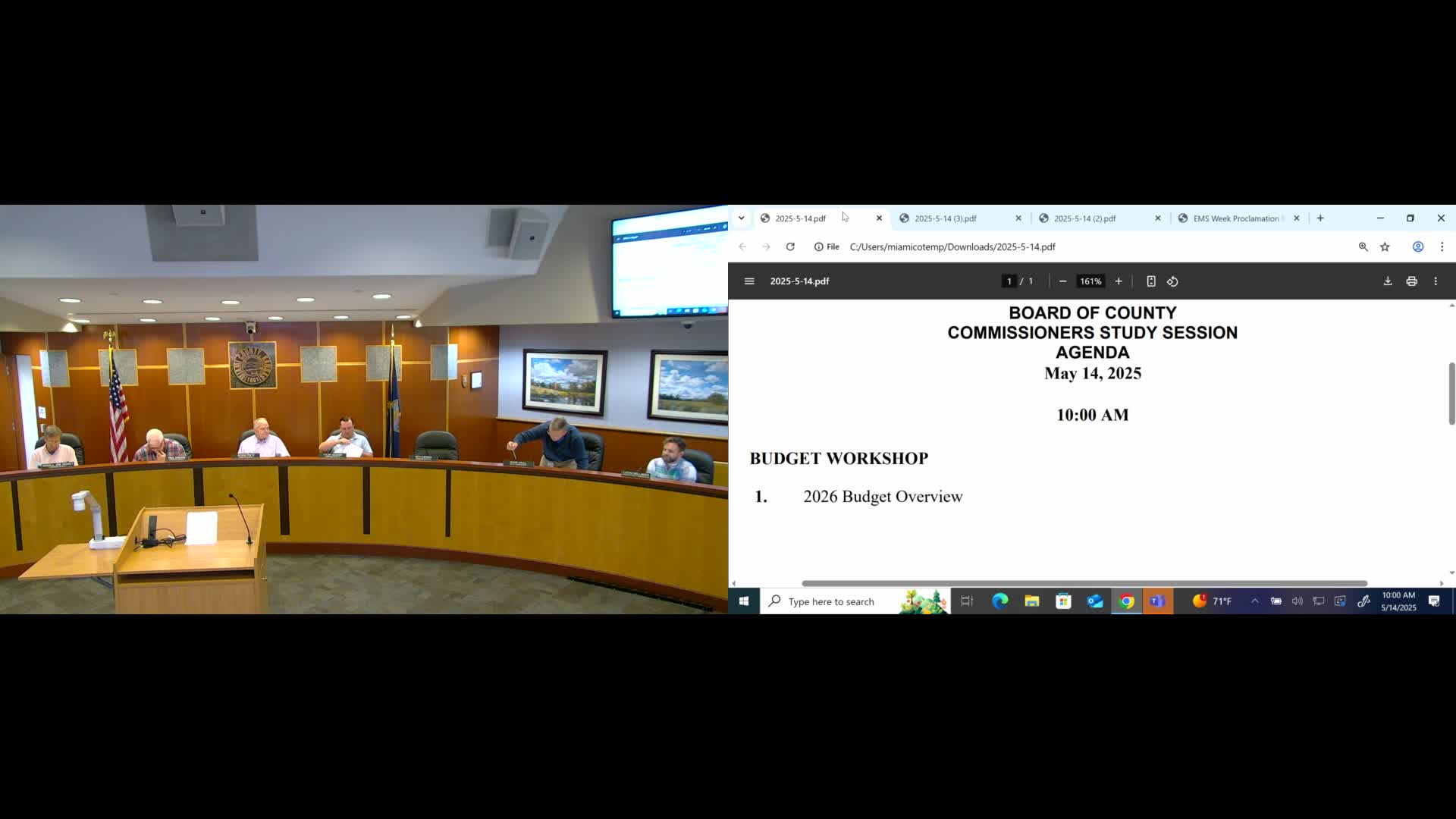
Miami County staff outline $4.05 million in new budget requests, warn of mill-levy effects
Summary
At a Miami County commission study session, finance director Lucas Mellinger gave an overview of the 2026 budget picture, including an estimated 5.5% valuation increase, an estimated revenue-neutral rate near 33 mills, statutory hearing deadlines and $4,050,000 in departmental requests above the current revenue-neutral base.
Lucas Mellinger, Miami County assistant county administrator and finance director, told commissioners at a study session that the county’s current fiscal picture includes an assessed valuation that produces $706,849 per mill and a current mill levy of about 34.767, which generated just over $24 million for last year’s budget. "Our current assessed valuation is $7.00 6. That means, 1 mill generates $706,849 for the county," Mellinger said.
Mellinger said the county has not yet received finalized valuation figures from the clerk (expected June 15) but is using an appraiser estimate of a 5.5% valuation increase for planning. Using that estimate he projected a revenue-neutral rate “around 33 mils.” He also warned commissioners that the county’s cash-balance choices affect the mill levy calculated on the state form: "Due to the cash balance going down, it has an effect on the tax rate," he said, explaining an example where spending down reserves increases the mills the county would have to request to maintain the same budget.
Why it matters: the state form and statutory calendar tie valuation, notice and hearings together and limit how the commission can present and adopt the budget. Mellinger summarized the statutory deadlines that govern the process, including clerk valuation timing, the July 20 notice deadline for revenue-neutral intent, and the separate timelines for publishing and holding revenue-neutral and budget hearings depending on whether the county exceeds the revenue-neutral rate. "Those are all set out in statute, so those dates are the dates that we have to live by," he said.
Key figures and department requests: Mellinger’s presentation listed roughly $4,050,000 in new requests above the 2025 revenue-neutral base (not including salary adjustments or new positions). Major items highlighted in the presentation included:
- Road and Bridge: an asphalt-program request of $1,600,000 ("asking for 1,600,000 in the asphalt program"), a larger equipment budget request (presented figures put equipment needs closer to $1.0 million per year to begin catching up, with an equipment-budget figure referenced as "up to 1.2" in the presentation), and a roughly $200,000 increase for gravel costs tied to an earlier direction to budget for larger tonnage purchases.
- Public safety: a suite of sheriff’s office requests that Mellinger grouped as software, vehicles and command-center upgrades; the presentation listed about $200,000 tied to vehicles with roughly $100,000 noted for patrol vehicles and about $100,000 for a command center upgrade, and additional jail-related increases described in the packet.
- Facilities and other departments: building-and-grounds upkeep increases to align with 2024 spend; reappraisal and clerk requests in the $50,000 range each; and other smaller departmental requests.
Mellinger emphasized the state form’s treatment of beginning cash balance as a driver of the mill levy calculation, showing that a higher beginning fund balance reduces the mills needed and vice versa. He gave an example comparing a $100,000 beginning balance to a $500,000 beginning balance and how that changes the computed mill levy on the state form.
What the commission discussed: commissioners pressed for clarification about multi-year valuation trends and reserve levels, with questions about how many years the county has been revenue neutral and what an appropriate cash reserve target should be. Commissioners referenced guidance from the Government Finance Officers Association (GFOA) that recommends 15–20% reserves, and staff discussed trade-offs between spending reserves for one-time capital needs and preserving reserve levels to avoid later tax increases or rating impacts.
Next steps and limits: Mellinger asked commissioners to decide whether the county intends to remain at revenue neutral by the July 20 notice deadline and noted the commission’s preference to have the decision by the July 16 meeting to allow for paperwork to be prepared. He also reminded the panel that official valuations from the clerk will arrive on June 15 and that the practical distribution of property-tax cash to the county occurs under Kansas cash-basis timing rules later in the fiscal cycle.
Ending: No formal votes were taken at the study session. Mellinger said department heads will make full presentations the next week and that the commission’s study sessions are scheduled over the next two weeks to review departmental requests in detail.