Get Full Government Meeting Transcripts, Videos, & Alerts Forever!
Get email alerts on the Public Health Grants Services topic
No spam. Unsubscribe anytime.
Miami County Health Department reports first-quarter services, warns of recently curtailed grants
Summary
The Miami County Health Department presented first-quarter service numbers, including immunizations, lead screens and WIC participation, and reported that a $100,000 noncompetitive "reaching rural" subaward was stopped and will not be received this year.
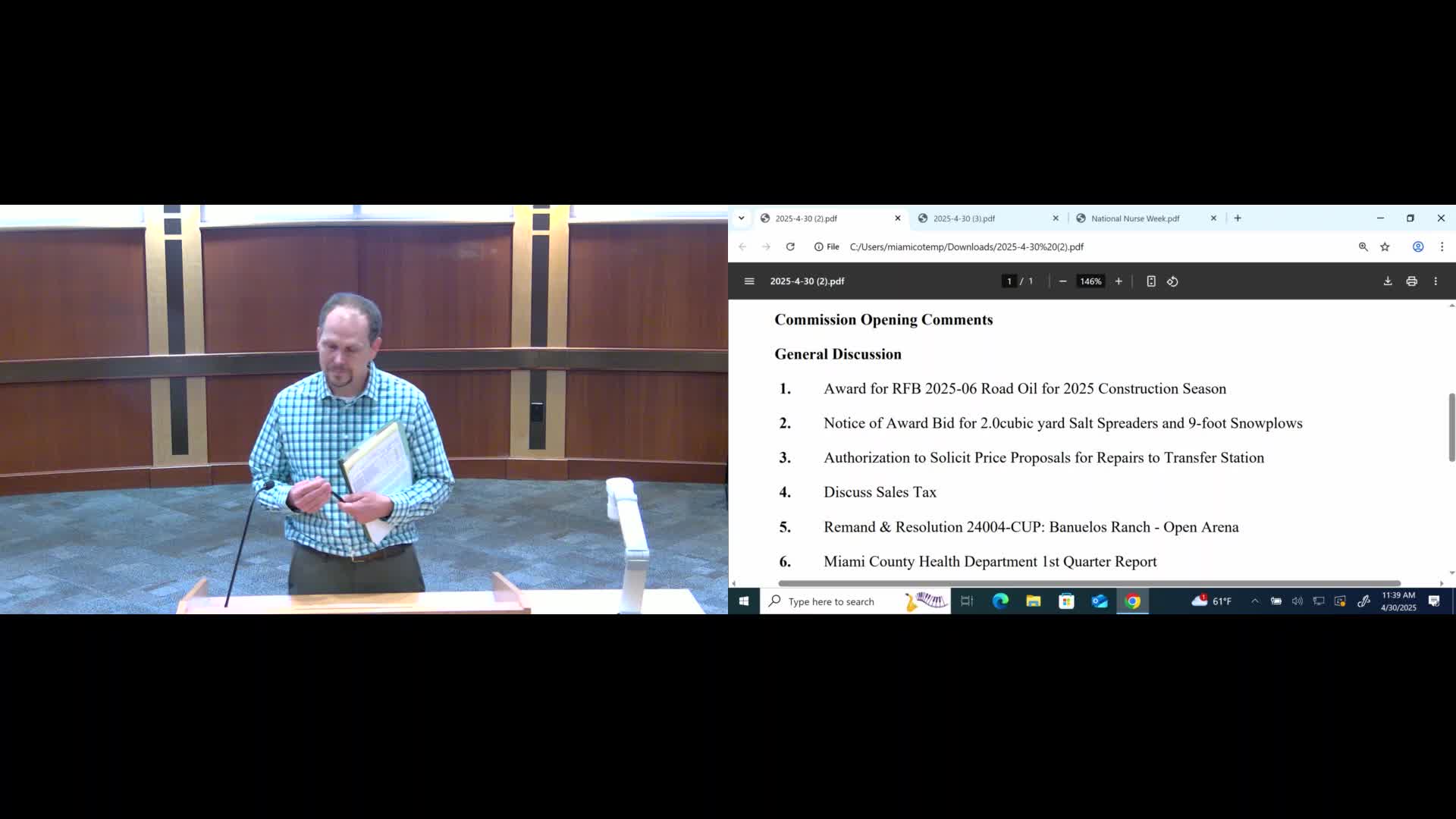
Mackenzie Kelly, public-health director, presented the Miami County Health Department's first-quarter report, outlining client counts, program highlights and recent grant disruptions.
Kelly said highlights included hosting a mobile mammography unit, distributing more than 4,000 diapers through a partner program, hosting KU nursing students and conducting 72 lead screenings from a $5,180 mini-grant (45 of those screens showed high risk and two were abnormal on confirmatory tests). She reported 400 vaccines administered in the first quarter (projected vaccine revenue roughly $8,000 pending insurance reimbursements), 331 WIC families served (43 new clients), about 232 public-health lab clients and 34 care resource coordination clients.
Kelly told commissioners that a noncompetitive subaward called the "reaching rural" grant (a $100,000 subaward described in the packet) was recently stopped and would not be received this year, and she said a portion of other coalition-building funding had been curtailed; the department had spent roughly half of one coalition grant at the time the funding was ended and had ceased further work on that project. She said the reaching-rural grant had been intended to fund some wraparound services and limited salary support for sheriff's office partners; without the funding, the county may need to subsidize some activities from the general fund until other sources are found.
Kelly discussed other small awards the department received or expects: a $3,000 mini-grant for overdose data-to-action, a $5,180 lead-testing mini-grant, and additional funding opportunities for maternal-child health home visiting. She said roughly 45'50% of the department's grants in total support salaries; core KDHE grants typically cover about half of program salaries and other grants vary in the share of salary support.
Commissioners asked for clarification on investigatory work (disease investigations and animal-bite follow-up) and whether the department would need general-fund coverage if federal/state grant streams were reduced. Kelly and commissioners agreed staff would identify priority services and report budget impacts as part of budget planning.
Ending: The department will return with budget-cycle details and any requested contingency plans if grants are not restored; commissioners thanked Kelly for the report and said they expect more budget detail during upcoming budget hearings.