Get Full Government Meeting Transcripts, Videos, & Alerts Forever!
Get email alerts on the District Finance topic
No spam. Unsubscribe anytime.
Treasurer outlines years of deficit spending, spending freeze remains in effect; board reviews levy and funding options
Summary
District treasurer presented a multi‑year financial review showing deficit spending in several years, a FY24 surplus largely tied to property valuations, and the continuation of a spending freeze. The board discussed levy timing, fair school funding impacts and possible cost‑saving measures.
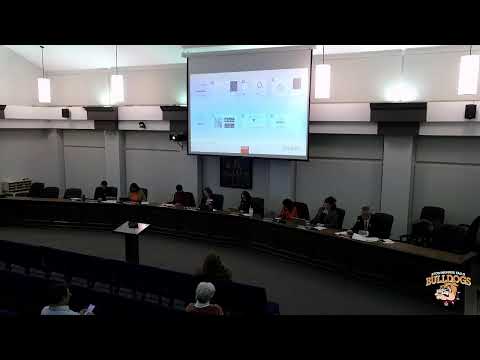
The Stow‑Munroe Falls City School District treasurer presented a financial overview on March 3 that traced multi‑year deficit spending, explained the district’s current spending freeze and outlined local levy and permanent improvement (PI) funding sources.
Treasurer Patrick Gallano said the district experienced recurring deficit spending from fiscal year 2014 through fiscal year 2023, with deficits ranging “from roughly $2 million to $4 million” in several years. Fiscal year 2024 showed a surplus of about $3.5 million, a result Gallano attributed largely to increased property valuations rather than structural budgetary changes. Gallano cautioned that long‑term financial health requires earlier interventions to avoid compounding deficits.
Local revenue overview: Gallano presented district levy data the county auditor compiles. Key figures cited in the presentation included: • General fund local levies (examples presented): a 4.74‑mill levy yielding about $6,889,000; a continuous 21.54‑mill levy yielding roughly $17,500,000; and another continuous levy yielding about $4,800,000. Total local funding across general fund, emergency levies and PI levies presented on the slide summed to roughly $59,000,000. • Emergency levies: the district has multiple emergency levies (examples cited: 3.32 mills for five years; 5.7 mills for ten years) that require renewal at upcoming ballot cycles; total emergency levy revenue shown was approximately $27,000,000 (aggregate of listed emergency levies). • Permanent improvement funds: two continuous PI levies shown totaling roughly $2.8 million.
Spending freeze and actions: Gallano confirmed the district’s spending freeze remains in effect. He said additional restraints will be implemented as year‑end purchase orders are closed and that the administration will notify the board before additional measures are sent to staff. Gallano apologized for short notice when the freeze was first implemented and said future communications to the board will be earlier.
Measures already taken and options under review: The district has taken steps to reduce costs, including using purchase‑of‑service contracts to replace some staff positions after departures (examples presented: replacing an in‑house gifted coordinator position with a purchase‑of‑service agreement estimated to save approximately $77,000; replacing a public‑relations position with an outside contract estimated to save about $128,000 total when benefits are included). Other potential measures Gallano listed for evaluation included new levies, targeted fees (small class fees at intermediate schools, pay‑to‑participate athletics), further use of federal grant funds where permissible, right‑sizing staffing and evaluating transportation routes and radius rules.
Fair School Funding Plan and state budget impact: Gallano summarized the 2021 Fair School Funding Plan and warned of potential state budget changes that could reduce district foundation funding by roughly 6.5 percent across the upcoming biennium (a projected decrease of about $976,000 total in the state budget scenario discussed), shifting more of the funding burden to local revenue sources if enacted.
Public comment and oversight concerns: Resident Jason Whitaker used the public comment period to ask why the board had approved multiple check registers showing the wrong year and questioned whether the board had adequate oversight and timely discussion ahead of the spending freeze. The treasurer and board members acknowledged the history of multi‑year deficits and said the current administration is taking steps to restore long‑term stability.
Votes at a glance: Separate items on the agenda were approved later in the meeting: the Neola policy packet C (see separate story) and approval of student field trips. Field trips motion was approved by roll call (Antoinette East Jenkins — aye; Marlietti — aye; Sheehan — aye; Sue Donnick — aye; Wind — aye).
Why it matters: Staffing and transportation are the largest ongoing cost drivers (the treasurer noted payroll and benefits comprise roughly the majority of the budget and that payroll/monthly obligations can be in the low‑millions). The district must balance near‑term cash timing with longer‑term structural solutions such as levy renewal and state funding advocacy.
What comes next: Administration will continue to refine five‑year forecasts, pursue legal and financial guidance on levy timing with bond counsel and municipal advisors, centralize spending decisions under the spending freeze and keep the board apprised of recommended ballot timing and budget actions.