Get Full Government Meeting Transcripts, Videos, & Alerts Forever!
Get email alerts on the Utility Rates topic
No spam. Unsubscribe anytime.
Ohio Consumers’ Council warns Washington Court House residents of potential double utility rate increases; offers ways to respond
Summary
State agency representatives told the Washington Court House City Council that proposed distribution and supply filings by CenterPoint and AES Ohio could raise household utility costs and urged residents and the council to file comments, attend PUCO hearings and consider a council resolution opposing the increases.
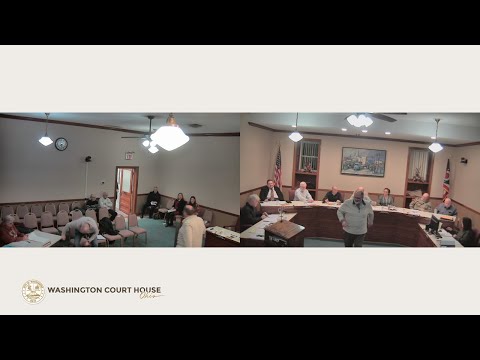
Maureen Willis, a representative of the Ohio Consumers— Council, told the Washington Court House City Council on Jan. 22 that two pending utility cases could raise monthly household energy costs and encouraged local advocacy at the Public Utilities Commission of Ohio.
Willis said CenterPoint has filed for a roughly 25% increase in distribution rates and AES Ohio has filed for about a 14% total-bill increase. "You will potentially residents will potentially see their utility bills rise," Willis said, adding that those increases affect only the distribution portion of a bill — the lines that deliver gas and electricity to homes — not supply or transmission.
The council was urged to consider formal local action. "What you can do... is draft a resolution," Willis told Council member Caleb Johnson. "A resolution that says, we oppose this rate increase. It's gonna harm our community." She said such resolutions and local testimony become part of the PUCO record and can influence the commission's decision.
Catherine Metz, senior outreach and education specialist for the Ohio Consumers— Council, described consumer assistance programs and how residents can apply. Metz said the federally funded Home Energy Assistance Program (HEAP) is open through May and provides one-time credits for households at or below 75% of the federal poverty guideline, with benefits that "can go up to $1,200." Metz also described a Winter Crisis portion of HEAP for households facing imminent disconnection and noted local points of contact, including Fayette County Community Action Agency and the Salvation Army.
Willis summarized the PUCO process and timeline: utilities file applications, PUCO staff review, local public hearings are scheduled and the commission examines the record before issuing a decision. She said AES Ohio—s application was filed in November 2024 and CenterPoint—s in October 2024, and that decisions typically take nine to ten months; she expected local hearings in February and March 2025.
Council members asked what the city could do beyond encouraging residents to testify. Willis reiterated drafting a resolution and encouraged council attendance at local hearings. City Manager Joseph J. Dennon said the administration can help publicize hearing dates and host information. Council member Ted Hawk and other members discussed local steps to guard consumers, including existing city rules aimed at marketing activity.
Council discussion also touched on marketing and door-to-door solicitation. A council member identified in the record as Mr. Pitstick noted that the city already regulates door-to-door sales and suggested increasing the permit fee as a deterrent; the transcript records the permit fee as "a hundred dollars." Willis said her office is pressing for legislative limits on door-to-door marketing and pointed to the PUCO—s Apples-to-Apples comparison tool for consumers shopping for supply contracts.
Why it matters: proposed rate increases would affect residential budgets and municipal constituents directly. The Ohio Consumers— Council advised both individual consumers and local elected officials that public comments, resolutions and testimony at PUCO hearings become part of the legal record the commission must consider.
The council did not take formal action on the utility filings during the meeting but members discussed drafting a resolution and publicizing assistance and PUCO hearing dates once scheduled. Metz and Willis left printed consumer alerts and guidance for the public and the city to distribute.
Metz and Willis—s presentation and the council—s discussion provided residents: details of the filings, a path to apply for energy assistance, and concrete steps local government can take to join or amplify consumer objections at the PUCO.