Get Full Government Meeting Transcripts, Videos, & Alerts Forever!
Get email alerts on the Outdoor Recreation Economy topic
No spam. Unsubscribe anytime.
Outdoor Recreation Council reports progress on Bailey's Veil trail system; council members weigh funding options
Summary
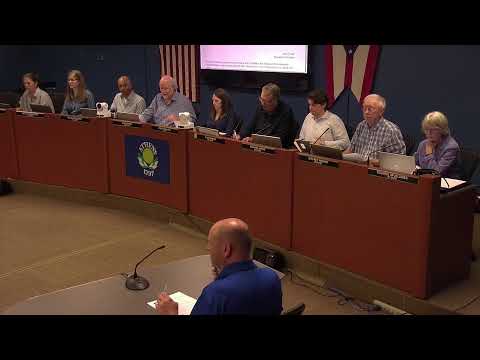
Outdoor Recreation Council of Appalachia Executive Director Jesse Powers presented an annual report to the Athens City Council’s Committee of the Whole on May 12, saying 58 of a planned 88 miles of the Bailey’s Veil trail system are complete and that ORCA has leveraged volunteer hours and roughly $10.6 million in public investment to date.
Outdoor Recreation Council of Appalachia Executive Director Jesse Powers presented an annual report to the Athens City Council’s Committee of the Whole on May 12, outlining progress on the Bailey’s Veil trail system and regional outdoor-economy work.
Powers said the Bailey’s Veil system is a multi‑county effort “rooted in how do we solve these persistent challenges in our region,” and reported that “currently, in 2025, ’58 of the a planned 88 miles are complete.” He told council the organization logged nearly 3,200 volunteer hours in 2024 and that ORCA’s staff includes four employees, an AmeriCorps member and an economic recovery core fellow.
The presentation emphasized economic-development goals and financing history. Powers summarized the project’s inclusion in a federal conservation finance pilot and described earlier “Pay for Success” modeling that, he said, envisioned up‑front city and county contributions of about $90,000 per year to attract $3–5 million of outside investment. Powers and the mayor later said the city’s current direct contribution is about $300,000 to date toward roughly $10.6 million in public infrastructure investment.
Why it matters: council members framed the project as an asset-based approach to spur visitors, local businesses and infrastructure improvements in a region they called historically underinvested. Powers said the project also mounts a regional effort that includes an upcoming Ohio Outdoor Recreation Economy Conference at Ohio University’s Baker Center in July and a new mobile bike rental at the Village of Chancey trailhead.
Council discussion centered on funding and measurement. Member Spineke raised the idea of tying future city payments to transient guest tax (TGT) performance, asking whether ORCA would consider “pay for performance” tied to hotel‑lodging receipts. Powers said ORCA’s board would consider funding approaches but noted “we don’t wanna have a rob Peter to pay Paul type of scenario.” The mayor clarified that earlier financing had been structured as performance‑based, with the TGT used as a primary metric under the Quantified Ventures Pay for Success model but that the pandemic depressed hotel stays and TGT revenue.
Other council members asked about events and local benefits. Powers described annual and recurring events, including the Bailey’s Dirt Fondo fundraiser on Sept. 27, and said ORCA supports other events such as the Ohio Mountain Bike Championship and rides connected to Pelotonia. He said ORCA operates social enterprises that use local artists and that the group aims to build local wealth.
No ordinance or city appropriation was proposed or approved during the presentation. Powers closed by inviting questions and by noting a forthcoming economic analysis.
What’s next: council members suggested staff follow up on funding options and coordination with the Convention and Visitors Bureau if the city pursues performance‑tied support. Powers said ORCA’s board would consider funding arrangements the partners require and welcomed continued city participation.