Get Full Government Meeting Transcripts, Videos, & Alerts Forever!
Get email alerts on the County Finance Investments topic
No spam. Unsubscribe anytime.
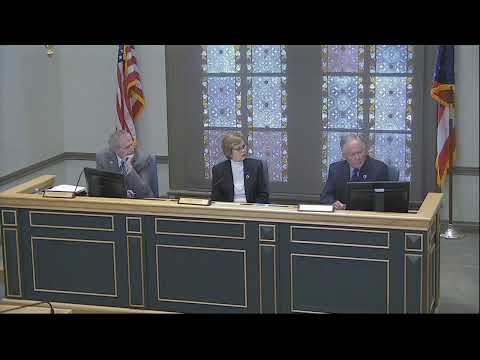
Delaware County commissioners weigh removing treasurer’s investing authority amid litigation
Summary
Delaware County commissioners discussed whether to remove the county treasurer’s investing authority following litigation over the Investment Advisory Committee policy; no formal removal vote was taken and counsel was asked to draft a document for the board’s later consideration.
The Delaware County Board of Commissioners reviewed ongoing litigation with the county treasurer over the Investment Advisory Committee’s policy and discussed, but did not vote on, whether to remove the treasurer’s investing authority.
Why it matters: The dispute centers on private placement investments the treasurer pursued and whether the county’s investment policy — and the treasurer’s compliance with it — should justify transferring investing authority from the treasurer to the board or another official. Any change would immediately shift who controls how taxpayer funds are invested.
The board reconvened in regular session after an executive session and heard a summary from the county’s General Counsel that litigation is pending between the commissioners and the treasurer over the Investment Advisory Committee policy and the treasurer’s adherence to that policy. The General Counsel said staff’s prior recommendation, following the semiannual review on March 6, was that the board not remove the treasurer’s investing authority because removing that authority would require county staff to assume all investing operations and could not be limited solely to the private placements at issue: “our staff recommendation was that this board not remove the treasurer’s investing authority,” the General Counsel said.
The General Counsel also described the board’s current legal posture in the litigation: rather than exercising removal authority, the board has asked a court to decide whether the Investment Advisory Committee’s policy is valid and whether the committee properly exercised authority to set county investment policy. The General Counsel noted that some commissioners view the policy as valid and enforceable while the treasurer has argued in good faith that the policy is invalid.
One commissioner (unidentified on the record) told colleagues the law clearly permits the commissioners to remove the treasurer as the county’s investing authority and framed that step as a means of protecting taxpayer dollars: “the law is very clear that the commissioners do have the authority, to remove the treasurer as the investing authority,” the commissioner said. The speaker indicated they favored removal because of ongoing concerns about the private placement program but acknowledged removal would be broad: the board could not surgically strip authority only for particular investments.
County General Counsel explained the statutory process the board could follow if it elected to change the investing authority. The statute, as described to the board, makes the authority discretionary after the semiannual review and permits the board to designate either the board itself, an individual board member, or an employee of the board as the county’s investing authority. Counsel said the board could amend its March 6 resolution (which had recorded an election not to exercise that authority) to instead exercise that permissive authority. Counsel recommended that, if the board takes that step, it make the change effective upon written notice to the treasurer and deliver that notice promptly to avoid ambiguity.
Justin Hobby, Director of Finance, addressed the board and said he had no concerns about performing the investing function for the county: “Don’t have any concerns, providing this function for the county. It’s similar to the work I’ve done previously at [the] city of Delaware and city of Marysville,” Hobby said.
No formal decision to remove the treasurer’s investing authority was reached. Instead, commissioners instructed counsel to draft a document the board could evaluate; counsel said he would prepare a draft and the board recessed to allow counsel time to prepare a proposed document. The board also recorded a separate procedural vote to adjourn out of executive session (Resolution No. 25-243). The clerk polled commissioners by name during that vote; Commissioners Benton, Lewis and Merrill each responded “Aye,” and the motion carried.
Next steps: Counsel will draft a proposed resolution or notice for the board to consider. The board recessed to allow counsel time to prepare a draft for later discussion and set a brief recess to reconvene at noon.