Get Full Government Meeting Transcripts, Videos, & Alerts Forever!
Get email alerts on the Opioid Settlement Funding topic
No spam. Unsubscribe anytime.
Recovery board and jail officials present $1M‑plus plan for opioid settlement funds; commissioners warn of restrictions
Summary
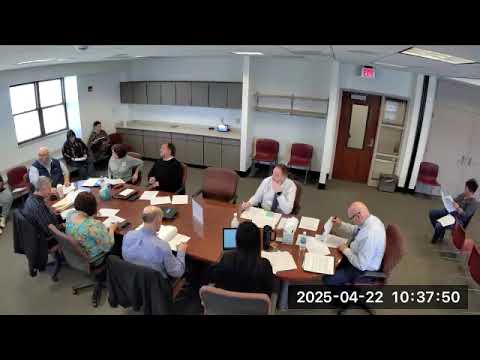
April Carraway, director of the Trumbull County Mental Health & Recovery Board, presented a multi-part plan at the April 15 workshop to use opioid‑settlement funds to expand jail-based treatment, transportation for people leaving custody, workforce development and related services.
April Carraway, director of the Trumbull County Mental Health & Recovery Board, presented a multi-part plan at the April 15 workshop that would put opioid-settlement dollars toward jail-based treatment, transportation for people released from custody, workforce development and other programs to support people with substance-use disorders.
Carraway and jail administrator David Bobby told commissioners the board can propose a package that would use roughly $1,000,000 per year to sustain expanded services, including: jail-based behavioral-health services to increase onsite treatment capacity; transportation funds to take people released from custody to treatment providers; funding to repair a body scanner used to keep contraband out of the jail (Carraway cited an estimated repair cost of $92,000); and workforce-development contracts to help residents in recovery get job training and placement. The board said it already contributes direct service dollars to the jail and sees settlement funds as a way to expand that reach.
Why it matters: Trumbull County holds settlement funds from national opioid litigation in multiple accounts. Workshop discussion indicated roughly $3,000,000 is currently in local commissioners’ accounts; board and staff stressed that settlement funds are finite and often restricted in use. Officials urged a strategic plan to use those dollars for interventions that meet federal and state settlement criteria and to stretch limited funds over multiple years.
Legal and procurement caveats: Commissioner and prosecutor’s-office counsel warned the board that certain settlements and grants carry explicit rules. Bill Dansett of the prosecutor’s office said he was told in prior legal advice that law-enforcement purchases (e.g., vehicles) are often not permissible uses of the settlement dollars unless explicitly allowed; April Carraway and other staff said allowable uses must tie to prevention, treatment, recovery support and stigma reduction and argued that many of the board’s proposed items (transportation, jail-based treatment, case management, workforce development, prevention and recovery housing) fall within those categories.
Program details offered: Carraway and partners outlined requested items with estimated annual costs: jail-based treatment expansion ($150,000/year), transportation coordination ($75,000/year), a corrections-case manager and a behavioral-health navigator/case-manager salary lines (salaries included in board packet), restoration/repair of equipment for contraband detection (body scanner repair cited at $92,000 as a one-time cost), and support for community-service projects tied to employability for justice-involved people. The board also proposed a position to coordinate in-jail services and agency scheduling to reduce duplication and ensure consistent coverage.
Next steps and commissioner direction: Commissioners asked for a strategic plan showing three-year sustainability scenarios tied to projected settlement receipts. Staff and the recovery board were told to prepare contracts and scope-of-work language and to confirm how proposed activities align with the settlement’s MOU and any applicable federal restrictions. Carraway said the board is already exploring a coordinated plan and would return with a more specific, prioritized request and implementation schedules.
Ending: Commissioners emphasized that the funds are limited and should be used carefully; they asked staff to confirm legal permissibility for each proposed line item before authorizing expenditures. The board and county staff committed to return with a prioritized plan and contract language for formal action.