Get Full Government Meeting Transcripts, Videos, & Alerts Forever!
Get email alerts on the Public Safety Vehicles topic
No spam. Unsubscribe anytime.
Commissioners agree to reduce sheriff vehicle order to four after debate over cost and funding
Summary
After lengthy discussion about state purchasing contracts, budget overruns and possible alternative funding, Trumbull County commissioners agreed at a workshop to reduce a planned purchase of five marked interceptor vehicles to four and to pursue the purchase through a state contract vendor.
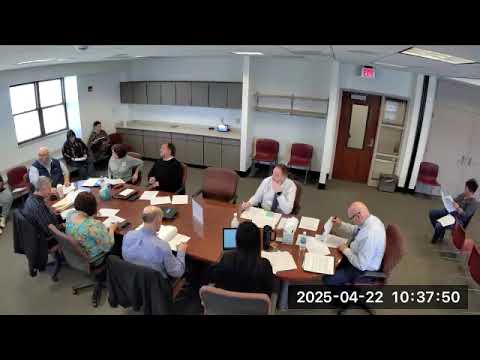
Commissioners at a Trumbull County workshop on April 15 agreed to reduce a planned sheriff’s fleet purchase from five vehicles to four after officials raised concerns about cost and funding sources.
The decision followed a detailed briefing that identified Montrose Auto Group as the vendor under an Ohio Buys state purchasing contract and cited a per-unit price on the agenda of $65,828.55. Prosecutor’s office counsel and sheriff’s representatives advised commissioners that Montrose appears to hold an active state contract for the 2025 interceptor package and that the county may purchase under that contract rather than run a separate competitive bid.
Why it matters: Commissioners had appropriated about $250,000 for the purchase; the five-vehicle package on the agenda would total roughly $329,142.75 before mobile data terminals and equipment, leaving a shortfall the board needs to cover. The decision to reduce to four vehicles reduces that gap and gives the board time to identify where additional funds will come from.
What officials said and asked: Bill Dansett of the prosecutor’s office said the draft agenda language originally implied a competitive bid but that Montrose holds an active Ohio Buys contract that would allow a direct purchase. He recommended updating the agenda language to reflect that the purchase is “purchased pursuant to that state contract.” He also flagged that the contract number on the agenda should be double-checked against the Ohio Buys listing.
Mark, a representative of the Trumbull County Sheriff’s Office, explained operational needs and delivery timing. He said vendors estimate roughly two months for delivery once ordered and that some equipment and mobile-data terminals (MDTs) may be salvaged from old vehicles to offset costs. Commissioners and the sheriff’s office discussed trade-in or surplus options for old vehicles and the statutory process that can apply to vehicle trade-ins.
Budget and funding options: Commissioners noted the gap between previously appropriated funds and the higher purchase total. Several participants explored options: covering part of the cost from other departmental reserves, spreading purchases over multiple years, or using non-general-fund sources such as opioid-settlement monies. Prosecutor Dansett cautioned that certain uses of settlement funds may be restricted and urged review before committing opioid dollars to law-enforcement vehicle purchases. April Carraway of the Mental Health & Recovery Board later confirmed many opioid-settlement expenditures must be tied to treatment, prevention, or recovery services.
Commissioners’ decision and next steps: After prolonged discussion about fleet rotation, long-term procurement planning and public-safety needs, the board agreed in the workshop to reduce the purchase to four interceptors (amounts per unit and final total to be updated on the formal agenda). Staff were directed to: (1) confirm the Ohio Buys contract number and vendor pricing, (2) update appropriation sources and fund numbers, (3) identify remaining required funding and options for covering it, and (4) return to a public meeting agenda with a revised purchase authorization.
Logistics and procurement points: The prosecutor’s office advised that purchases pursuant to an active state contract should be documented clearly and that the county must ensure the correct state-contract number is cited. The sheriff’s office said usable equipment will be harvested from retired vehicles where feasible.
Ending: Commissioners said they want a multi-year capital plan for vehicle rotation to avoid large one‑time purchases in the future and agreed to return a revised action for formal approval at a public meeting.