Get Full Government Meeting Transcripts, Videos, & Alerts Forever!
Get email alerts on the Cannabis Regulation topic
No spam. Unsubscribe anytime.
South El Monte Council continues review of cannabis buffer-zone change after large public turnout
Summary
After widespread public comment, City Council continued consideration of reducing the city's cannabis retailer buffer from 1,000 feet to 600 feet and moved the item to the June 3 meeting for more study and community engagement.
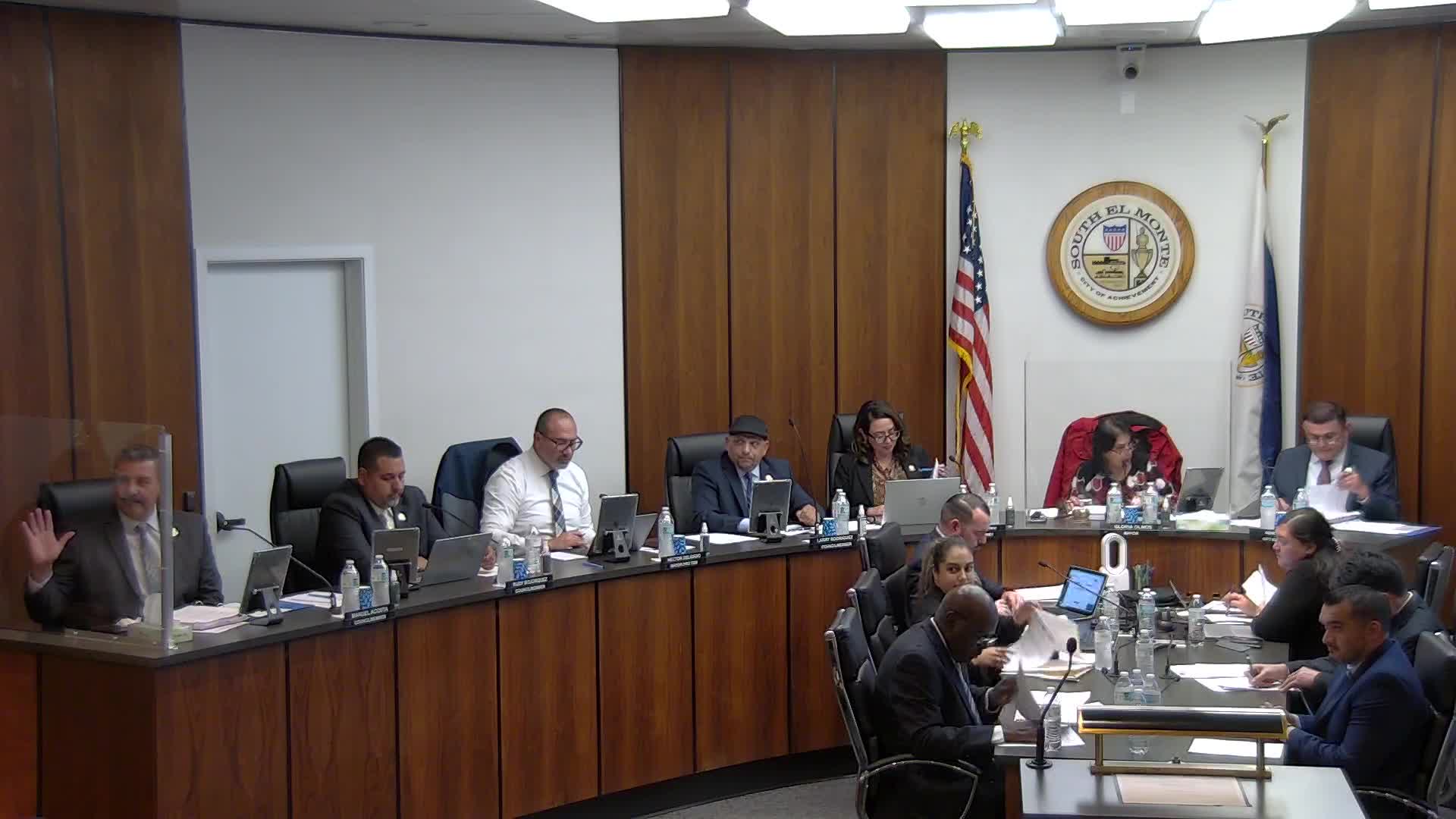
Mayor Gloria Olmos opened public comment and the City Council on May 6 continued an item to revisit the city's cannabis retail buffer zone until its June 3 meeting following extensive public comment and requests for a local town-hall process.
Speakers at the meeting urged the council either to keep the council-approved 1,000-foot buffer between cannabis retailers and sensitive uses or to hold a public forum before changing the standard. City staff had asked the council to move item 10E, the cannabis-buffer discussion, to the council's next regular meeting for further study; the council agreed to continue the item.
Why it matters: The council is weighing whether to reduce the buffer allowance to 600 feet to match state baseline guidance from the Department of Cannabis Control. A reduction would allow retail cannabis businesses to locate closer to schools, day-care centers, houses of worship and parks; speakers at the May 6 meeting said residents and parents should have a formal chance to weigh in before the council acts.
At the meeting, dozens of residents spoke during the public comment period. Patricia Salcedo said she has children in the neighborhood and pleaded with the council to keep restrictions that keep dispensaries farther away from schools and parks: “A thousand feet, we have cannabis stores now that are operating. If that is insufficient, let them place them somewhere else,” she told the council. Tony Ozeta, who identified himself as a counselor, said he sees youth overdoses and urged a public hearing. Several speakers urged a town-hall meeting and for the council to consult law enforcement, local principals and neighboring cities that have allowed dispensaries.
Other commenters urged the council to consider projected tax revenue. In public comment, Eduardo (Eddie) Salcedo argued dispensaries are a revenue source and described personal experience with cannabis as medical treatment for anxiety and cancer; he urged the council to consider both public-safety concerns and economic benefits.
Council response and next steps: Mayor Pro Tem Hector Delgado thanked residents for showing up and said the continuation was intended to give staff time to research public-safety impacts, enforcement options and community input processes. Delgado said, “rest assured the reason this item has been continued, we need to do our research here.”
The council did not vote on any ordinance or zoning change at the May 6 meeting. Staff will return at the June 3 meeting with further information; multiple speakers asked the council to schedule a separate town-hall meeting in the meantime.
Community context: Speakers repeatedly contrasted a 1,000-foot buffer the council had earlier adopted with the State Department of Cannabis Control's 600-foot baseline for schools and youth centers. Several public commenters cited the 2022 ballot measures the city previously placed before voters, and one speaker reviewed the local election returns in arguing residents had already decided some elements of cannabis policy.
What the council asked staff to do: Councilmembers asked staff to prepare additional research, to summarize local law-enforcement and code-enforcement perspectives, and to propose formats for a public town-hall meeting prior to taking any zoning or buffer adjustment vote.
The matter will return to the City Council on June 3, 2025.