Get Full Government Meeting Transcripts, Videos, & Alerts Forever!
Get email alerts on the Secondary Roads Opt Out topic
No spam. Unsubscribe anytime.
Bennett County discusses secondary-road "opt out," commissioners agree to send measure to voters
Summary
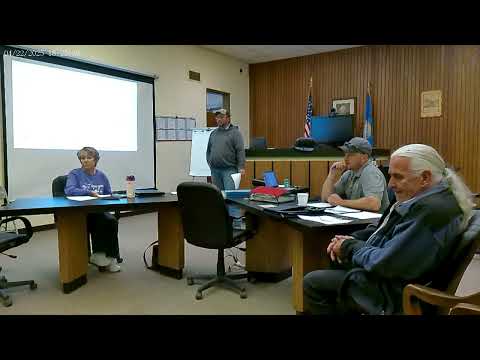
Bennett County officials and residents spent a lengthy public meeting discussing whether to place a secondary-road opt-out on the ballot and how any new revenue would be used.
Bennett County officials and residents spent a lengthy public meeting discussing whether to place a secondary-road opt-out on the ballot and how any new revenue would be used. Commissioners indicated they will send an opt-out proposition to voters; no final spending plan was adopted at the meeting.
The measure under discussion is the county’s secondary-road opt out, which commenters and county staff said would raise roughly $350,000 a year if approved by eligible voters outside incorporated city limits. County presenters showed a draft budget that projects roughly $3.3 million in revenues for the current year and about $4.3 million for the following year; opt-out revenue would begin to flow after a successful vote and would affect the county’s 2026 road season, not the current construction season.
Why it matters: Residents said many secondary roads have not seen substantial maintenance for years and urged clarity about which roads would get the new funds and precisely how the money would be spent. Commissioners and staff discussed trade-offs between a targeted secondary-road opt out — which state law requires be spent on secondary roads — and a general opt out that would add funds to the county’s general fund and could be budgeted to highways but would not legally be restricted to secondary roads.
Presenters and several residents noted two distinct choices: a) a secondary-road opt out, which by statute must be used only on secondary roads and is voted on only by registered voters living outside city limits, or b) a general opt out, which would be decided countywide and would place proceeds into the general fund unless the board specifically budgets them to highway accounts. Multiple residents asked whether a hybrid approach is possible — for example, earmarking a general opt-out line to the highway department — and staff said they would research legal constraints before finalizing any ballot language.
Residents pressed for specifics. At the meeting staff displayed a list of roads they identified as high priority, and they walked through example cost figures: a rounded cost-per-mile figure shown by staff was $32,006.90 per mile (shaping plus rock), a flyash stabilization option was cited at about $8,000 per mile, and a heavier asphalt solution was discussed in the six-figure range per mile. The presentation also showed a draft highway budget and a projected shortfall if additional projects proceed without added revenue.
Questions focused on who would vote, how much each landowner would pay, and what the $350,000 would buy. Staff reported the opt-out levy breaks down to roughly $0.56 per acre on average (noncropland roughly $0.22 per acre; a sample residential/improved parcel figure was shown at about $1.35 per acre), though staff said they had not brought full supporting worksheets into the meeting. Commissioners and residents repeatedly requested a clearer, road-by-road accounting showing which secondary roads would be improved under the $350,000 annual scenario.
Operational and contracting issues were also discussed. Residents and commissioners debated whether the county should hire a highway superintendent to oversee crews and quality control, lease or loan gravel trailers to private landowners under permit for local hauling, bid out larger projects to contractors, or retain in-house crews. One commenter noted previous multi‑month contracts that included maintaining finished segments and said past contracting sometimes produced better, faster results than relying solely on county crews. Staff said major projects would be bid out through the state process.
Legal and voting mechanics came up. Presenters explained that a secondary-road opt out is voted on only by registered voters outside city limits; a general opt out would be a countywide vote. Several residents asked whether city residents would be excluded from decisions that affect countywide budgets; staff clarified that the statutory secondary-road opt out has that voter limitation and that any change to that arrangement would require state-law changes.
Board action at the meeting was limited. Early in the session the commission approved an agenda-flexibility motion (voice vote), and later commissioners told the room they intend to send an opt-out proposition to the county’s voters (no final ballot language or appropriation was adopted at the meeting). County staff repeatedly emphasized that any opt-out revenue would not affect work this calendar year and instead would change funding for the next construction season.
Residents asked for further detail and time to review numbers. Several requested a list limited to secondary roads and a clear estimate of per-road costs, while others urged the board to consider directing general-fund dollars into highways for a limited number of years as an alternative. Commissioners asked staff to prepare clearer, print-ready materials showing precise road lists, per-mile cost estimates, and the legal differences between secondary-road and general opt outs so voters have actionable information before a ballot decision.
The discussion closed with commissioners and staff saying the matter will proceed to a public vote; board members and residents will continue to refine priorities, funding scenarios and ballot language before the county places any question before voters.