Get Full Government Meeting Transcripts, Videos, & Alerts Forever!
Get email alerts on the Water Quality topic
No spam. Unsubscribe anytime.
Council adopts ordinance allowing city to replace private lead service lines with water enterprise funds
Summary
Grand Junction adopted an ordinance that allows the utilities department to replace private lead or galvanized service lines from the meter to buildings using Water Enterprise Fund resources. Staff said the city inventory found 365 affected lines and estimated total replacement costs ranging from $256,000 to $514,000.
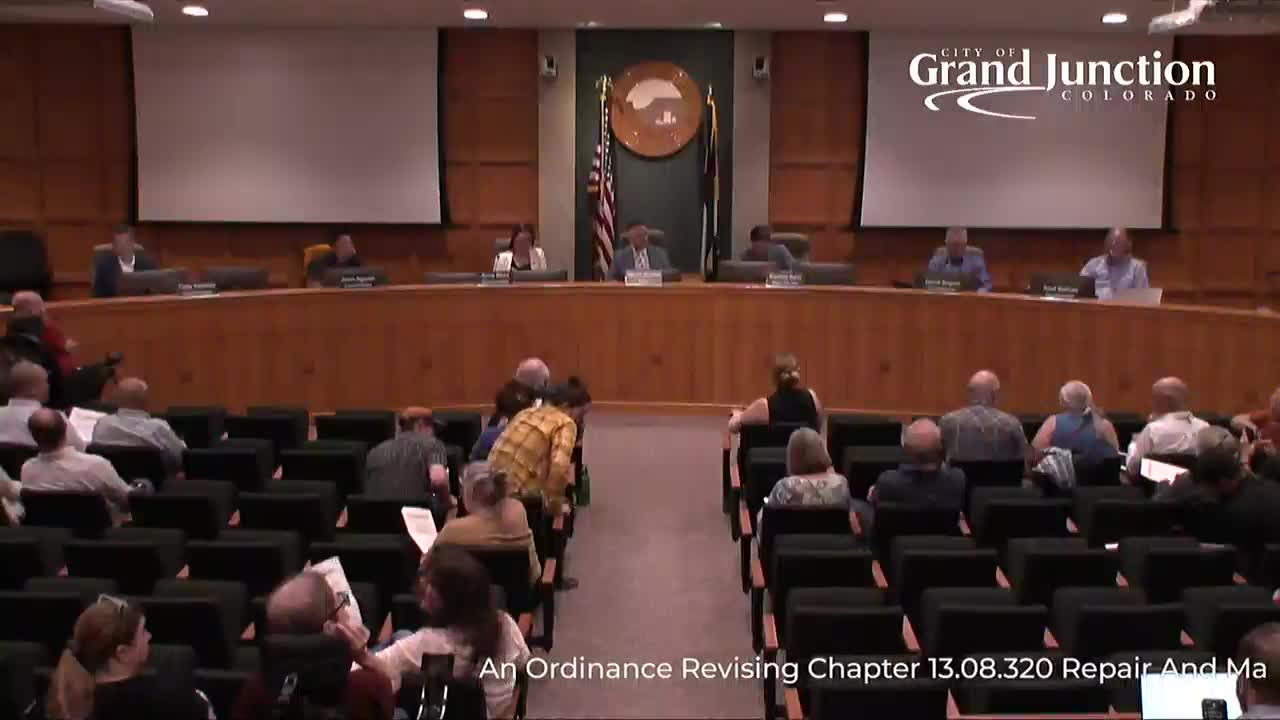
The Grand Junction City Council on April 16 adopted on final passage an amendment to Chapter 13.08.320 governing repair and maintenance of service pipes. The ordinance allows the city’s utilities department to replace, at city expense, all or part of a customer’s lead or galvanized service line from the meter to the building when necessary to manage, operate or maintain the water system and to meet state or federal regulations.
Utilities Director Randy Kim told the council the change responds to revised U.S. Environmental Protection Agency regulations for lead and copper that require replacement of lead service lines the city controls beginning in 2027 and lower the action level from 15 parts per billion to 10 parts per billion. “Our city staff conducted an inventory as required by the regulations of all of our service lines. And we determined 365 lines, are either lead or what's called galvanized, requiring replacement,” Kim said.
Kim said 219 of the 365 affected lines are on the private side (from meter to building). He presented an estimated total replacement cost range between $256,000 and $514,000, with municipal-side costs estimated at $92,000 to $185,000 and customer‑owned side costs at $164,000 to $329,000. The ordinance would allow the city to use Water Enterprise Fund resources and current budgeted amounts to replace both municipal and private portions, which staff argued would avoid higher long‑term costs such as corrosion‑control treatments and extra monitoring if action levels were exceeded.
Council held a public hearing; no public comments were made. After discussion referencing prior workshops and staff analyses, council adopted the ordinance on final passage by roll call, 7–0.
Under the ordinance the replaced service connection becomes the property of the private property owner for ongoing maintenance after replacement. Staff said the city’s adopted 2025 budget already included $100,000 for lead‑service replacement and the 10‑year capital plan provides additional funding in out years; staff said the program as proposed would not require a water rate increase.