Get Full Government Meeting Transcripts, Videos, & Alerts Forever!
Get email alerts on the Climate Policy topic
No spam. Unsubscribe anytime.
City presents climate progress and electrification priorities; staff say 2050 carbon neutrality still the long‑term target
Summary
Sustainability staff told the council that Fort Collins has cut community greenhouse gases since 2005 but that transportation and natural‑gas emissions remain the primary local contributors; staff outlined building codes, fleet electrification and small‑engine electrification as priority levers.
Chief Sustainability Officer Jacob Castillo and Sustainability staff briefed the council on progress under the Our Climate Future framework, providing emissions updates, recent investments and near‑term electrification priorities.
Honore Depew and Brian Tholl presented data showing the community greenhouse‑gas inventory through 2023 and an electricity‑mix projection to 2030. Staff reported Fort Collins’ community emissions declined about 27 percent below the 2005 baseline as of 2023 and that per‑capita emissions declined about 44 percent over the same period. Staff credited reductions in industrial emissions and a cleaner regional electric grid driven by Platte River Power Authority projects. At the same time, transportation and natural‑gas (methane) emissions remain a large portion of local sources.
Staff summarized 2024 investments funded with early revenue from a voter‑approved 2050 (tax) allocation and said those projects targeted energy affordability, resilience and planning, including building‑level pilots and neighborhood resilience investments. Presenters confirmed the City has five electric buses in service and six additional electric buses on order.
Key electrification work areas staff highlighted: building energy codes and pilots for building performance standards; electric vehicle (EV) readiness actions for new development; fleet electrification; and small‑engine equipment (lawn and garden) electrification, including statewide Regulation 29 compliance windows that limit use of certain gas‑powered equipment during summer ozone episodes.
Council members asked about regional sources of air pollution (including oil and gas production outside the city), why some interim climate targets are likely to be missed, and how the City’s roadmap ties to near‑term budget and program choices. Staff said it is unlikely the City will fully achieve the 2026 and 2030 interim targets without additional measures beyond those already planned but emphasized that the 2050 carbon neutrality goal remains the strategic long‑term target and that staff will deliver a refreshed framework and strategic funding plan for council review later in the year.
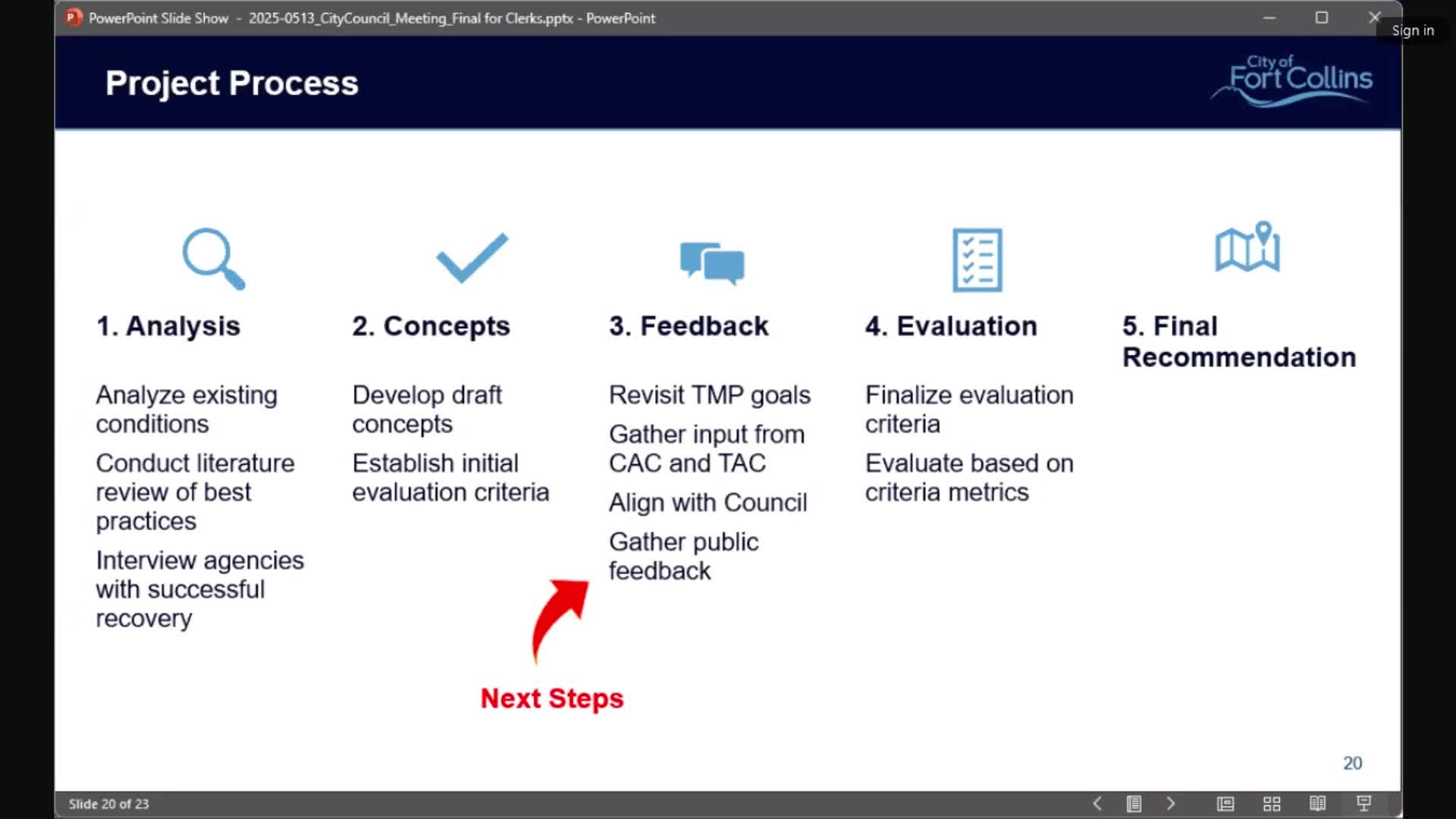
Staff said next steps include internal and board engagement, refining the Our Climate Future framework, producing a strategic funding plan, and returning with recommendations in late 2025. Council asked for follow‑up material on the City’s building‑code timeline, the PRPA electricity mix assumptions, fleet electrification statistics and funding alternatives.