Get Full Government Meeting Transcripts, Videos, & Alerts Forever!
Get email alerts on the Wastewater Permit topic
No spam. Unsubscribe anytime.
Draft wastewater discharge permit would add dozens of tests and raise lab costs, Pueblo West staff warn
Summary
District wastewater staff told the board the state’s draft renewal would add roughly 58 analytes to the testing schedule and could increase annual lab costs by about $27,000; PFAS monthly testing and collection‑system inflow & infiltration work were flagged as additional costs.
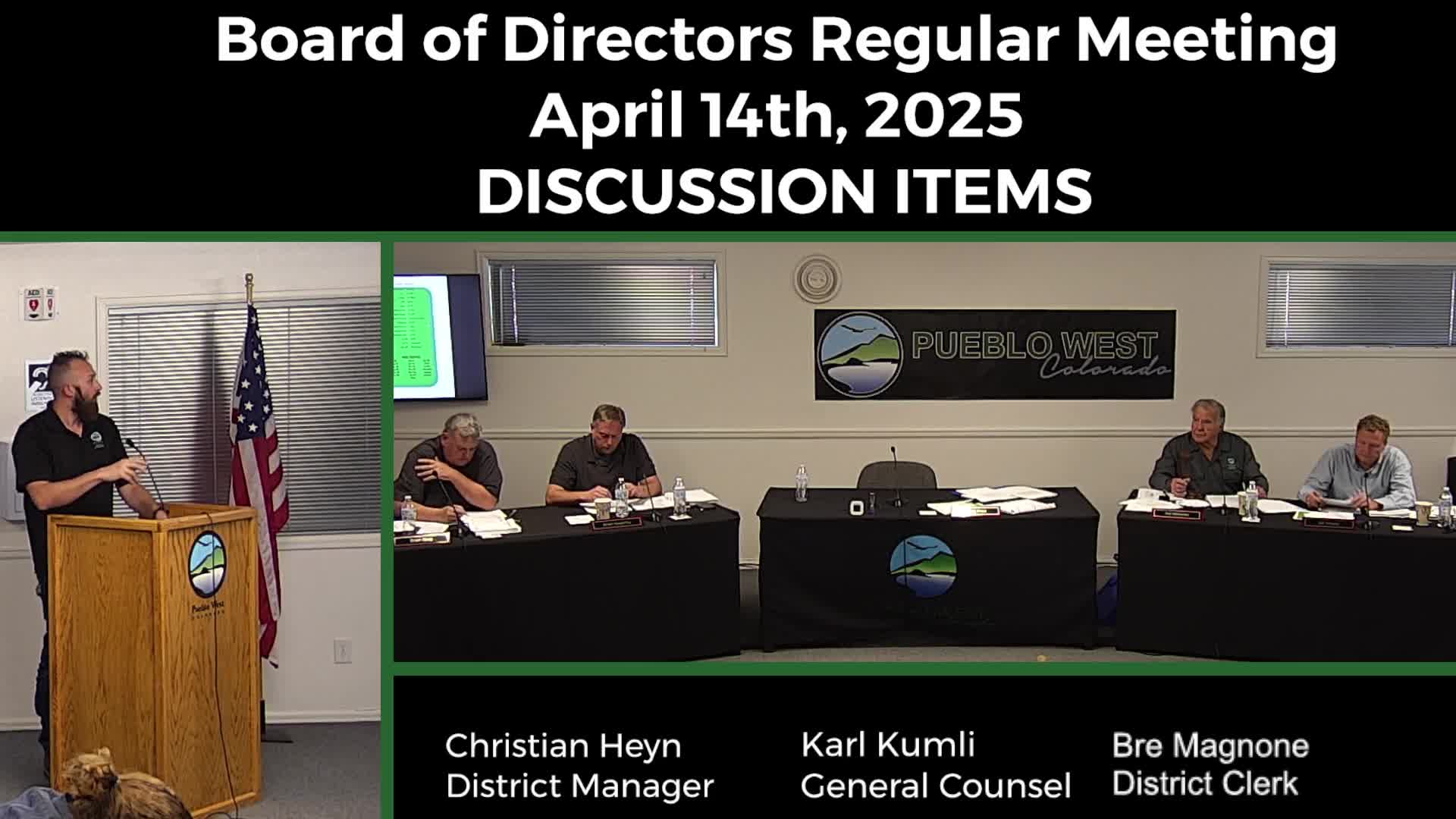
PUEBLO WEST — Utilities staff briefed the board April 14 on a draft wastewater discharge permit from state regulators that would significantly expand laboratory sampling requirements and raise the district’s operating costs.
Libby House, wastewater treatment plant manager, said the draft permit would add roughly 58 analytes to the district’s sampling schedule and increase testing frequency for some parameters. House estimated an approximate annual laboratory cost increase of $27,000 for routine testing and shipping; monthly PFAS testing was the single largest new line item and could add about $6,000 a year if required at the minimum frequency included in the draft.
Deputy Director Robert Bannum noted the draft also requires an inflow and infiltration (I&I) study; the district already budgeted for an I&I study this year but staff said the study and future collection‑system repairs (lining clay pipe, watertight manhole lids) could create additional unanticipated costs. House said some draft sampling frequencies appear disproportionate—for example, monthly tests for metals the plant has not historically detected—which is why the district and its engineers are preparing public comments to the state before the April 30 deadline.
On PFAS, House said district raw water samples have been non‑detect at current lab limits, but PFAS have been detected in groundwater near the wastewater plant; staff recommended continued monitoring. Directors asked whether the district should consider building laboratory capacity in‑house; staff cautioned that instrumentation and startup costs can exceed mid six figures and recommended a short feasibility study to outline cost/benefit scenarios.
Why it matters: The draft permit could increase the district’s recurring operating costs and spur capital work to reduce I&I. The state’s final permit could impose higher monitoring and compliance obligations that will affect ratepayer costs and capital planning.