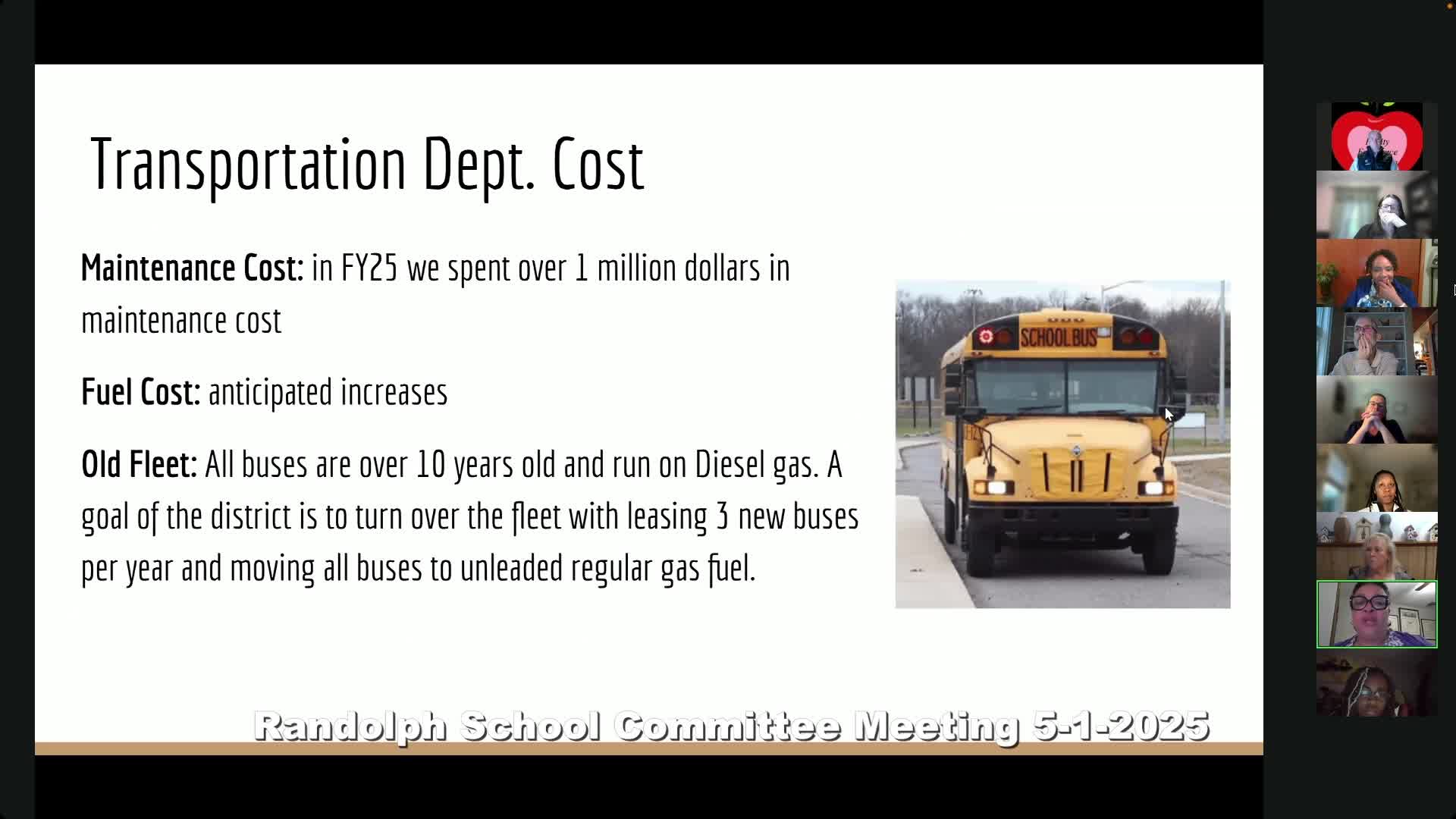
District describes $1 million-plus maintenance, aging buses and town revenue-sharing as transportation budget pressure points
Loading...
Summary
Superintendent and transportation staff told the committee that round-the-year maintenance on a fleet averaging about 10 years in age has driven a substantial maintenance bill; the district said renting buses brings revenue but most of the proceeds are not retained locally, and leasing new buses would require town approval.
Transportation was highlighted as a significant cost driver during the Randolph School Committee's May 1 budget hearing. The district reported heavy maintenance expenses for an aging fleet and raised concerns about how revenue from renting buses is handled.
Superintendent Dr. Tia Stovell and Transportation staff member Carlos (name provided in the meeting; role not explicitly titled on the record) described a nearly $1 million maintenance bill this year for buses (the superintendent said the district "spent almost a million dollars this year in maintenance cost"). Stovell said several buses are about 10 years old and one is from 2009; the age and condition are increasing routine repair costs. The district is considering leasing buses to reduce maintenance expenses but said leasing requires town approval and likely a town-council vote.
Carlos explained the district does rent buses for outside trips and other town uses, but said the proceeds do not remain entirely within the school transportation fund. "When we rent the buses out ... the town takes $300,000 of that money right off the top," he said, and the district does not retain enough revenue to offset overtime and maintenance costs generated by those runs.
Why it matters: Transportation is a large, recurring budget item. The committee and superintendent said the current arrangement—where the district pays overtime and maintenance but does not retain the full rental revenue—limits the districts ability to use generated income to replace aging vehicles or reduce operating costs.
Details and next steps: Stovell said the district has discussed lowering projected maintenance lines in exchange for a town-level decision to permit leasing. She also said the district has raised the issue with the town manager and hopes to address revenue-reconciliation with the town. The superintendent said an agreement would be necessary because the district cannot lease buses without town approval.
Ending: Committee members said transportation revenue sharing and the age of the fleet are matters they plan to raise with the town manager and town council as the budget process continues.