Superintendent: special-education and out-of-district placements are major drivers of Randolph's budget increase
Loading...
Summary
Dr. Tia Stovell told the school committee special-education costs, including out-of-district tuition and transportation, have risen sharply; the district seeks state changes to the 'circuit breaker' reimbursement threshold to ease local burden.
Special-education costs were a central focus of Superintendent Dr. Tia Stovellduring the May 1 budget hearing, with rising out-of-district placements and transportation singled out as key drivers of the FY2026 request.
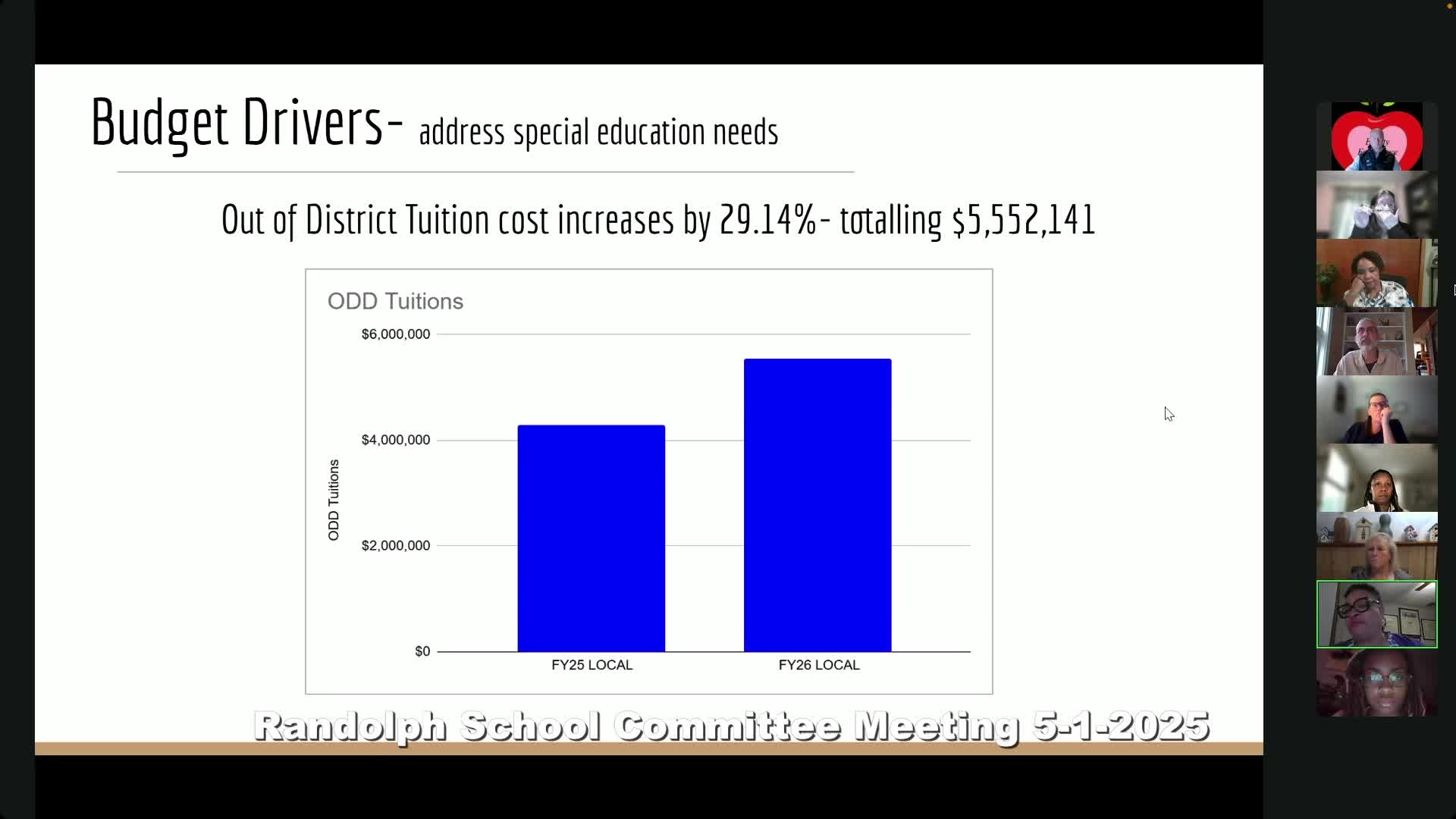
Dr. Stovell said Randolph's out-of-district tuition costs increased by 29% and cited a figure of $5.5 million for out-of-district tuition on one slide; she later referenced a separate slide showing an out-of-district cost figure of about $6.783 million and warned the number was increasing because of recent move-ins. She emphasized that the district has worked to bring some students back into town programs, and has created in-district alternatives such as the Randolph Virtual Academy and BRITE program to reduce costs.
Dr. Stovell also described state-level funding pressures: she said the district is advocating to raise the Massachusetts special-education "circuit breaker" reimbursement threshold (quoted in the meeting as currently about 70%) toward 90% so local districts are less burdened by rapidly rising special-education costs.
Why it matters: Special-education and related transportation make up a growing share of the district's budget. The superintendent said the state and national trend of rising special-education costs is partly responsible and that local adjustments alone cannot fully offset those increases.
Details: The superintendent said the district currently expects out-of-district costs in the millions for FY2026 and that federal or state allocations (including circuit-breaker reimbursement) will affect the final net cost to the town. The district also cited McKinney-Vento (homeless student transportation obligations) as an additional cost driver because of the large number of transient families and students who must be transported to the school of origin.
Ending: Dr. Stovell said the district will continue to press state legislators and DESE for funding changes and asked the town and community to consider the state-level funding context when evaluating the local FY2026 request.