Get Full Government Meeting Transcripts, Videos, & Alerts Forever!
Get email alerts on the Public Safety Budget Staffing topic
No spam. Unsubscribe anytime.
Park County sheriff urges higher pay, equipment upgrades as budget shortfall looms
Summary
At a May 5 Park County commission workshop, sheriff's office presenters told commissioners the office is understaffed, faces rising detention medical costs and equipment needs, and faces an estimated $260,000–$310,000 funding gap for fiscal 2026 unless additional PILT or other funds are allocated.
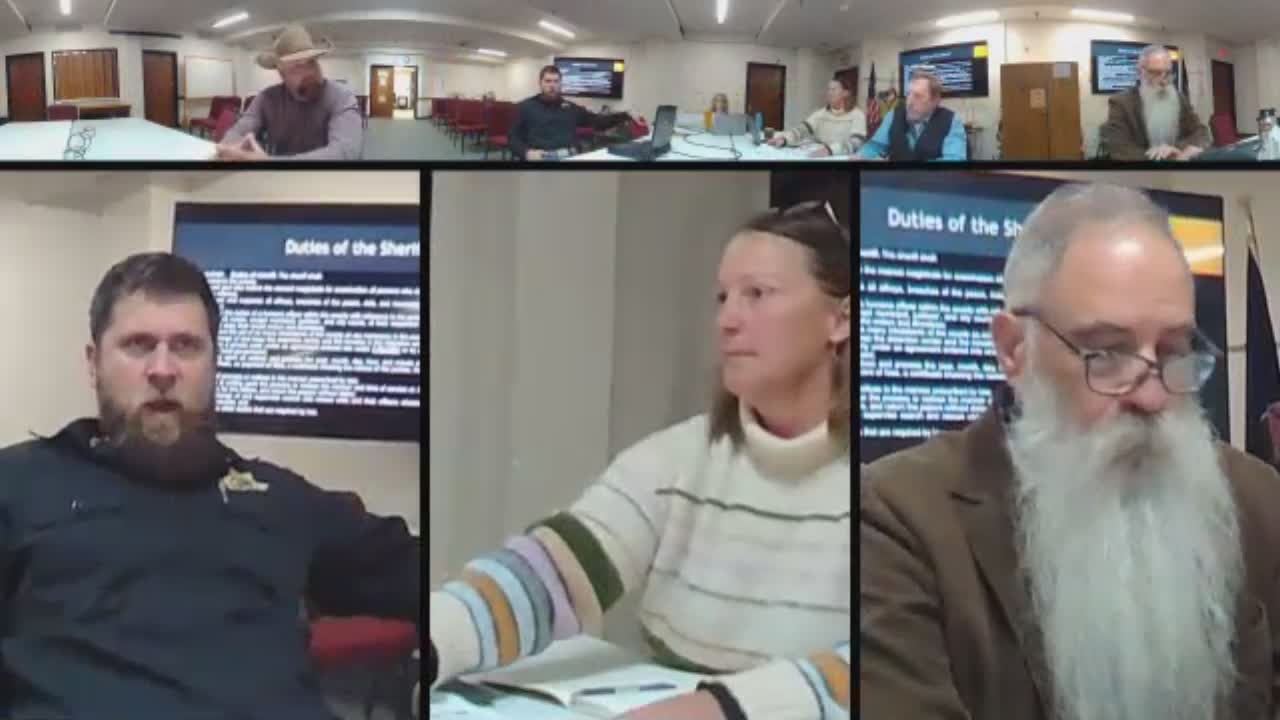
Park County commissioners heard a workshop presentation on May 5 about the sheriff’s office budget, staffing shortages and equipment needs, including upgrades to radio software, vehicle procurement options and growing detention medical and mental‑health costs.
The sheriff’s office representative said the department currently has 18 sworn officers covering about 2,800 square miles with a county population of roughly 18,000 and two recruits currently in the police academy. “So current staffing levels. Right now, our our staffing level is 18 sworn law enforcement officers cover 2,800 square miles, population of 18,000,” the sheriff’s office representative said.
Why it matters: presenters told commissioners that staffing and equipment shortfalls affect response capacity across the county, increase overtime and make it difficult to staff special events and court security. Commissioners were asked to consider possible funding sources, including transfers from PILT (Payments in Lieu of Taxes), resort tax proceeds, targeted appropriations and grant support.
Key details
- Staffing and retention: Presenters said the office has 18 sworn officers, two of whom are at the police academy and not yet field‑ready, and 9 detention staff (a captain, one sergeant and seven detention officers). The presentation cited a 2015 staffing assessment recommending five additional deputies and three detention officers; since then the office gained three sworn positions and a half detention officer position. Presenters said 27 employees have left the sheriff’s office in the past 10 years for other opportunities and estimated the average cost to hire and train a replacement at about $120,000.
- Detention costs and medical bills: The presenters described detention medical costs as a major budget pressure. “I can go ahead. I think 1 there was 1 inmate that cost us about I think it was, like, 40 close to $45,000 in medical bills,” the sheriff’s office representative said, describing unpredictable and sometimes high inpatient or specialty care costs. They said deputies and detention staff must accompany inmates to the hospital while in custody, further increasing staffing needs and overtime.
- Mental health and crisis response: Presenters described gaps in local mental‑health resources and said some state legislation may bring additional funding for crisis stabilization units, but details and governor approval remain pending. The county has worked with a local crisis responder (named in the meeting) and explored telehealth and mobile crisis response options. Presenters said stronger local crisis resources could reduce jail use by keeping people out of custody when appropriate.
- Radio upgrade request: The sheriff’s office asked to fund a software update for handheld radios to join statewide trunking and improve mutual‑aid communications with neighboring counties. The presentation said the software update would cost “somewhere to the tune of $50,000 for all of our radios,” and presenters argued that improved interoperable communications are critical for multi‑agency events such as fires, floods or large public gatherings.
- Vehicle procurement and leasing: The sheriff’s office described a leasing option for fully outfitted patrol vehicles as an alternative to buying. A presenter identified as Tad discussed a three‑year lease option priced at about $18,616 per vehicle per year and said the outfitting cost was comparable to current upfits (roughly $27,000). The office said lease lead times could be shorter than current vehicle procurement timelines and that leasing might free capital for staffing, but acknowledged mileage and commitment limitations and recommended a trial before wider adoption.
- Search and rescue and helicopter costs: The presentation noted that search and rescue operations are statutory duties of the sheriff and are often expensive when air resources are required. Presenters said most search and rescue teams are volunteers and that air resources are sometimes the only practical way to safely recover people in certain terrain; billing or insurance for those costs remains limited.
- Missouri River Drug Task Force (MRDTF) and grant funding: The presenters explained that MRDTF is grant funded in its own fund and that partner contributions are declining. The city currently contributes $12,500; presenters said the task force will need roughly an additional $40,000 this fiscal year to balance projected expenditures, and that rules for grant accounting limit direct transfers. The presenters said the figures shown in the budget slides assumed a PILT transfer that would also cover MRDTF needs.
Budget shortfall and next steps
County finance staff member Erica said the sheriff’s fund (Fund 2300) faces an estimated budget gap of about $260,000 without a cost‑of‑living adjustment and about $310,000 with a 2.9% COLA included. “We’re looking at about $260,000 short with no cola and about 310,000 short with a cola,” Erica (county staff) said. The presentation noted every 5% across‑the‑board wage increase would cost roughly $100,000 in this fund.
Presenters suggested several avenues for commissioners to consider: transfer of PILT funds to shore up the sheriff’s fund, pursuing appropriations or grants, exploring resort‑tax or special assessment options in tourist areas such as Gardiner, and piloting a vehicle‑lease program. Commissioners asked staff to circulate the PowerPoint and underlying spreadsheets and to return with more detailed lease proposals and cost scenarios.
Discussion vs. decision
The meeting was a workshop and informational; no formal motions or budget approvals were taken. Commissioners requested follow‑up information (PowerPoint, detailed Excel sheets and lease proposals) and signaled interest in exploring options including PILT transfers and targeted appropriations.
Ending
County staff said budget worksheets and the presentation slides would be posted on the agenda and emailed to commissioners. The commission adjourned after the workshop without formal action on any specific funding change.