Get Full Government Meeting Transcripts, Videos, & Alerts Forever!
Get email alerts on the Fair Logistics topic
No spam. Unsubscribe anytime.
Park County, MSU Extension and fairgrounds staff agree on immediate steps for 2025 fair logistics
Summary
At an April 23 work session, Park County commissioners, MSU Extension 4‑H staff and fairgrounds personnel discussed responsibilities and logistics for the 2025 fair, focusing on sanitation, wood-chip handling, equipment availability and insurance for third‑party activities; commissioners asked for a mid‑May follow‑up.
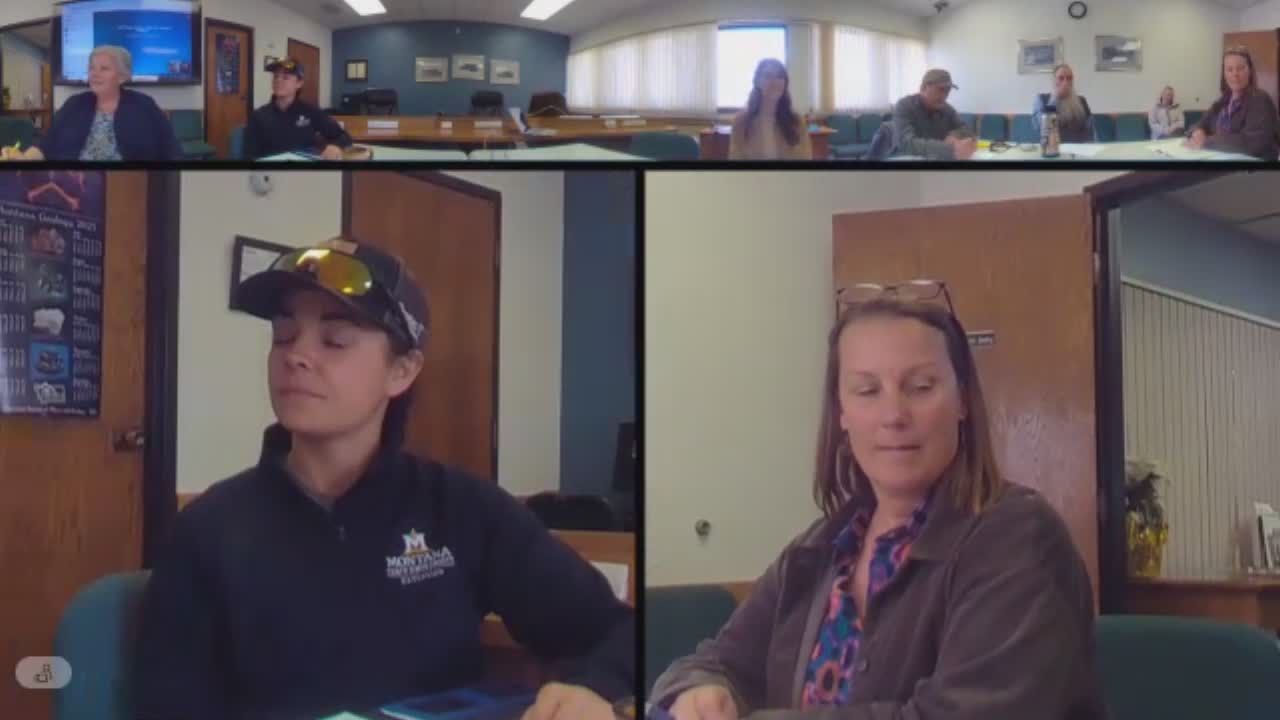
Park County commissioners, MSU Extension 4‑H staff and Fairgrounds personnel met April 23 for a work session to clarify responsibilities and operational needs for the 2025 fair as the Ag Fair Alumni Committee steps back from some duties.
Jackie, MSU Extension 4‑H, said the event “is now a 4 H kind of a culmination of their year's project. This is their event to show what they've learned,” and emphasized that MSU Extension will prioritize youth presentations and livestock shows while coordinating any public activities so they do not “take away or detract or overshadow any of the projects that the kids are presenting.”
The gathering centered on practical needs: porta‑potties and hand‑washing stations, disposal of wood chips used for bedding in livestock barns, availability and condition of skid steer equipment to move those chips, volunteer staffing for cleaning and setup, and insurance for outside vendors such as bounce‑house or bike‑club operators.
Why it matters: Commissioners and staff said the county lacks the volunteer and contractor capacity the Ag Fair Alumni Committee previously provided, and several operational needs must be resolved to keep the event safe and on schedule. Without clear arrangements for cleanup, equipment and sanitation, staff warned that turnover between the fair and the county’s next event could be constrained.
Sanitation and facility staffing
Fairgrounds staff described current restroom capacity and the need for supplemental units. The fairgrounds has 22 existing toilets across buildings but limited accessible fixtures; staff requested at least two ADA‑accessible portable toilets and two hand‑washing stations for the fair week. Jackie and Morgan Squires, Fairgrounds and Parks District, asked the county to consider covering some or all of those rental costs. Commissioners referenced an existing $3,500 line item and discussed using it to offset porta‑potty and hand‑washing station expenses.
Wood chips and cleanup
Fairgrounds staff outlined the labor and cost of moving wood chips used for stalls. Morgan Squires said that when the alumni committee handled the work it required “2 skid steers a full day. So we're talking 14 to 16 hours of 2 skid steer operators” and additional fairgrounds labor, and that disposal now carries a direct cost. Morgan estimated a disposal fee “about a thousand dollars,” while Matt, a county staff member, later said the county’s recent disposal charge was likely “in that range” and “probably right in that range” of roughly $700–$1,000 depending on drop‑off location.
Equipment and operator availability
Staff and commissioners said county equipment is limited. Morgan warned the fairgrounds currently has one older skid steer and asked the county to inspect any county‑loaned machines before committing them for fair use. Commissioners and staff agreed to investigate repairing the county unit, seeking rentals, or finding alternate volunteer equipment. The group noted that volunteers often use personal skid steers but that relying on wheelbarrows to move large volumes of wood chips is unsafe and inefficient.
Insurance and third‑party activities
Commissioners raised insurance questions for non‑4‑H activities such as bounce houses or the bike club’s obstacle course. John (role not specified in the transcript) noted that 4‑H activities are covered under extension insurance but third‑party vendors must carry their own coverage or be approved through county risk staff. Morgan said she would work with county risk (referred to in the meeting as Mako and Lovett) to clarify when outside vendors need proof of insurance or whether the county can extend coverage; she said smaller educational workshops might not require additional insurance but that higher‑risk attractions likely would.
Volunteers, donations and fundraising
Participants discussed whether the fairgrounds’ nonprofit or Ag Fair alumni letter directing donations to Bank of the Rockies (attention Heather Malcolm) could be used to collect funds for shared expenses. Morgan said 4‑H “doesn't have a huge need for financial assistance” but acknowledged funds would be helpful for items such as porta‑potties and tent rental. The group also discussed local organizations that have participated in past years — Expedition Church volunteered to help with a stick‑horse rodeo and cleaning, and the Livingston bike club has previously donated time — and the commissioners asked staff to confirm insurance and cleanup commitments with those groups.
Next steps and follow up
Commissioners asked staff to pursue several actions and return with updates after a mid‑May site check. The meeting record captures the following directions: the county will look into providing two hand‑washing stations and at least two ADA portable toilets; work with refuse to secure extra green‑waste roll‑offs and improved pickup signage; investigate skid‑steer repair or rental options; and confirm insurance for outside vendors. Morgan said she would coordinate with Expedition Church and other community groups, and the group scheduled a mid‑May follow up after the May 15 site‑readiness date to confirm arrangements.
Ending
No formal votes on policy or budget were taken at the work session. The meeting concluded after the group agreed to reconvene in mid‑May to check progress and finalize logistics for the fair week.