Get Full Government Meeting Transcripts, Videos, & Alerts Forever!
Get email alerts on the School Construction Costs topic
No spam. Unsubscribe anytime.
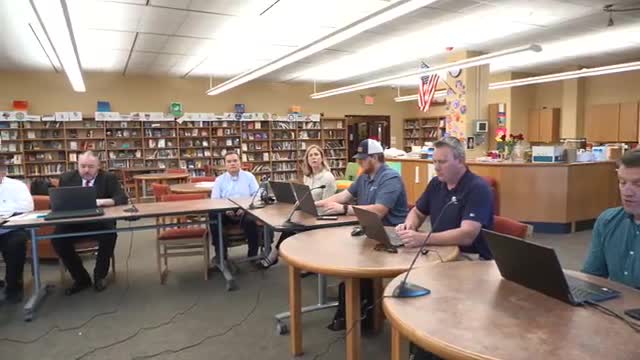
Swansea committee reviews MSBA cost scenarios and votes to price a repair‑only option
Summary
At a May 15 meeting the Swansea School Building Committee heard MSBA cost scenarios and approved a scope to price a repair‑only option while continuing study of addition/renovation and new‑construction alternatives.
The Swansea School Building Committee on May 15 reviewed cost scenarios from the Massachusetts School Building Authority (MSBA) data and voted unanimously to approve a repair‑only scope for pricing as part of the district's feasibility study.
The decision means the project team will prepare a formal price for bringing the existing junior‑high facility up to current codes — including a full mechanical, electrical and plumbing replacement, exterior envelope upgrades and stormwater and septic work — and will submit that priced option to the MSBA alongside addition/renovation and new‑construction alternatives.
Why it matters: The MSBA drives reimbursement through per‑square‑foot caps and eligibility rules; the committee must compare multiple options (repair, addition/reno, new build) on a consistent basis so town voters and the MSBA can evaluate the district share and state grant implications.
OPM Chris Leffler of PMA Consultants told the committee, “We're currently in module 3, the feasibility study,” and outlined a timeline that anticipates the district vote in fall 2026 and a likely bid period in early 2028. PMA project estimator Chad Curtin briefed the group on cost drivers, saying, “So, we're gonna talk numbers for really the first time,” and explained the team was using MSBA project data to estimate construction cost ranges without final designs.
PMA presented four illustrative scenarios for each delivery approach (repair, addition/renovation, new construction) that varied by gym and auditorium size. Curtin noted the current MSBA combined building-and-site cap shown to the committee was $649 per square foot while the team's midpoint construction estimate for future bids was roughly $1,000 per square foot — figures the committee used only for comparative purposes.
The PMA team stressed several cost factors that affect district share: modular classroom allowances (a $5 million allowance in the repair scenario that the MSBA does not reimburse), delivery method premiums for phased renovation (a phased‑work premium the team modeled at about 30% on direct trade costs and a construction manager at‑risk premium they conservatively set at 7%), contingency assumptions, and MSBA base‑rate and cap adjustments that can change a project's reimbursement.
Committee members asked about timing and market risk, and Curtin cautioned that MSBA caps can change; he added that a recent MSBA policy change prevents a project's base reimbursement rate from decreasing at project scope and budget agreement time — a rule the team said protects communities in some market fluctuations.
Formal action: The committee approved the repair‑only scope of work “as presented” by roll call vote 7–0. The record shows all voting members present cast aye votes.
Next steps: The project team will carry the priced repair option forward into the next submission material and continue developing addition/renovation and new‑construction alternatives for comparison during the PSR (Preferred Schematic Report) phase. The consultants asked the committee to confirm evaluation criteria by June 3 for the PSR submission schedule.
Ending: The committee positioned the repair scenario as one of three priced options to present to the MSBA and the public; the team said the trio of priced options will let the town and the MSBA compare district cost, reimbursement and educational outcomes before the district authorizes local funding.