Get Full Government Meeting Transcripts, Videos, & Alerts Forever!
Get email alerts on the Dam Safety And Restoration topic
No spam. Unsubscribe anytime.
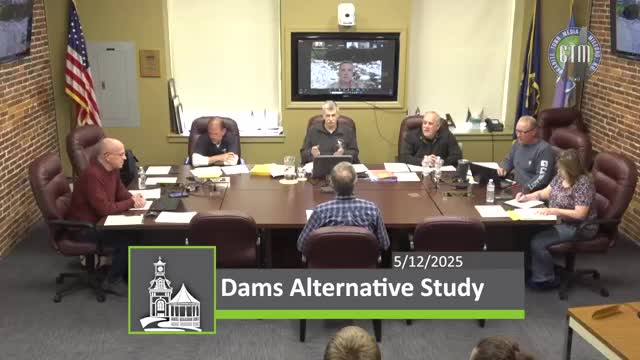
American Rivers offers funding and technical help to update 2014 dam study; Milford selectmen and state dam officials outline next steps
Summary
A national river‑restoration nonprofit offered private foundation funds and technical support to update a 2014 analysis of the Goldman and McLean (town) dams in Milford. State Dam Bureau staff described inspection frequency and regulatory triggers; no formal board action was taken.
Andrew Fisk, Northeast regional director for American Rivers, told the Board of Selectmen on May 12 that his organization has private foundation money available to help Milford update the 2014 study of the Goldman and McLean dams and to fund follow‑up technical work if the town chooses to proceed. Fisk said American Rivers can provide a range of support from updated analyses and community engagement to full project management and fundraising for removal if a community decides removal is its choice.
Representatives from the New Hampshire Department of Environmental Services (DES) Dam Bureau explained their routine oversight: both dams are classified as low‑hazard structures and DES inspects such dams every six years, including downstream conditions. DES staff said inspectors have previously issued notices identifying concrete deterioration, debris in outlets, and some erosion on abutments, but that current deficiencies had not yet risen to the level of imminent public‑safety threat.
Fisk and DES staff described the scope of technical work required to update the 2014 analysis: (1) update hydrology and hydraulics modeling to reflect current flows; (2) update sediment‑volume estimates behind each dam (a key cost driver); and (3) produce an updated opinion of probable cost for either maintenance/repair or removal. Fisk said the 2014 work had identified detectable contamination in some upstream sediments tied to nearby cleanup sites and that that prior assessment was preliminary; further sampling could be scheduled later in the process if needed.
Speakers from the community and the Conservation Commission raised concerns about aesthetics, local recreation, potential impacts on the downtown riverfront, historic values, and the results of a March warrant article (which had failed 63%–37%). A range of residents said they supported updated data to inform future decisions; others stressed that some residents prioritized preserving the visual and economic character of the downtown riverfront.
American Rivers emphasized it does not undertake long‑term dam maintenance; the organization’s primary role is funding, technical support, and, in some cases, managing removal projects when communities choose that path. Fisk said the Goldman Dam’s private trust owner had indicated little interest in maintaining the asset and that American Rivers could consider support for removal if the town and other stakeholders wanted that route. DES staff reminded the board that removal or reconstruction would trigger federal and state permitting, including Section 106 (historic preservation) review and Corps of Engineers and state dredge‑and‑fill permitting as applicable.
No formal motion was taken. Selectmen and officials agreed to keep the discussion open; American Rivers offered to scope and fund an updated alternatives analysis if the town wished to accept private foundation resources to underwrite that next step.