Get Full Government Meeting Transcripts, Videos, & Alerts Forever!
Get email alerts on the Sewer Inflow Infiltration topic
No spam. Unsubscribe anytime.
City eyes ordinance change to charge large users for sewer inflow after Gonic surge
Summary
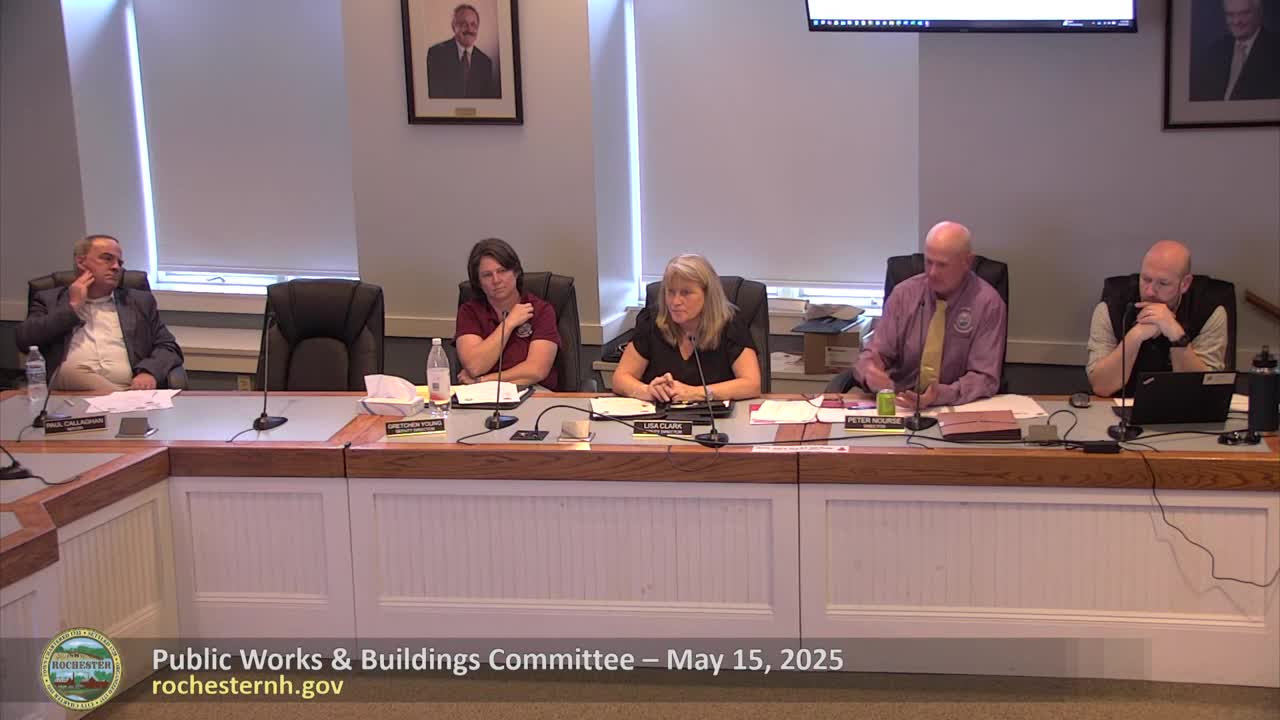
Public Works staff proposed changes to the sewer use ordinance to allow billing for stormwater and groundwater inflow from large commercial properties after a significant inflow event in Gonic overwhelmed headworks; staff plan to present ordinance language to the Codes Committee.
Public Works officials told the committee that a October 2023 storm produced a rapid inflow spike above the treatment plant’s capacity — city staff reported a peak about 11 million gallons per day after roughly 2.5 inches of rain in an hour — and subsequent smoke testing identified substantial inflow sources near Gonic, including catch basins, trench drains and roof drains that route stormwater directly to the sanitary sewer.
Director Norris said the city is exploring an amendment to the sewer use ordinance and the fee schedule so the city can quantify and bill for excessive clean water volumes contributed by commercial, industrial and large multifamily properties. “The approach we'd like to use is to apply the sewer rate to these quantities,” Norris said, adding the city and legal/finance have concluded a legal route is available if the change is adopted and the customer does not comply with a remediation schedule.
Gretchen Young (city staff) explained technical options for quantifying inflow: rational method calculations based on impervious area and rainfall, or direct metering of flows. Staff said the near‑term, “low‑hanging fruit” is large commercial and industrial sites with hundreds of thousands of square feet of impervious area; single‑family homes present a different enforcement challenge and staff do not plan an immediate heavy‑handed approach for individual homeowners.
Enforcement and incentives: Staff proposed a progressive approach that would require a compliance plan with milestones; if milestones are not met the city could levy charges or seek injunctive relief through Superior Court. Committee members discussed fairness and selective enforcement risk and suggested ordinance language include options for negotiated compliance schedules or temporary agreements while remediation proceeds.
No ordinance change was adopted at the May 15 meeting; staff said they will present detailed ordinance language and technical quantification methods to the Codes Committee for review.
Ending — next steps: Public Works will take a Codes Committee referral to establish ordinance language, billing mechanics and compliance procedures; staff plan to begin work first with identified large contributors and pursue corrective schedules rather than immediate punitive measures.