Get Full Government Meeting Transcripts, Videos, & Alerts Forever!
Get email alerts on the Brownfields Remediation topic
No spam. Unsubscribe anytime.
City begins site characterization after soil contamination found at former public works site
Summary
Rochester officials told the committee that demolition and preliminary testing at the former public works facility uncovered petroleum‑saturated soils; state regulators have required an initial site characterization and groundwater monitoring to determine extent and next steps for redevelopment.
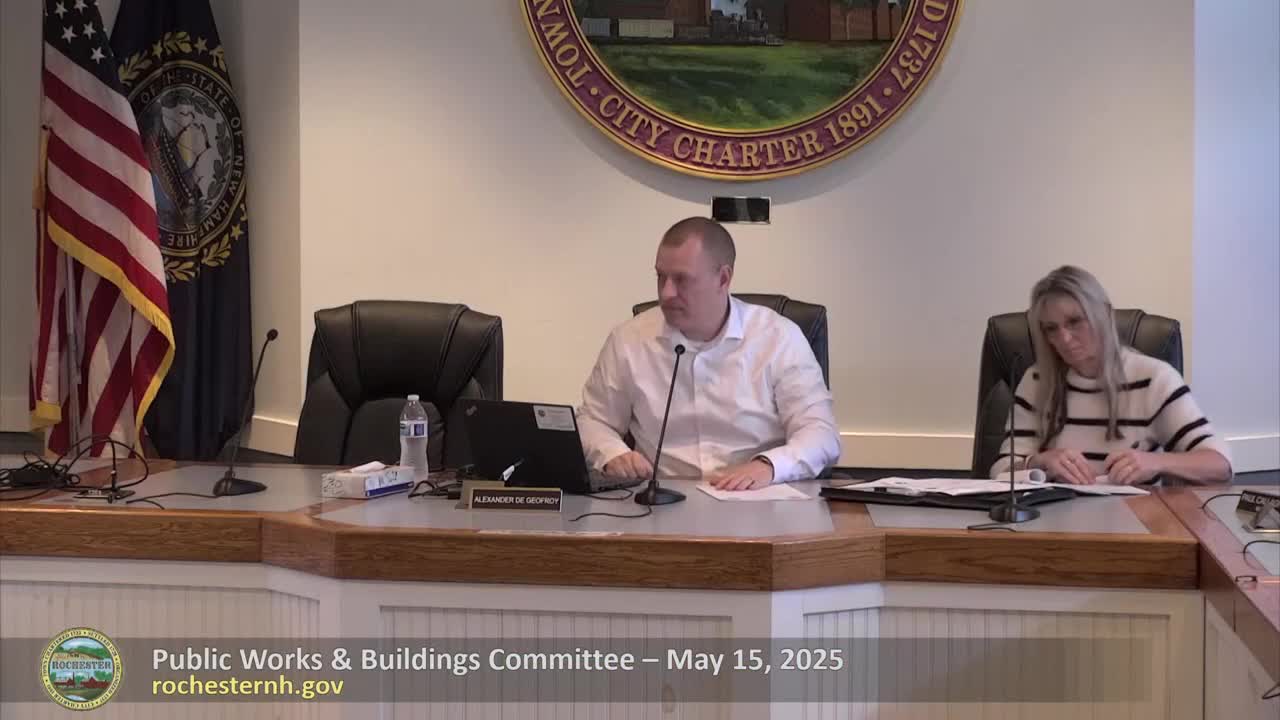
Director Norris told the Public Works & Buildings Committee on May 15 that demolition of the former public works facility (built c.1950) revealed petroleum contamination in soils beneath the building and adjacent salt shed and oil storage areas. A phase‑1 and phase‑2 environmental assessment previously documented recognized environmental conditions; subsequent field work identified contaminated soil and hydraulic fluids at depths the city estimates begin about 6 feet below ground.
Norris said the New Hampshire Department of Environmental Services (DES) Oil Remediation Bureau has classified the city as a responsible party and has ordered an initial site characterization that will include test pits, borings and groundwater monitoring wells to define contaminant boundaries and potential receptors. Mike Towle of Tomford Environmental, the city’s consultant, described the upcoming work: “The major part of the initial site characterization is actually in salt monitoring wells and see if the contamination has affected groundwater beneath the site.”
To date the city has removed nearly 500 tons of contaminated soil and spent about $382,422 (grant and city funds combined). Staff estimate roughly 3,800 tons of contaminated soil remain in place, though the exact volume will be refined by the site characterization. Disposal options include excavation and transport to a licensed facility (waste management), or in‑place management that could require vapor barriers or a groundwater management permit; each path carries different costs and long‑term monitoring obligations.
Costs and timing: City staff said disposal options range from a roughly $32 per ton landfill disposal fee up to about $52 per ton to treat (“bake”) contaminated material before disposal, plus excavation and transportation costs. City estimates put additional near‑term expense in the low‑to‑mid hundreds of thousands of dollars if excavation and off‑site disposal are required. Towle said the characterization report will be prepared in the next 6–8 weeks and DES review may take about three months, with faster attention possible if the project is prioritized.
Developer/owner implications: City staff said that if the property is transferred to a developer, ongoing groundwater monitoring requirements or a groundwater management permit typically would be attached to the deed and become a future owner’s responsibility. Catholic Charities (prospective developer) has been kept informed, city staff said.
Committee members asked about alternatives and liability; staff said DES has resources and sometimes brownfields funding but grants are typically directed to the party transforming a contaminated parcel into productive use. The committee did not take a vote; staff will proceed with the initial site characterization, report findings to DES and return with recommendations for remediation scope and cost.
Ending — next steps: Tomford will complete the initial site characterization (soil and groundwater monitoring), submit a report to DES in coming weeks, and the city will await the bureau’s guidance on whether soils must be excavated or can be managed in place through engineering controls and long‑term monitoring.