Get Full Government Meeting Transcripts, Videos, & Alerts Forever!
Get email alerts on the Transportation Bonding topic
No spam. Unsubscribe anytime.
Appropriations subcommittee briefed on MDOT bond program and state trunk line fund debt
Summary
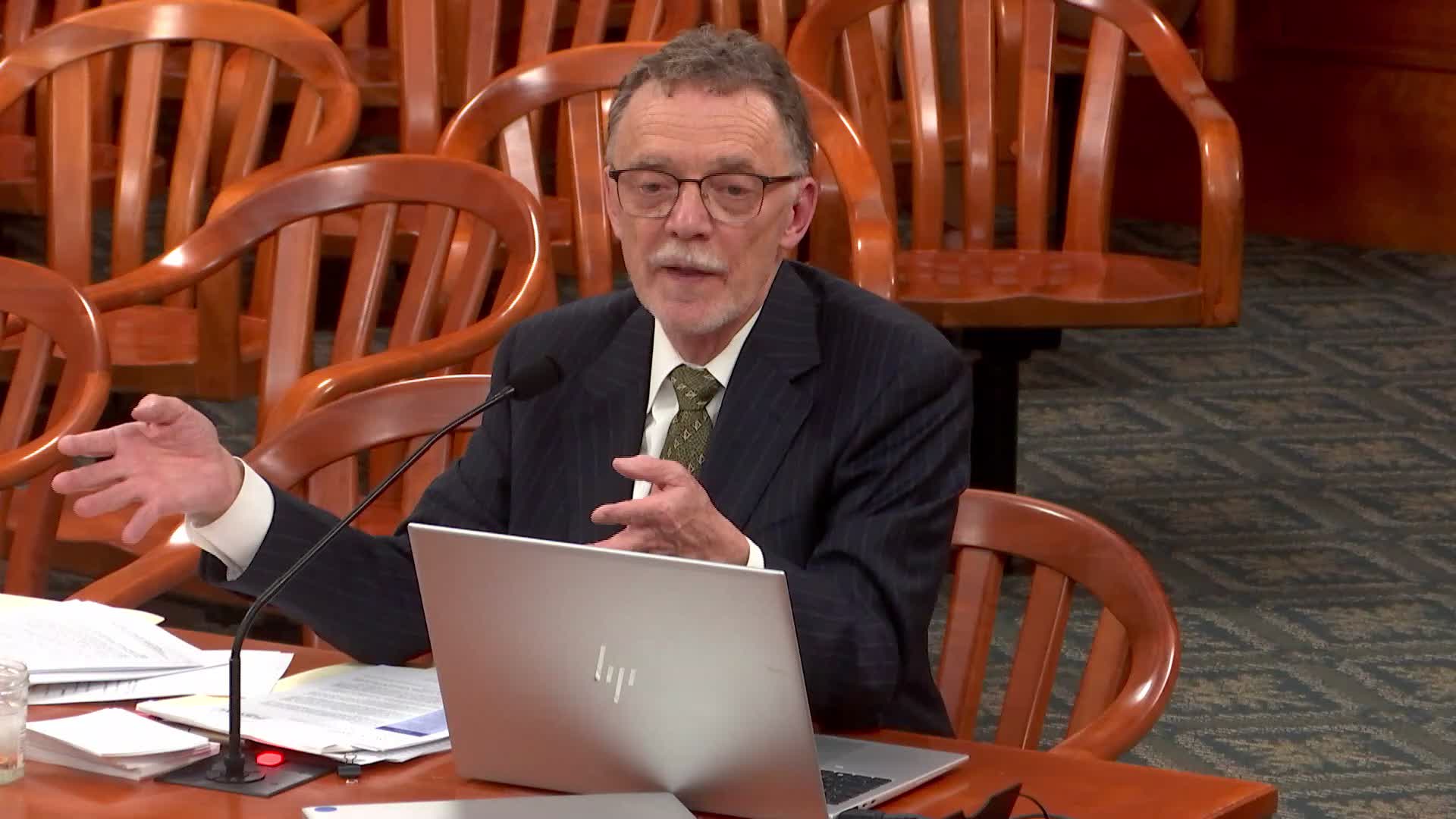
The Appropriations Subcommittee on State and Local Transportation on Thursday heard a briefing on the Michigan Department of Transportation (MDOT) bond program and debt service from House Fiscal Agency analyst William Hamilton.
The Appropriations Subcommittee on State and Local Transportation on Thursday heard a briefing on the Michigan Department of Transportation(MDOT) bond program and debt service from House Fiscal Agency analyst William Hamilton.
Hamilton said MDOT has roughly $3 billion in outstanding transportation-related debt and has sold about $2.8 billion of a $3.5 billion authorization under the Rebuilding Michigan program, with the department anticipating the sale of the remaining $700 million before year-end. "They sell state trunk line fund bonds by pledging the state trunk line fund," Hamilton said, adding that the department also can issue bonds by pledging federal grant revenue.
Why it matters: MDOTbonds shift some transportation costs to future years and create ongoing debt-service obligations for constitutionally restricted transportation revenues such as fuel taxes and vehicle registration fees. Those obligations affect how much revenue is available for construction and maintenance in future budgets.
Hamilton described the bonds as revenue bonds that are secured by pledges of constitutionally restricted transportation revenue rather than by the state's full faith and credit. "They are considered revenue bonds," he said. He also noted the commission can issue GARVEE-style bonds (bonding in anticipation of federal grant revenue) and that the State Transportation Commission must provide the House and Senate appropriations committees with a list of projects at least 30 days before bonds are issued.
Hamilton walked members through historical and recent borrowing: outstanding state trunk line fund debt rose in the early 2000s to about $2.3 billion, fell to about $1.1 billion by 2019, and increased again after the 2020 Rebuilding Michigan program. He said the commission originally authorized up to $3.5 billion and had sold $2.8 billion so far; he expects the remaining $700 million of that authorization to be marketed this calendar year.
On limits and coverage, Hamilton cited Public Act 51 and commission policy. He summarized the statutory constraint as limiting state trunk line fund debt service to 50% of the previous year's constitutionally restricted revenue credited to the fund, and said the State Transportation Commission uses a stricter 4-to-1 revenue-to-debt-service coverage policy. "Currently, in the last bond statement, STF revenue was 5.4 times the amount needed to cover STF debt service," Hamilton said, noting the department remained below statutory and policy limits.
Committee members pressed for more detail on long-term costs. Representative Morgan asked why bonding is used instead of pay-as-you-go budgeting; Hamilton replied that bonding "can advance their construction program as opposed to waiting to build up the cash," allowing road users to benefit from improved facilities sooner and that historically low interest rates made borrowing more attractive in recent years. When asked for the total cost to retire current bonds over their full schedules, Hamilton said he did not have that figure on hand but offered to obtain the detailed debt-service projections from MDOT.
Hamilton also said bonds are often issued in multiple series with different maturities and that many issues include call provisions that permit refunding under favorable conditions. He noted MDOT policy to refinance callable bonds if refunding would yield at least a 3% net present value savings.
Next steps and context: Hamilton said MDOT and the Office of Financial Management had not yet released final 2024 audited financial statements at the time of his briefing, which affects the most recent official figures. He offered to provide committee members with detailed debt-service schedules and the total cost to retire the outstanding debt on request.