Get Full Government Meeting Transcripts, Videos, & Alerts Forever!
Get email alerts on the Multilingual Learners And Access topic
No spam. Unsubscribe anytime.
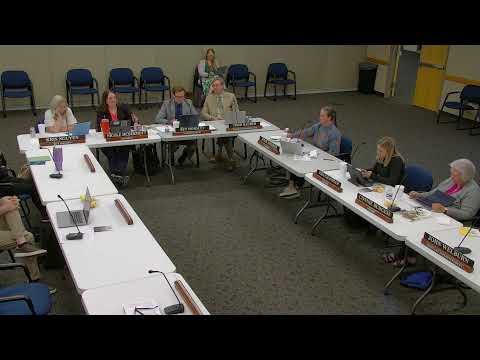
Granite details services for multilingual learners, refugees and compliance work in Education Access and Opportunity presentation
Summary
Department directors described Title IX and 504 compliance, Title VI American Indian programs, services for 20,000 multilingual learners, refugee/newcomer supports, and district efforts to build ESL capacity, including an in-district ESL endorsement pathway and Flashlight 360 for speaking and writing practice.
David Gomez, director of Educational Access and Opportunity (DEAO), and Carly (Carly/Harley) Chavez, associate director, briefed the board on five major areas of the department—s work: Title IX, Section 504 compliance, Title VI American Indian programs, Title III multilingual-learner services, and refugee/newcomer supports.
DEAO told the board the district serves roughly "20,000 multilingual learners," operates a 504 caseload with "5,684 active 5 0 fours" in the FOCUS system, and has 933 students qualifying under Title VI (American Indian education). Carly described culturally based outreach and a parent committee and said the district's American Indian graduation rate is about 95 percent.
Refugee and newcomer supports: the department works with outside resettlement agencies (the transcript references the international refugee community and Catholic Community Services) and maintains 11 refugee liaisons. The liaisons make home visits, help families register and navigate school transportation, and follow students through the school year; staff reported serving 612 newcomers and refugees this year from 48 countries and 25 languages.
Multilingual learner services and capacity building: staff described Title III obligations and district strategies to build in-school capacity. The district licenses the Elevation platform so teachers can access training modules (for lane-change credit) and use the platform for WIDA and ESL data entry. The district also runs an in-district ESL competency endorsement (Canvas-based) that has grown beyond earlier college-delivered endorsement options; DEAO said Cypress High School engaged 48 teachers and about 25 have completed the district-endorsed pathway so far. Staff called the in-school coaching cycles and embedded classroom work central to scaling training.
Assessment and instructional tools: staff highlighted WIDA assessments and a tool the presentation referred to as Flashlight 360, a progress-monitoring program used for speaking and writing practice and scoring. Staff reported measurable growth on WIDA composite scores where schools implemented these supports.
Voices from schools: a Cypress teacher who spoke during public board discussion called the ESL endorsement work "the best professional development that I've ever experienced," and board members recognized the district—s scale: "we have over 20,000 multi language learners," the superintendent later noted.
Discussion vs. decision: the presentation was informational. The district said it will continue to build capacity, run summer English sessions for newcomers, maintain refugee liaisons and expand the endorsement and professional-learning work; no board vote was taken.
Next steps: staff will invite legislators and interim committee members to visit highly impacted schools, continue training and coaching cycles, and report results to the board.