Get Full Government Meeting Transcripts, Videos, & Alerts Forever!
Get email alerts on the Teacher Pay And Evaluation topic
No spam. Unsubscribe anytime.
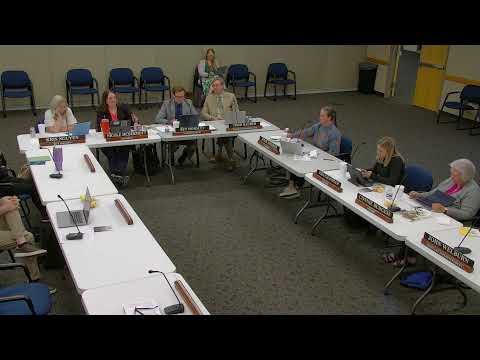
Granite School District discusses joining Utah—s teacher merit-pay pilot under SB 173
Summary
Board and staff reviewed Senate Bill 173 (the Excellence in Education Leadership Supplement Program), outlined Granite—s proposed evaluation and award structure, and directed the district committee to finish the local system for submission to the state. Board members raised concerns about equity, measurement and school culture.
Patrick (staff member) told the Granite School District board that the district has been working with a committee to opt into Senate Bill 173, the Excellence in Education Leadership Supplement Program, a state-funded, voluntary five-year pilot created in the 2024 Utah legislative session. "It's a state funded voluntary 5 year pilot from '24 to '29," he said, and added the program is being administered by the Center for School of the Future at USU.
The program aims to "identify and reward the top 25% of teachers statewide," Patrick said. Under the plan presented to the board, the district will identify its own top 25% of eligible teachers in tested subjects, submit that pool to the state, and the state will then compare nominees across participating LEAs to select the top performers for larger awards. The district-level process will be used to nominate teachers for the state-level comparisons; Granite's committee will finalize local rules and submit the system to the state by July 1.
Why it matters: the pilot would pay cash awards intended to recruit and retain high-performing teachers and to incentivize transfers to high-poverty schools. The board heard the proposed award structure: teachers ranked in the top 5% statewide would receive $10,000 (doubled to $20,000 if they work in a school meeting the board—s "high poverty" metric), teachers in the 6–10% range would receive $5,000 (doubled in high-poverty schools), and teachers in the 11–25% tier would receive $2,000. "If they're in a title 1 or a poverty school, it'd be $20,000," Patrick said.
Granite's committee recommended evaluation weights designed to make district nominees competitive in the state comparison: 75% student growth or achievement, 20% professional evaluations conducted locally, and 5% student surveys. The board was told the district had the option to include a portfolio or collaboration measure but opted not to because principals already assess collaboration in professional evaluations and including an optional element could disadvantage Granite teachers in statewide comparisons.
Board members expressed both support and caution. Ben Worsley supported participation, saying decline to participate could cause Granite to "lose teachers to charter schools" that participate. Julie Jackson raised concerns about effects on school culture and fairness, noting that "what if I speak out and now my principal doesn't give me a good evaluation and I don't get my $20,000?" She also cited research she has reviewed that showed problems with merit pay programs and said she wanted more local control. Kim Chandler and others pressed for clarity on how the state would compare nominees from different LEAs and charters; staff answered that the district identifies its top 25% and "the state takes over from there."
District staff noted implementation timing: the local system must be finalized and submitted to the Center for School of the Future by July 1; data collection and validation would occur in 2025–26, the district would submit its first teacher candidates in August 2026, and the first state awards are expected in October 2026. Staff also reiterated the district will survey teachers and seek stakeholder input while finalizing the system.
Discussion vs. decision: the board did not vote on policy or funding for the program at this meeting. Staff and the standing committee were directed to finish the local design, gather teacher input, and submit Granite—s system to the Center for School of the Future by the stated deadline. Staff said they will report back to the board as the process moves forward.
Next steps: committee meetings, a teacher questionnaire, final local policy to be submitted by July 1 and ongoing board updates. "We—re going to continue to meet as a committee, develop the plan and get stakeholder input," Patrick said.