Get Full Government Meeting Transcripts, Videos, & Alerts Forever!
Get email alerts on the Planning Process Findings topic
No spam. Unsubscribe anytime.
Planning-commission workshop clarifies variances, downtown exceptions and how to write findings
Summary
Attorney and staff led a training explaining legal differences between variances and downtown 'exceptions,' the role of findings in quasi-judicial decisions, and how commissioners should document reasons for permitting or denying projects under Ukiah's hybrid zoning code.
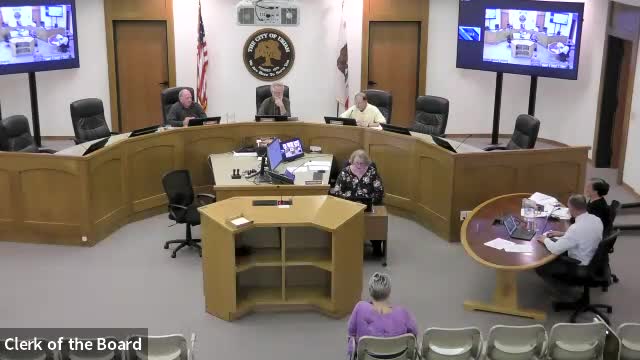
At its April 9 educational workshop the Ukiah City Planning Commission received an extended training on the legal differences between variances and the downtown zoning code’s "exceptions," and on how commissioners should craft findings when deciding permits.
Assistant City Attorney Darcy Vaughn explained that variances are "creatures of state law" and can be granted only when a property’s unique physical circumstances would otherwise deprive the owner of privileges enjoyed by neighboring properties under identical zoning. Vaughn said Ukiah’s zoning code defines variance as a "permit that grants a minor modification or variation of the strict application" of the zoning chapter but stressed that variances cannot be used to avoid zoning limits for purely economic reasons.
Nut graf: Commission staff and counsel told commissioners that exceptions in the downtown zoning district are distinct from variances, that the downtown code explicitly prohibits variances within its boundaries, and that exceptions were intentionally built into the 2012 downtown form-based code to provide project-specific flexibility while preserving the code’s intent. Commissioners were shown sample language and templates for findings that link facts in the record to legal standards.
Vaughn and Planning staff explained the downtown code’s structure: rather than treating variances as the source of flexibility, the downtown code provides prescribed "exceptions" and sets findings for both minor and major exceptions. "Variances are prohibited" in the downtown zoning code, staff noted, and an exception is "a ruling that would permit a practice that is not consistent with a standard of this code." The presenters said exceptions are project-specific and do not change the code for other properties; repeated requests for the same exception, however, are a signal the code may need legislative amendment.
The training emphasized the practical importance of clearly written findings. Vaughn and staff recommended a concise structure: state the conclusion and then explain "because" followed by the facts that support the conclusion and the applicable code or general-plan policy. The commission discussed strategies for composing findings during meetings, including (1) asking staff to prepare revised findings for a continued hearing and (2) having staff transcribe an orally stated finding into the record during the public discussion so the commission can refine and adopt it.
Presenters also reviewed nonconforming structures under the downtown code, explaining that many pre-2012 buildings are nonconforming and that substantial alterations or demolition can trigger a requirement to bring replacements into full compliance with the downtown code’s standards. Commissioners raised concerns about consistency and precedent; staff and counsel stressed that commissioners should rely on the record and the code’s required findings rather than perceived precedent.
Ending: The training concluded with a short discussion of AB 2409 and an associated government-code notice requirement for certain zoning-ordinance actions that affect the use of real property; staff said the city would follow the expanded notice timing for applicable legislative items and would provide commissioners with additional guidance and examples in future packets.