Get Full Government Meeting Transcripts, Videos, & Alerts Forever!
Get email alerts on the Property Maintenance topic
No spam. Unsubscribe anytime.
Ukiah keeps vacant‑and‑abandoned property ordinance; council discusses pools and abatement process
Summary
Council approved the ordinance adding Chapter 13 to the Ukiah City Code to register and maintain vacant and abandoned properties. Discussion focused on in‑ground pools, mosquito mitigation and how the city would work with owners through building permits and code enforcement.
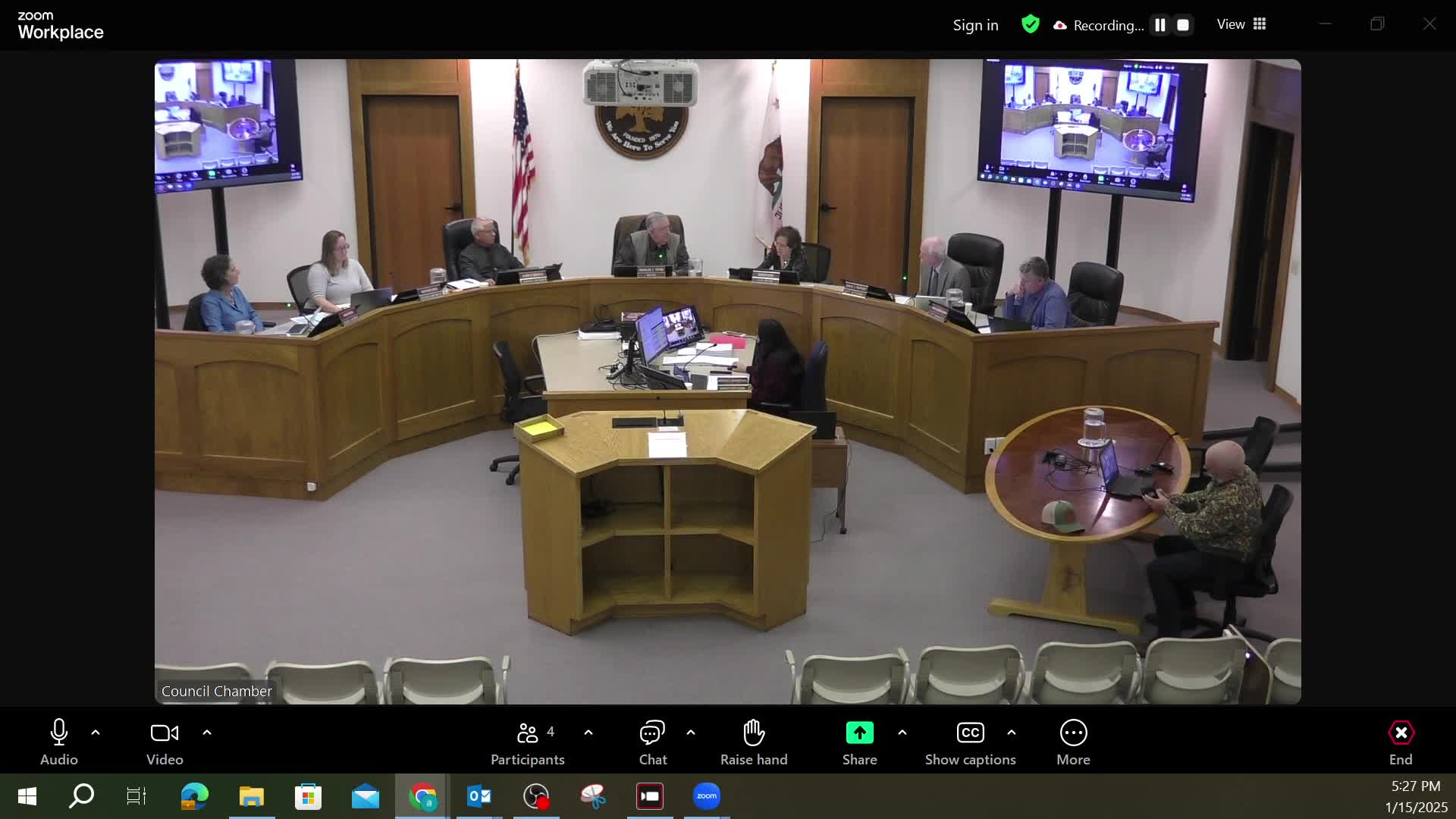
The Ukiah City Council approved an ordinance Jan. 15 adding chapter 13 to the Ukiah City Code to create a vacant-and-abandoned property registration and maintenance program. The ordinance was on the consent calendar and passed as part of the consent vote.
During council discussion, members and staff focused on how the ordinance will address hazards posed by abandoned in‑ground pools and related abatement procedures. Councilmember Crane asked whether an empty in‑ground pool could “float out” if groundwater rises and whether the ordinance should allow preserving pools that might be an asset in the future.
Chief Building Official Matt Kaiser told the council pools that present hazards would be managed through the building-permit process when remediation occurs. “They would have to go through a building permit process in which we require them to not look at holes in the bottom of the pool, but also take the concrete down 2 feet all the way around when they backfill and fill those,” Kaiser said. He added the city would seek to contact owners and work through remediation rather than mandating destruction: “It does not need to be destroyed, but it does need to be dealt with in some fashion.”
Staff said routine abatement tasks—mosquito mitigation, trash removal and graffiti abatement—would be coordinated through code enforcement and, where possible, work with property owners. The ordinance is designed primarily to give the city authority to identify and address hazardous conditions at vacant properties and to require owner response or remediation plans before more prescriptive mandated fixes are imposed.
Why it matters: Councilmembers and residents flagged public‑safety risks from standing water and deteriorating structures. The ordinance creates a registration mechanism so the city can locate, monitor and require corrective action at vacant properties.
Public comment and next steps: Staff indicated pools would not automatically be demolished; owners would be contacted, and any required repairs or demolition would follow normal permitting and enforcement. The ordinance passed on the consent calendar; enforcement protocols will be handled administratively through code enforcement and building-permit procedures.