Get Full Government Meeting Transcripts, Videos, & Alerts Forever!
Get email alerts on the Mining Environment topic
No spam. Unsubscribe anytime.
Committee advances overhaul of Idaho cyanidation permitting process amid debate over rules-to-statute shift
Summary
Senate Bill 1170 would replace an existing, limited 1987 statutory framework for cyanidation (cyanide leaching) facilities with a more detailed statute that codifies permitting timelines, financial assurance, phased review, public‑notice points, and other requirements. Proponents from the mining industry and state agencies said the bill brings
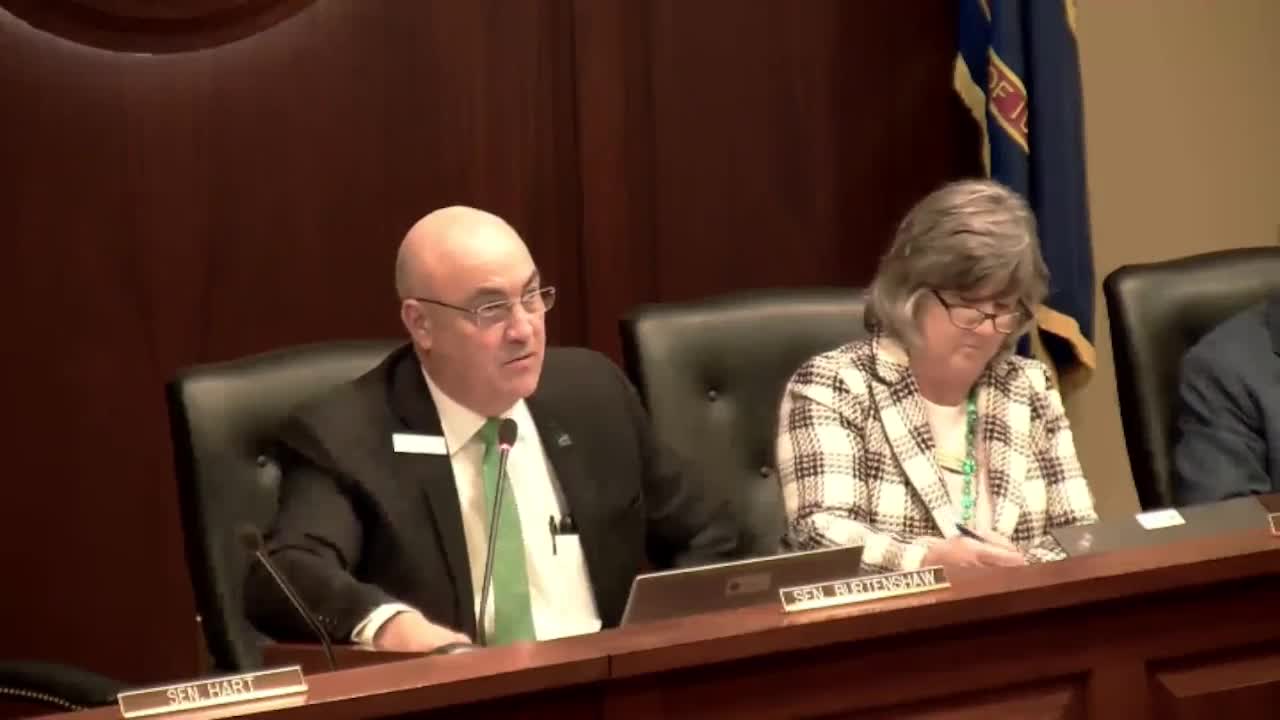
Senator Phil Hart (District 2) introduced Senate Bill 1170 to the Senate Resources & Environment Committee as an update to Idaho's statutory framework for permitting cyanidation facilities—operations that use cyanide to extract metals from ore.
"This bill ... deals with what's called cyanidation facilities," Hart said, and described the measure as replacing the current two‑page statutory section (adopted in 1987) with a more detailed set of provisions and definitions that reflect contemporary industry practice and environmental expectations.
Benjamin Davenport, executive vice president of the Idaho Mining Association, told the committee the bill preserves the existing 180‑day permitting timeline but clarifies points such as: iterative interaction between the applicant and agency, financial assurance and permanent closure-plan requirements, delegation so one lead agency reviews a given portion of an application, and protections against duplicative permit conditions from other state programs. "We're trying to accomplish a few things here ... 1, we want to establish clear environmental targets to protect beneficial use and water quality. 2, we'd like to establish clear expectations around the level of design and engineering detail needed ... 3, we'd like to enable DEQ and the applicant to maintain interaction throughout the permit application review process," Davenport said.
The bill retains a 180‑day decision limit but allows the director and applicant to handle phased reviews, extend timeframes by agreement for complex questions, and conduct targeted public notice at actionable decision points. Davenport said the measure was negotiated with the Idaho Department of Environmental Quality (DEQ) and the Idaho Department of Lands (IDL).
Industry and permitting experts described technical controls and detoxification methods used in processing‑circuit water, including recirculation during operations and chemical treatment (testimony referenced sodium metabisulfite and other industry practices) before any eventual discharge.
Environmental groups voiced concern, however, about moving negotiated administrative rules into statute. Jonathan Oppenheimer, government relations director for the Idaho Conservation League, said cyanide spills occur at mines worldwide and that prior negotiated rules reflected broad stakeholder input. He asked the committee to send the bill to amending order to preserve public‑process protections and clarify how rule sections would apply under the new statute.
Proponents opposed sending the bill to the amending order, saying the statutory rewrite was the product of lengthy negotiation with DEQ and IDL and that the bill provides clearer guidance and predictability for both regulators and industry.
After discussion, the committee moved to send Senate Bill 1170 to the floor with a due‑pass recommendation. The motion passed; Senator Taylor recorded a dissenting vote on the motion.
Ending: Senate Bill 1170 will move to the Senate floor for further consideration. Committee debate focused on balancing clearer statutory direction for permitting with concerns about removing negotiated rulemaking processes that previously included a wider set of stakeholders.