Get Full Government Meeting Transcripts, Videos, & Alerts Forever!
Get email alerts on the Broadband Infrastructure topic
No spam. Unsubscribe anytime.
Columbia County broadband project paused pending federal rule review; team outlines costs, timeline and financing
Summary
County IT director Holly Miller told commissioners the Oregon Broadband Office has paused BEAD applications after NTIA signaled potential rule changes. Project consultants presented design, cost ranges, take-rate assumptions and financing options including a special-purpose nonprofit and revenue bonds.
Holly Miller, Columbia County IT director, told the Board of County Commissioners that the Oregon Broadband Office has “officially pressing pause on the application process” for the federal BEAD program after the National Telecommunications and Information Administration (NTIA) signaled potential rule changes that could affect project design and costs.
The pause means the county’s application timing and some design choices may change; consultants advised the board to expect uncertainty about which technologies and connection-cost thresholds the NTIA will favor. “Most likely, their preference is going to be low earth orbit, which would be Starlink,” Miller said, describing one industry expectation discussed by the project team.
The project team presented updated technical and financial modeling and recommended next steps while noting estimates remain subject to the federal rulemaking. Michael Curry, a member of the broadband project team, said an economic-feasibility survey of local “community anchor institutions” received 41 responses, representing more than $200,000 annually in aggregated Internet and telecom budgets. He said those commitments are material both for financing capacity and for long‑term network sustainability.
Consultants provided cost and schedule ranges rather than final numbers. Drew McNaughton, lead for RSG Telecom (the proposed network operator), said the countywide design can be built in parallel crews and “can be done in 3 years,” while other presenters described a four‑year build assumption used in some scenarios. Design-level estimates presented to the board placed the BEAD‑eligible build at roughly $40 million; presenters also cited examples of a $28 million BEAD grant request in modeling and said that a likely financing mix could include approximately $30 million in BEAD funds plus about $10 million in financing or in‑kind match. The team described these figures as preliminary and subject to change with updated BEAD rules and final design work.
Project modeling used conservative take‑rate assumptions drawn from comparable open‑access networks: an initial take rate of about 35 percent, rising to roughly 55 percent after two years and about 70 percent by year six, the team said. The consultants also explained wide per‑premise connection cost variance in Columbia County: some drops could be as low as $1,500 while others could exceed $60,000, depending on distance from the distribution routes and whether lines are aerial or buried. The presenters noted that aerial construction, pole attachment make‑ready work and miles per passed premise all materially change per‑premise cost.
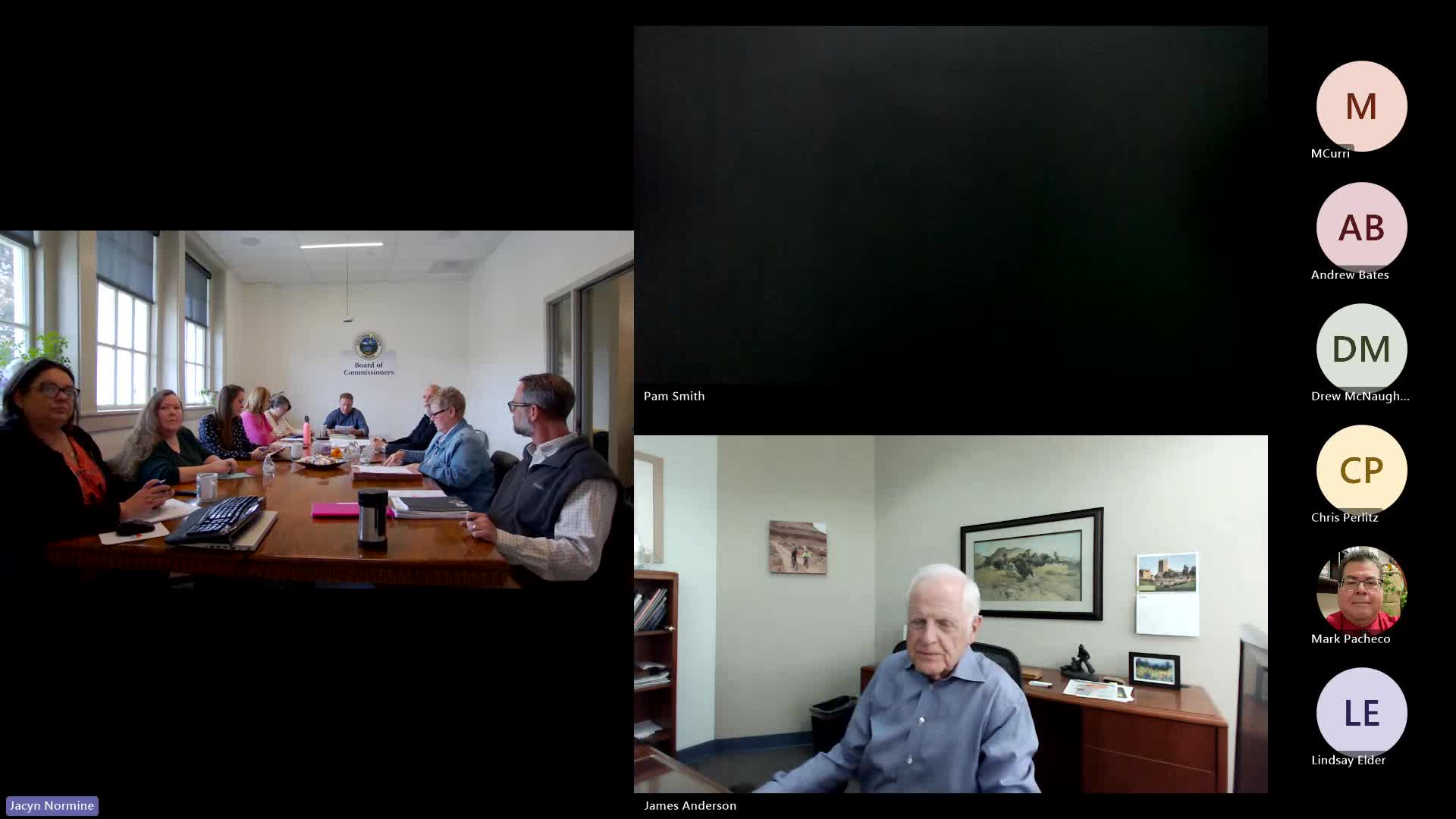
Jim Anderson, with MCM Capital (the revenue‑bond advisor on the call), described a financing structure the county has used elsewhere: a newly formed nonprofit special‑purpose corporation would issue tax‑exempt revenue bonds and be the obligor for the project debt. “There’s no taxes pledged to the payment of the debt and the debt holders can ever look to the county, the state government, or any other city government within the county for repayment,” Anderson said, characterizing the typical non‑recourse structure he described to the board. He and other consultants said revenue bonds can bridge timing between construction and grant reimbursement and that demonstrated early performance (strong take rates and subscriber growth) can improve interest rates for later financings.
The project team explained the county intends an open‑access model: Columbia County would own the passive infrastructure while a nonprofit operator (RSG Telecom, in the team’s plan) would operate the network and wholesale access to retail providers. The consultants said that model lowers barriers for incumbent or new providers to serve customers over the county network, and could increase consumer competition and lower retail prices.
Presenters identified several immediate tasks for staff and the consultant team: update the financial model to reflect the latest engineering design and the possibility of BEAD rule changes; develop the consortium and public‑private partnership agreements; finalize a nonprofit (special‑purpose corporation) structure and draft the resolution that would preserve the county’s intent to seek reimbursement for costs; and plan network promotion and subscriber sign‑up campaigns. The team said it would return with a handful of scenarios and updated financial numbers at the next scheduled briefing.
The board did not take formal action during the update. Commissioners and staff asked for further stratification of per‑premise costs by density and for scenarios that show outcomes with and without BEAD funding, and directed staff to bring refined financial scenarios and draft governance documents back to a future meeting.
Next steps include completing the updated design and cost mapping, finalizing consortium and partnership agreements, refining the subscriber‑take modeling, and preparing reimbursement‑intent language for future bond financing. The consultants emphasized the pause by the Oregon Broadband Office is expected to delay final awards but does not eliminate BEAD funding; it will, however, likely change some program rules and eligible technologies and therefore could affect connectivity choices and costs for portions of the county.