Get Full Government Meeting Transcripts, Videos, & Alerts Forever!
Get email alerts on the School Transportation topic
No spam. Unsubscribe anytime.
Beatrice schools approve new bus contract, raise pay-to-ride fees amid rising costs
Summary
The Beatrice Public Schools board approved a five-year transportation contract with First Student, adopted new pay-to-ride fees for 2025–26 and authorized two 8-passenger vehicle purchases after hearing district staff explain sharp cost increases and options to reduce routes or hubs.
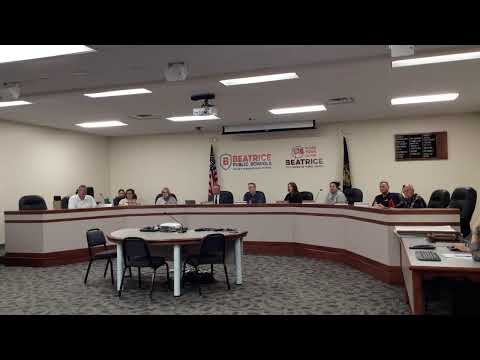
The Beatrice Public Schools Board of Education on April 14 approved a five-year contract with First Student to provide student transportation, voted to adopt new pay-to-ride fees for the 2025–26 school year and authorized two 8-passenger vehicle purchases to replace older vans after trustees heard staff describe rising operating costs and possible changes to routes and hub stops.
Board members voted separately to approve the First Student contract and addendum and to set the new pay-to-ride fees after Superintendent Dr. Nielsen and district staff outlined cost drivers, ridership and revenue projections. The board also authorized the superintendent to buy an 8-passenger vehicle for up to $60,000 and an 8-passenger van for up to $45,000 to comply with recent federal vehicle rules and to replace aging fleet vehicles.
The board heard that the district’s 13 regular in-town routes previously cost about $63,000 per month under its older contract; the proposed five-year deal with First Student begins at roughly $73,238 per month and would total about $992,684 for those same routes in five years using the contract’s scheduled increases. District staff said the new contract includes a 10% increase in the first two years and 7.2% increases in years three through five. The district also reported that the previous contract did not absorb many of the statewide price increases other districts already faced; staff cited higher bus production costs, driver wages, insurance and maintenance as reasons for the jump.
To offset some of the added expense, the board approved a tiered pay-to-ride schedule the district recommended. Using 2024–25 ridership numbers presented at the meeting (about 514 AM riders and 534 PM riders), administrators proposed the following 2025–26 annual rates: $160 ($16/month) for round-trip riders eligible for free or reduced-price meals; $120 ($12/month) for one-way riders eligible for free or reduced-price meals; $320 ($32/month) for all other round-trip riders; and $250 ($25/month) for one-way full-pay riders. Additional children from the same household would be charged a lower per‑child add-on under the proposal. Staff estimated the fee schedule would generate roughly $99,000 in revenue, covering about one-seventh to one-eighth of the district’s transportation cost for those routes.
Dr. Nielsen and district staff emphasized that state law (section 79-611) requires districts to provide transportation for students who live four miles or more from school and authorizes parent reimbursement for those distances; the district has historically provided broader in-town service as an option. Staff said the district has been waiving fees for families eligible for free and reduced-price meals but could begin charging those families if necessary; the proposed schedule retains a lower rate for those families.
Trustees discussed several alternatives to reduce transportation costs, including consolidating neighborhood stops into a limited number of hubs, lengthening student walks to bus locations, reducing the number of routes, or charging higher fees. Staff said hubs would likely increase walking distances from the current typical three- to five-block walk to as much as nine to ten blocks in some scenarios, and that the district would avoid routing students across major intersections when choosing hub locations. Administrators also told the board First Student offered a more favorable price for a longer (five-year) term than a one-year contract, which the company said would be priced substantially higher because it reduces the supplier’s ability to plan and spread capital and replacement costs.
Board members pressed staff on the size of the fee increases and what families could expect. Dr. Nielsen and Mr. Alexander said registration will open in May to allow families time to choose payment schedules (annual or monthly) and that monthly payment plans would remain an option. Staff said they would work with families who need accommodations and would communicate details before fall registration to avoid surprises.
On fleet replacement, the board was told federal guidance and regulatory changes have effectively prohibited continued use of some 10‑passenger vans built on large passenger‑van chassis; the district has replaced three such vehicles already and has about 10 more to phase out. The board authorized two immediate purchases to ensure compliance and to maintain transportation capacity. Staff said the district negotiated options with First Student to adjust costs if routes are later reduced.
The motions to approve the First Student contract and addendum and to adopt the 2025–26 pay-to-ride fees passed; the board also approved the two vehicle purchases. Several trustees who asked procedural or clarifying questions during the discussion were concerned about cost impacts for families and the district budget but indicated support after staff outlined mitigation options.
Looking ahead, staff said the district will monitor fuel and supply prices, work with First Student on route adjustments if needed, and communicate enrollment and payment options to families well before the 2025–26 school year begins.