Get Full Government Meeting Transcripts, Videos, & Alerts Forever!
Get email alerts on the Northwest Power And Conservation Council topic
No spam. Unsubscribe anytime.
Northwest Power and Conservation Council member Jeff Allen outlines council role, seeks reappointment
Summary
Jeff Allen, a current member of the Northwest Power and Conservation Council, briefed the Resources & Environment Committee on the council’s role in regional power planning and fish-and-wildlife mitigation and answered questions about his qualifications and dam-related salmon issues.
Jeff Allen, a current member of the Northwest Power and Conservation Council, told the Resources & Environment Committee that the council was created by Congress in 1980 and has two principal responsibilities: regional power planning and mitigation for fish and wildlife impacts from power generation.
"My name is Jeff Allen and I currently serve on the Northwest Power and Conservation Council and Governor Little has appointed me to another term," Allen said as he opened his remarks. He described the council’s dual charge "to ensure that the region has an adequate, reliable and economic power supply and that we mitigate for the impacts of that power generation." He said the council produces regional power plans and fish-and-wildlife programs that guide Bonneville Power Administration spending and regional planning.
The committee pressed Allen on his qualifications and on dam-related fish issues. Allen responded that his background includes decades in natural-resource policy, including work as a policy analyst and program manager for Idaho’s Office of Species Conservation and prior service as a state director for the council. "I would say 25 in natural resource policy is what qualifies me to represent the state of Idaho at the council level," he said.
On questions about the Lower Snake River dams and salmon, Allen said regional conditions — including ocean conditions — complicate attribution but that council-funded mitigation work has demonstrable results over time. "No one's claiming victory, no one's saying our work is done, but the work that we're doing is making things better for fish," he said, adding that dam operators and the U.S. Army Corps of Engineers "are working hard to improve passage at dams, the dams are being run differently now than they were in the past and ... we're figuring this out."
Allen also told the committee his views align with the regional recommendation provided to the State Department during Columbia River Treaty discussions. "What the senator and the representative seeking is in line with the regional recommendation for the Columbia River Treaty," Allen said, noting an agreement in principle between the United States and Canada and saying accelerated gate repairs and fuller summer lake levels would not conflict with treaty flexibility discussions.
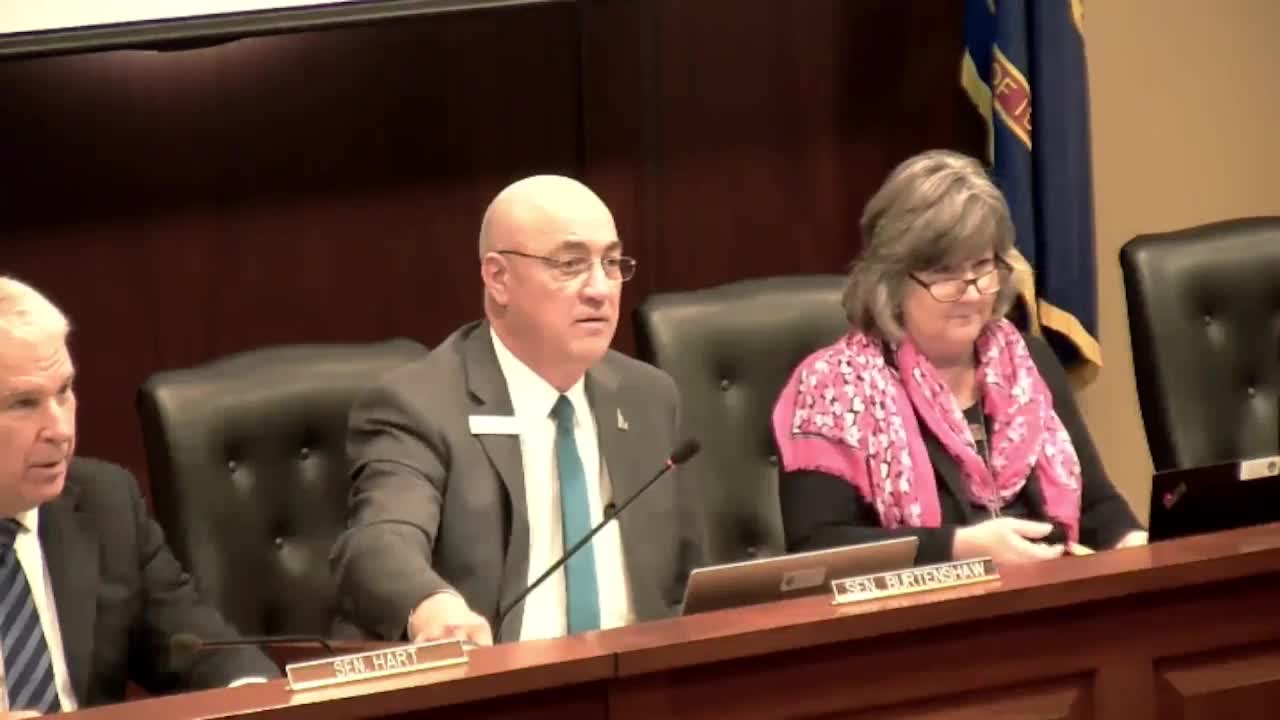
Chairman Burton Shaw and committee members asked questions and thanked Allen for appearing. Committee members said they will vote on the nomination at the next committee meeting; if approved it will go to the full Senate for confirmation.
The committee did not take a confirmation vote during this hearing.
The council role Allen described affects power planning, hydropower operations and the region’s approach to fish and wildlife mitigation, issues that link state, federal and tribal authorities and that can factor into cross-border agreements such as the Columbia River Treaty.