Get Full Government Meeting Transcripts, Videos, & Alerts Forever!
Get email alerts on the District Finance 16th Section Loan topic
No spam. Unsubscribe anytime.
McCombs board discusses 16th‑section loan option to cover construction while awaiting federal reimbursements
Summary
Board members and a financial adviser discussed using 16th‑section principal as an internal loan to cover construction payments, asked questions about repayment, legal limits and whether federal ESSER/ARP reimbursements can later be applied to the loan.
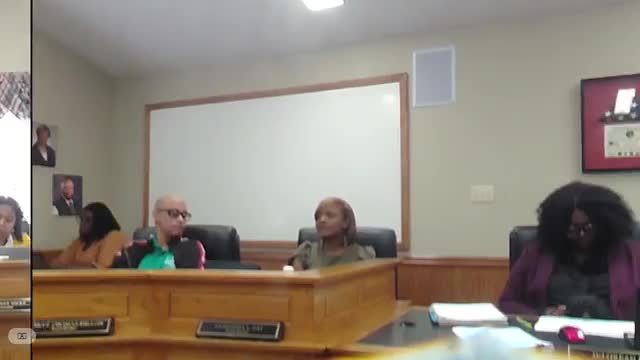
The McCombs School District Board of Education discussed taking an internal loan from its 16th‑section principal fund to cover construction and related capital costs while the district awaits federal reimbursements.
At a work session, financial adviser Rusty Russell told the board the district could borrow from its 16th‑section principal, pay itself back at about 4% interest over as long as 20 years and that an illustrative annual payment on the contemplated amount would be roughly $265,000. “You pay yourself back at a 4% interest rate over a term of up to 20 years,” Russell said.
Board members pressed for clarity on several practical and legal points: whether interest earned on the 16th‑section investments could be used first; whether taking a loan would affect the district’s obligation to share 16th‑section proceeds with neighboring custodial districts; and whether anticipated federal ESSER/ARP reimbursements could be used later to retire any internal borrowing.
Superintendent Dr. Hicks asked the adviser and staff for a written outline of the next three to four steps and said the promissory‑note language and a resolution would need to be prepared for a future board meeting. Russell said the district could draw roughly $3.5 million of a larger invested balance (he referenced a roughly $7,000,000 total investment as an example) and that the district controls the internal loan and could prepay without penalty.
Attorney Davis and district staff said they would research specific federal restrictions on use of ESSER funds for loan repayment; Russell said state law permits using 16th‑section interest to make payments on such a loan. Board members also requested the investment firm that manages the district’s funds appear before the board to answer questions about origination and documentation of the investments.
The discussion also touched on broader fiscal concerns. District leaders reported missed drawdowns of federal ARP/ESSER funds, noting that $23 million had originally been allocated and that about $17 million remained when the current superintendent took office; staff said delays in obligating and drawing down those funds contributed to the cash‑flow situation that led to the loan proposal. The superintendent and board emphasized they are seeking policies and procedures to improve transparency around investments and reporting so future boards will have clearer records.
No formal vote was taken during the work session. Staff and the adviser were directed to prepare the promissory note and resolution for placement on an upcoming board agenda, produce a written outline of next steps, and schedule the investment firm for a future appearance.
Board members said they expect additional legal and financial detail — including confirmation of any obligations to share 16th‑section proceeds with other districts and the exact documentation trail for the existing investments — before any final approval.
If placed on the board agenda for action, the promissory note and resolution would require a subsequent formal vote at a regular or specially called meeting.