Get Full Government Meeting Transcripts, Videos, & Alerts Forever!
Get email alerts on the Traffic Signals Pedestrian Safety topic
No spam. Unsubscribe anytime.
Waverly council directs staff to pursue removal of three underused traffic signals and add pedestrian beacons
Summary
At a study session April 27, City of Waverly staff and council members agreed to begin the process to remove three traffic signals the state DOT found "not warranted," explore lower-cost pedestrian beacons (RRFBs) and run a minimum 90‑day trial period while the Green Bridge remains closed.
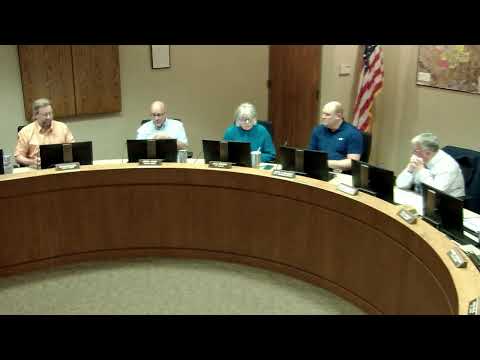
WAVERLY, Iowa — City council members at a study session on April 27 heard detailed recommendations from the director of public works and agreed to start the process to remove three traffic signals the Iowa Department of Transportation had not warranted and to explore pedestrian-activated flashing beacons in several locations.
The discussion centered on three intersections the director identified as candidates for removal or redesign: Fifteenth Street at West Bremer Avenue (by the library), Twentieth Street at Third Street (near MercyOne) and the Second Street downtown signal. The director said DOT warrant studies returned “not warranted” for several of those lights and recommended alternatives, including Rectangular Rapid Flashing Beacons (RRFBs) where power exists.
The move matters because the city maintains the signal equipment and replacement or full upgrades are expensive; the director told the council a full modern intersection upgrade can approach $250,000, while a flashing beacon installation has historically cost about $15,000. He also said removal will follow DOT procedures, including a minimum trial period (about 90 days) to assess traffic effects before changes are finalized.
Council members emphasized pedestrian safety near the library and school routes. “I would be hesitant to take both lights out. I think there needs to be a light there for crossing to the library,” a council member said during the discussion. The police chief supported adding a pedestrian device at the Twentieth/Third curve, noting the approach speed and sight-line issues there and recommending a device that helps pedestrians cross safely.
Staff described options for keeping one signal green except when preempted from the south or when a crosswalk button is used, converting others to pedestrian-triggered devices, repurposing usable camera/controllers from older signals and coordinating public notice. The director noted some signals are older models (one dating to 1981) with parts becoming scarce but salvageable for other intersections.
Council members and staff discussed costs and trade-offs: removal and replacement both carry expense; complete modernization is costly but the city can reuse some components. The director said removing a single signal requires city crews and contractor support (boom trucks, Tetra assistance) and recommended taking advantage of lower general traffic during the bridge closure to perform work.
The council’s direction to staff—reached by consensus during the study session—was to begin the process on the identified signals, coordinate with the DOT and the police department, and bring back implementation steps and cost estimates. Staff will also evaluate RRFBs or other pedestrian-initiated devices where power is present and describe signage/education plans for any yield/priority changes.
What happens next: Staff will return with a list of proposed changes, estimated costs, anticipated public-notice steps and any required follow-up actions for DOT approvals and 90‑day trials.