Get Full Government Meeting Transcripts, Videos, & Alerts Forever!
Get email alerts on the Syria Policy topic
No spam. Unsubscribe anytime.
Senate Hearings Spotlight Syria Sanctions Lift, Repatriation of Detainees and Opportunity in Lebanon
Summary
Nominee Joel Rayburn and senators debated the administration's recent decision to lift Syria sanctions, expectations for the Syrian authorities, risks including possible resurgence of violence, and opportunities to bolster the Lebanese Armed Forces to counter Hezbollah.
WASHINGTON — Senate Foreign Relations Committee members pressed Joel Rayburn, the president's nominee for assistant secretary for Near Eastern Affairs, on the administration's recent decision to lift sanctions on Syria and on how the United States should handle repatriation of foreign nationals held in northeast Syrian camps and support for Lebanon.
Rayburn described the president's move as offering "a golden opportunity" for Syrians to rebuild and for the region to reduce the influence of Iran and its proxies, but he stressed that the administration has "expectations" for Syrian authorities and that restoration of sanctions is possible if those expectations are not met.
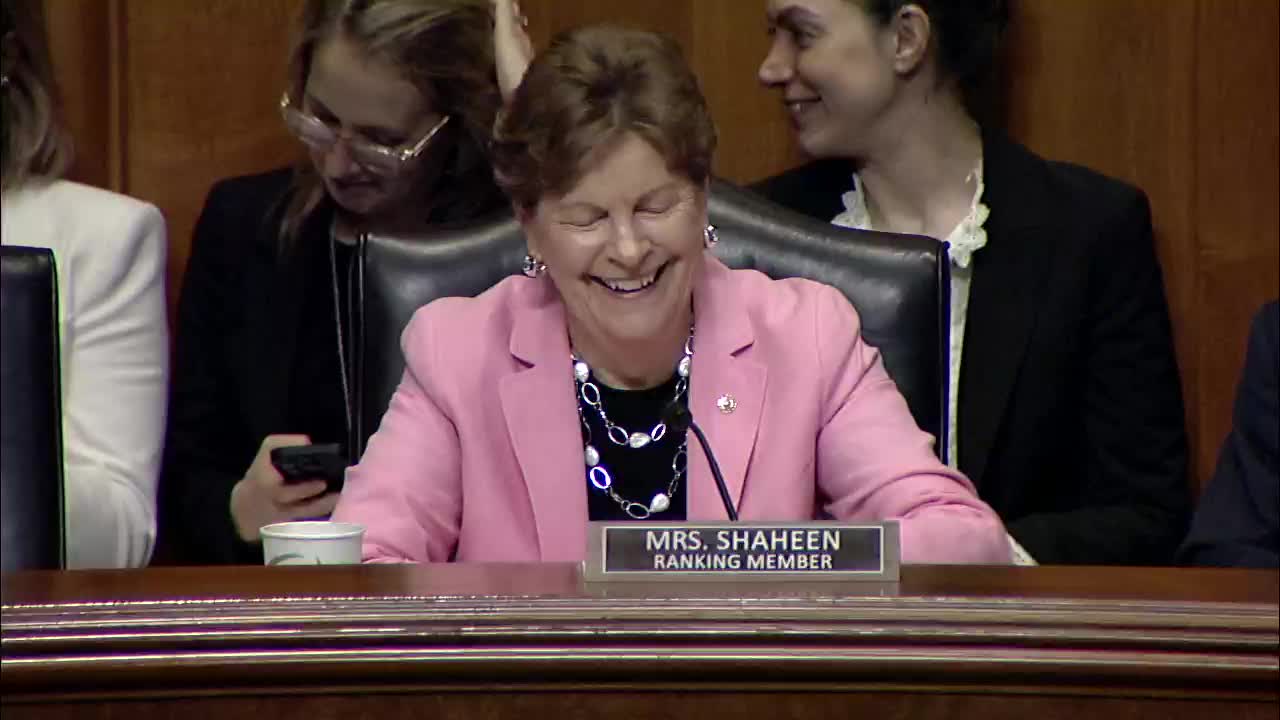
Ranking Member Jeanne Shaheen opened the hearing by calling the fall of the Assad regime "one of the most consequential" developments in the Middle East and said the United States should capitalize on reforms and reductions in Iranian-backed influence. Several senators asked Rayburn how the United States would ensure Syria meets conditions tied to normalization, including limiting Iran-backed militias, cooperating on chemical weapons, and addressing terrorism concerns.
"He's giving them a chance to turn the page," Rayburn said of the president's decision, but he added that the path forward includes expectations such as normalizing relations with Israel, expelling foreign fighters, assisting in counter‑ISIS efforts, and accepting responsibility for detention centers in northeast Syria.
Senators also raised concerns about repatriating foreign nationals held in camps described as potential security risks if left unaddressed. Rayburn said the United States should press third countries to accept repatriation and pursue deradicalization "thoughtfully," emphasizing diplomatic effort to secure returns and rehabilitation.
On Lebanon, senators asked how the United States can support the Lebanese Armed Forces (LAF) to stabilize the south of the country and counter Hezbollah. Rayburn said the new Lebanese government and LAF face a "golden opportunity" to clear spaces previously used by Iranian proxies and that U.S. diplomacy should help empower Lebanese authorities to implement ceasefire agreements and stabilize the Israel–Lebanon border.
Discussion vs. decision: Rayburn repeatedly framed responses as implementing the president's policy if confirmed and highlighted conditions the administration expects Syria and Lebanon to meet. No new sanctions policy was enacted by the committee; senators sought commitments that snapback mechanisms or other safeguards remain available.
Ending: Senators from both parties said they will continue to monitor implementation to ensure humanitarian needs are met and that any lift of sanctions is reversible if Damascus does not meet the stated expectations.