Get Full Government Meeting Transcripts, Videos, & Alerts Forever!
Get email alerts on the Iran Nuclear Policy topic
No spam. Unsubscribe anytime.
Nominee Joel Rayburn Backs 'Maximum Pressure' on Iran, Urges Stringent Verification
Summary
During his Senate Foreign Relations Committee hearing, nominee Joel Rayburn endorsed a return to a maximum-pressure campaign on Iran and said Tehran must not be allowed to retain an indigenous uranium-enrichment capability; senators debated enforcement tools and verification.
WASHINGTON — Joel Rayburn, the president's nominee to be Assistant Secretary of State for Near Eastern Affairs, told the Senate Foreign Relations Committee he supports reimposing a "maximum pressure" campaign on Iran and said any agreement must prevent Tehran from maintaining an indigenous enrichment program.
Rayburn said, if confirmed, he would implement President Trump's policy to "bring a maximum pressure approach back on the Iranian regime, particularly on its revenue streams driven by its oil exports," and described enforcement steps used during the previous administration to disrupt Iran's oil trade.
The exchange came during a broad committee discussion of U.S. policy toward Iran and nuclear nonproliferation. "You have to build out an enforcement apparatus," Rayburn said, listing measures including disrupting a "ghost fleet" of tankers, exposing beneficial ownership of front companies, engaging allied insurance sectors and flagging states, and isolating Iran politically with coalition pressure. "When you do all those things, you can make a real dent in their oil exports," he said.
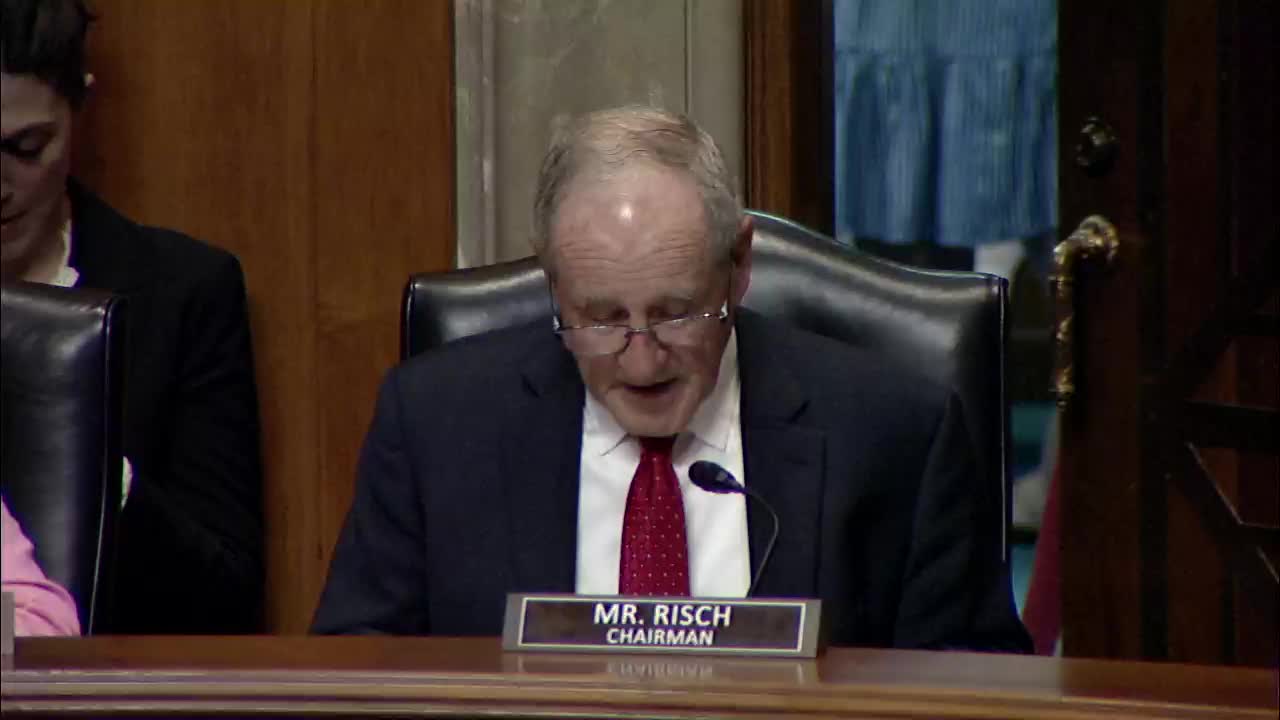
Why it matters: Senators on both sides said Iran's nuclear capabilities and regional proxies pose an urgent security risk. Several committee members, including Sens. Jim Risch and Ted Cruz, pressed Rayburn to endorse what they described as the administration's red line: complete dismantlement of Iran's enrichment program and stringent verification. Rayburn said he agrees with the president and administration envoys that Iran does not need domestic enrichment to operate civilian nuclear power and that robust verification is essential.
Rayburn emphasized that other countries run civilian nuclear programs without indigenous enrichment, buying fuel from third parties. He added that Iran's prior deception under earlier agreements means any future deal would require "very stringent controls" and oversight. "The Iranians have not operated in good faith, even under the terms of the previous JCPOA," he said.
Committee members described tactics they expect to be revived as part of maximum pressure: targeted sanctions on entities enabling Iranian oil sales, maritime interdiction and cooperation with international partners. Sen. Risch said enforcement in the first Trump administration had reduced Iranian oil exports to the low hundreds of thousands of barrels per day and argued the U.S. should "dust off that apparatus and crank it up a little bit." Rayburn replied that those enforcement mechanisms could be reconstituted.
The hearing also touched on related threats: ballistic-missile and unmanned aerial vehicle proliferation, Iran's backing of militant proxies across the Middle East, and the risk that loosening controls would allow Iranian enrichment to be used toward weapons production.
Discussion vs. decision: Rayburn repeatedly noted he is not yet in office and framed his answers as commitments to carry out the president's policy if confirmed. Senators pressed him on technical verification tools and the scope of what a future deal should include; Rayburn's responses stressed enforcement, oversight and multilateral diplomacy.
Ending: Rayburn concluded that a combination of diplomatic pressure, enforcement mechanisms and allied cooperation offers the best path to prevent Iran from obtaining a nuclear weapon and to limit its regional destabilizing activities. The committee's record will remain open for questions for the nominees.