Get Full Government Meeting Transcripts, Videos, & Alerts Forever!
Get email alerts on the State Legislation topic
No spam. Unsubscribe anytime.
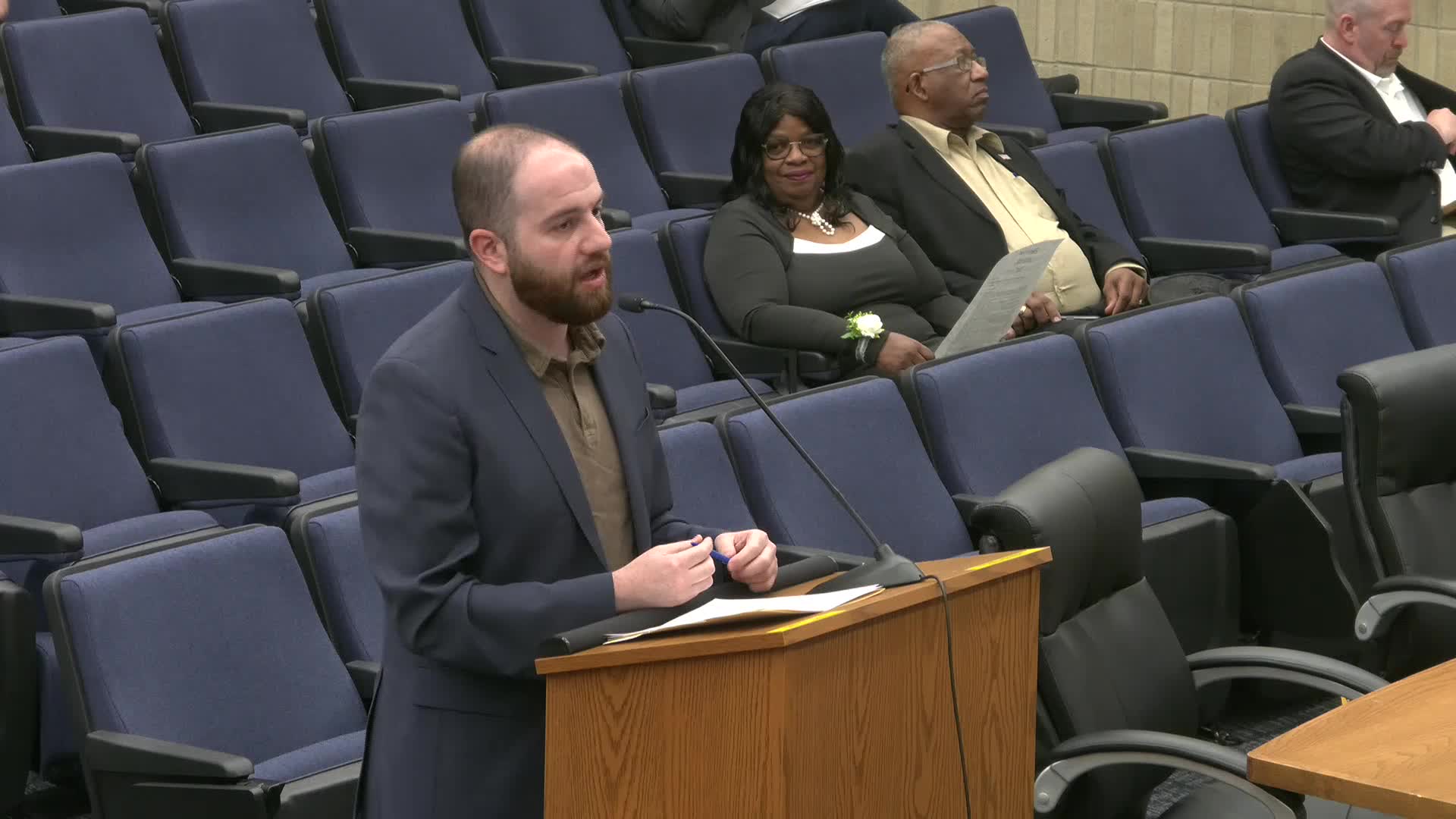
Senator Jeremy Moss briefs Waterford trustees on maternal-health bills, FOIA expansion and price‑gouging reform
Summary
Senator Jeremy Moss, a member of the Michigan Senate, briefed the Waterford Township Board of Trustees on May 12 about bipartisan maternal‑health bills, measures to protect vulnerable adults, an upcoming prescription‑drug review board and efforts to expand FOIA to the legislature and governor's office.
Senator Jeremy Moss, a member of the Michigan Senate, gave the Waterford Township Board of Trustees a legislative update during the board’s May 12 meeting, saying the Senate had passed multiple bipartisan packages now awaiting action in the House.
Moss said the Senate passed a maternal‑health package — which he called “the momnibus package” — that includes Senate Bill 29 to create a commission to investigate racial disparities in maternal health; Senate Bill 30 to establish reporting procedures for mistreatment during childbirth; Senate Bill 31 to require hospitals to revise policies to prevent pregnancy‑related discrimination and to stabilize pregnant patients before ending care; and Senate Bill 32, which requires malpractice‑insurance filings with the Department of Insurance and Financial Services to include prenatal‑services information.
Why it matters: Moss said the maternal‑health bills aim to identify and reduce racial disparities in maternal and infant care, a point he described as a priority for the Senate package. He also described other bipartisan measures approved by the Senate that would expand protections for vulnerable adults, create a prescription‑drug accountability board, and change state open‑records rules.
On vulnerable adults, Moss said the Senate approved bills he cited as Senate Bills 111–114. He said those bills would expand personal‑protection orders to cover vulnerable adults and elders (SB 111), add embezzlement from a vulnerable adult to the racketeering definition (SB 112) with aligned penalties (SB 113), and allow counties or regions to form multidisciplinary teams to protect vulnerable adults from exploitation and neglect (SB 114).
Moss described a separate bipartisan measure to create a Prescription Drug Accountability and Affordability Board modeled on boards in other states, saying the board would review large, unexplained price increases and could impose limits when increases are not justified.
On government transparency, Moss said he has worked to apply Michigan’s Freedom of Information Act to the governor’s office and the legislature. “Michigan is one of only two states that does not apply FOIA to the governor's office or to the state legislature,” he said, and added that Senate bills 1 and 2 to expand FOIA to legislative offices passed the Senate and now await House consideration.
He also said he is working to strengthen Michigan’s price‑gouging law so that triggers tied to a declared state of emergency would limit unjustified price increases on essential goods and housing; he described Michigan’s existing law as comparatively weak.
Moss said the Senate is in budget season and aiming to complete a state budget by June 30 so municipal and school districts know revenue levels before July 1. He took questions from trustees and acknowledged local priorities that he and other legislators are tracking, including a grant application for a Waterford fire station and a $500,000 senior‑center appropriation the township has begun to receive in quarterly installments.
Moss closed by saying the listed Senate bills now sit before the House and that he and colleagues will continue to work with House members to reconcile differences and move measures toward the governor for signature.