Get Full Government Meeting Transcripts, Videos, & Alerts Forever!
Get email alerts on the Community History And Curriculum topic
No spam. Unsubscribe anytime.
Community speakers urge board to honor Silas Peeler and William Hampton and expand Black history instruction
Summary
Several community members spoke during public comment asking the Guilford County School Board to name the new visual and performing arts school for Reverend Silas Peeler and Dr. William Milford Hampton and urging broader Black history instruction and equity in curricula.
Multiple speakers urged the Guilford County Board of Education during public comment to preserve local Black history and to name the district’s new visual and performing arts school in memory of Reverend Silas Peeler and Dr. William Milford Hampton.
Wanda Edgerton said the naming request is made “in accordance with Guilford County School code 9300R” and proposed the new school replace Hampton and Peeler elementary schools and be named “Peeler and Hampton School for the Visual and Performing Arts” to preserve the legacy of Reverend Silas Peeler and Dr. William Hamilton (referred to in the transcript as William Milford Hampton). Edgerton said both schools were severely damaged by the 2018 tornado and eventually closed and argued the proposed name would retain the history and legacy of the two schools in the African American community.
Albertina McGirt, identifying herself as a member and historian with St. Matthews United Methodist Church, spoke in support and described the civic and educational contributions of Reverend Peeler and Dr. Hampton. McGirt noted Peeler’s work with Bennett College and Hampton’s service as the first African American elected to the Greensboro City Council and his later service on the school board. The speakers said the two leaders emphasized artistic development and civic uplift and urged the board to preserve their legacies.
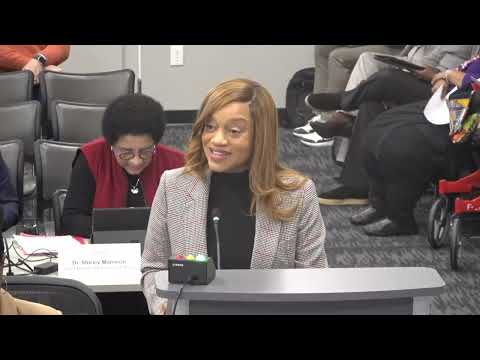
Representatives from the High Point NAACP also addressed the board. Dr. Elma Hairston, president of the High Point NAACP, urged the board to ensure students encounter Black history as more than a single month of instruction and advocated for culturally responsive and inclusive curriculum and community partnerships. Candace James, health committee chair of the High Point NAACP, echoed those themes and said Black history should be taught year‑round and reflected in funding and curriculum decisions. Sanah Sharif of the High Point NAACP recounted a local civil‑rights sit‑in anniversary and said the organization commemorates the action and its historical importance.
Speakers attributed historical facts and personal recollections to the named individuals; the speakers’ proposals were part of the public comment portion of the meeting and no binding board action on naming or curriculum was recorded during this meeting.