Get Full Government Meeting Transcripts, Videos, & Alerts Forever!
Get email alerts on the Capital Improvement topic
No spam. Unsubscribe anytime.
Woodland staff outline $11.75 million FY25–26 capital program; utilities, water projects lead
Summary
Administrative Services Director Kim McKinney presented the city’s FY2025–26 five-year Capital Improvement Program, highlighting roughly $11.75 million planned for next year, with about $5.5 million in water and sewer utility projects, a proposed additional ASR well, water meter replacements, and Measure F transportation investments.
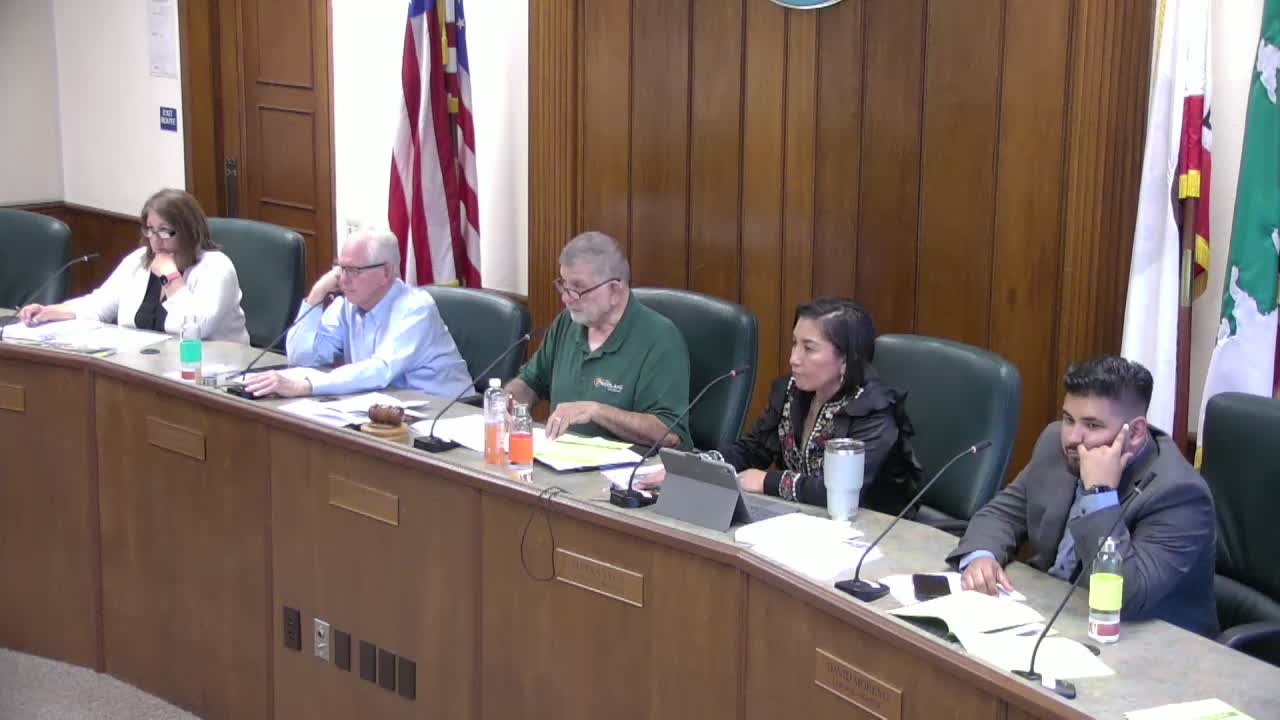
The City of Woodland’s administrative services director presented the Fiscal Year 2025–26 capital improvement program to the council on May 13, describing a $11.75 million slate of projects for next year and a five-year planning outlook.
Kim McKinney told the council that about half of the next year’s planned capital spending—roughly $5.5 million—comes from utility funds for water and sewer work, including pipe replacement, an asset-replacement program, meter replacements and an additional aquifer storage and recovery (ASR) well. McKinney said the city plans to replace aging residential water meters that were installed about 15 years ago.
Nut graf: The capital program is primarily driven by utility needs and constrained discretionary funds. Measure F (the city’s half-cent sales tax) is the main discretionary source and is currently shown with about $2.5 million programmed for transportation projects in 2025–26; grant funds of roughly $2 million are also included in next year’s plan.
McKinney described the program as a planning document: the council will consider appropriations for the operating budget in June, while the CIP provides a five-year outlook. She noted that the city recently contracted a consultant to update rate studies for water, sewer and storm systems; those studies will inform future project prioritization and funding needs.
Council members asked clarifying questions. Mayor Pro Tem Stallard asked whether Spring Lake Infrastructure Fee (SLIF) funding disappears after 2027; McKinney said additional projects could be programmed in later years but that the current forecast shows limited allocations after 2027. McKinney also explained that debt-service payments on prior bonds will conclude after the next fiscal year, which should free up funds to repay development-impact fees and restore spending capacity over time.
The CIP presentation was informational; council took no formal action. McKinney said staff will return with a Measure F spending plan at the next meeting and with recommended rate-study outcomes in forthcoming months.
Ending: Staff asked council to review the CIP as part of upcoming budget hearings; council members will consider the spending plan and budget appropriations in the scheduled June meetings.