Get Full Government Meeting Transcripts, Videos, & Alerts Forever!
Get email alerts on the Housing General Plan Rhna topic
No spam. Unsubscribe anytime.
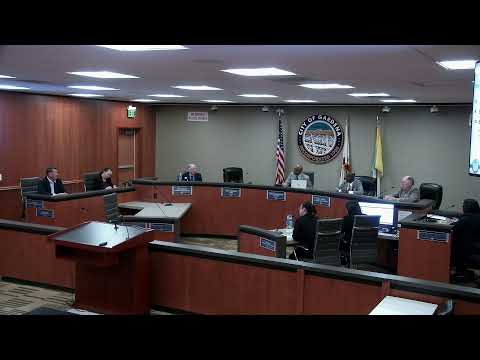
Gardena presents General Plan annual progress report; staff reports 966 permitted units toward RHNA and discusses affordability tools
Summary
Staff told the Planning Commission the city reported 966 permitted housing units to the state for the 2021–2029 planning period and discussed RHNA compliance, recent permits and affordable-housing policy options including an inclusionary housing ordinance.
City planning staff presented the General Plan Annual Progress Report to the Gardena Planning Commission and said the city submitted the report to the state showing 966 permitted housing units toward its Regional Housing Needs Assessment (RHNA) allocation of 5,735 for the 2021–2029 planning period.
Staff described the breakdown of last year’s activity and notable entitlements, including a 300-unit entitlement on Western Avenue (near Tokyo Central) that is an entitlement approval (not a completed project) and a single-room-occupancy project of 21 units. Staff said the permits counted toward RHNA are based on building permits issued or approvals that have been permitted; entitlement approvals are reported separately from completed construction or certificates of occupancy.
Staff provided 2024 ADU statistics: 65 ADUs were permitted last year. Within that total staff listed 20 new detached ADUs, 11 new attached ADUs, and 15 converted attached ADUs; staff further noted conversion types include garages or accessory structures. Staff reported completed counts for some categories as well: six single-family units and 20 units in multifamily structures were listed as completed. One completion number in the transcript was unclear and is therefore not specified in this report.
Commissioners asked whether the city is "on track" with the state; staff replied there is no required annual numeric target but that the city is compliant with state reporting requirements and has taken zoning steps (housing overlays and rezones) to accommodate its RHNA allocation. Staff explained the required housing-element update cycle (every eight years) and that Gardena is in the 2021–2029 cycle.
The discussion turned to affordability and policy tools. Staff explained that what commissioners described would be an "inclusionary housing ordinance," and said the city does not currently have such an ordinance in place. Staff noted a feasibility study on inclusionary requirements had been prepared previously but implementation was pending further analysis of development fees and market effects. Commissioners and staff emphasized local market constraints: buy-right projects that meet development standards proceed without commission review, and mandating a high share of low-income units could discourage development if it makes projects infeasible.
On ADU standards, staff said, "For ADUs specifically, it is a requirement for them to have their own sanitation facilities and kitchens," clarifying that junior ADUs attached to a main house may share some facilities per code but that most ADUs must provide separate sanitary and cooking facilities.
No formal vote was required for the informational report; staff submitted the annual report to the state as required by state law.